
Facades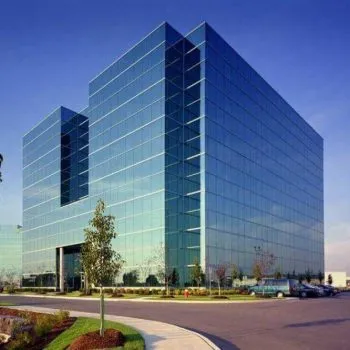
Unitized Curtain Wall
Factory-glazed cassettes that arrive as finished units, cutting site labour and improving weather-line consistency on tall elevations.
- Floor-to-floor spans
- Split mullion
- Structural silicone or capped
Extrusion · Anodizing · Powder Coating
Pak Alumex Aluminium Industries operates an integrated plant on Painsra Road, Gojra — extrusion, surface finishing and fabrication support sit on the same site, so tolerance and colour control stay in one chain of responsibility.
Doors, windows, curtain walls, louvers and specialty profiles — each family is supplied with matching accessories, gaskets and hardware preparation so fabricators can assemble without re-engineering the section.
Factory-glazed cassettes that arrive as finished units, cutting site labour and improving weather-line consistency on tall elevations.
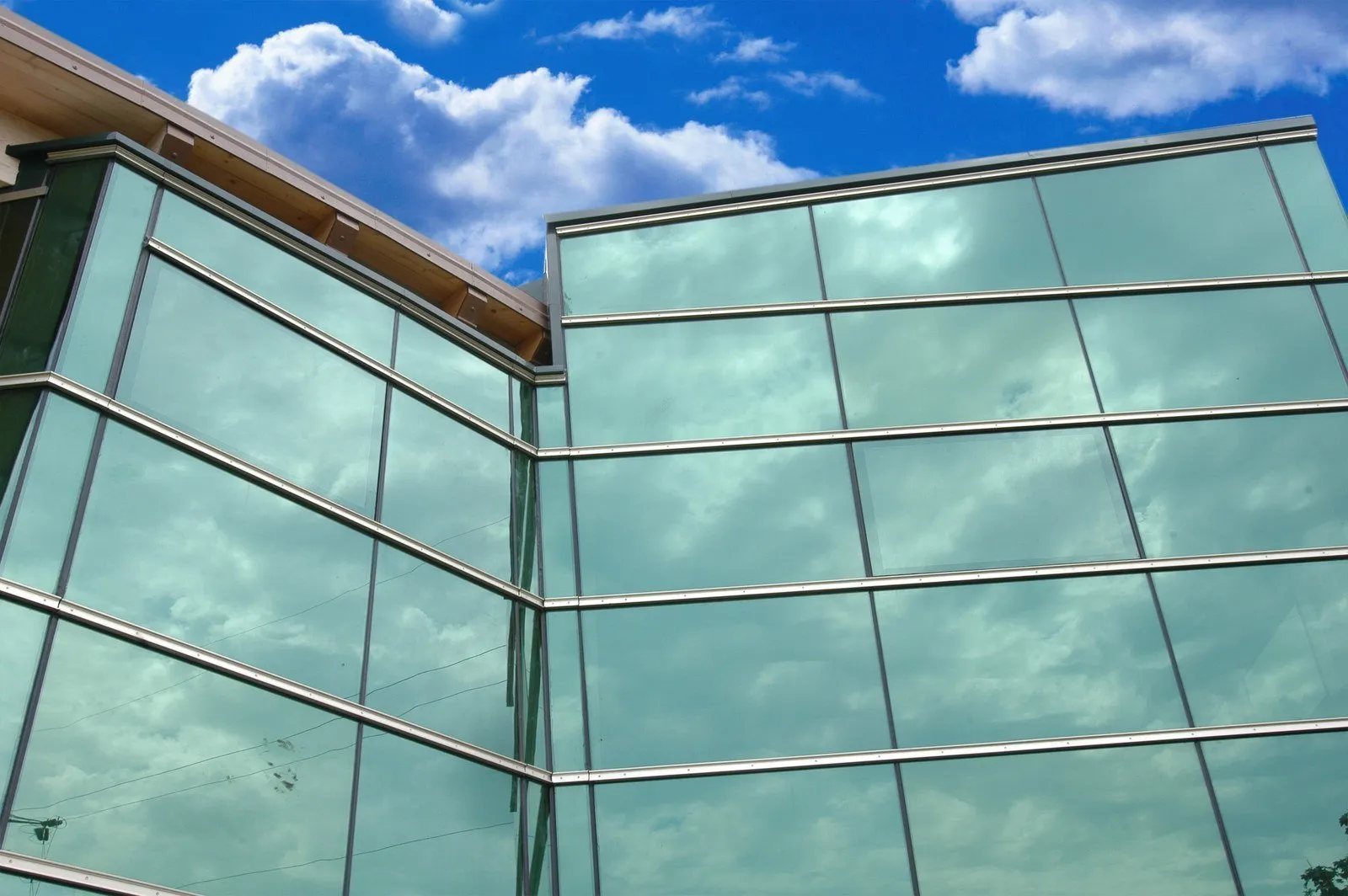
Stick-system mullions and transoms sized for 24–28 mm insulated glass units, with pressure-equalised drainage and thermal-break options.
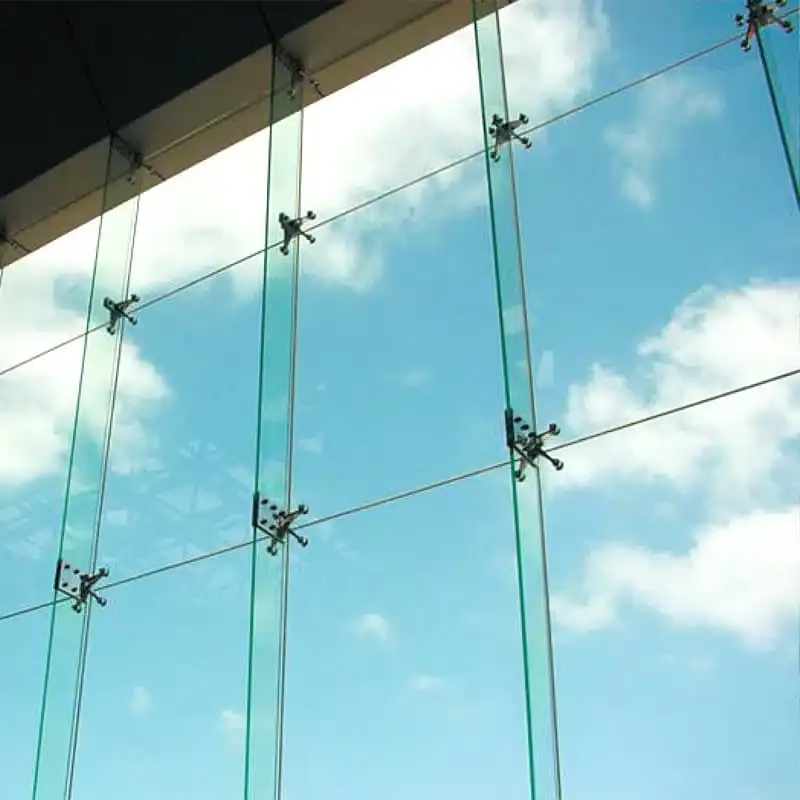
Point-fixed glazing supports for lobbies, atria and showroom frontages where the aim is maximum transparency with minimum framing.
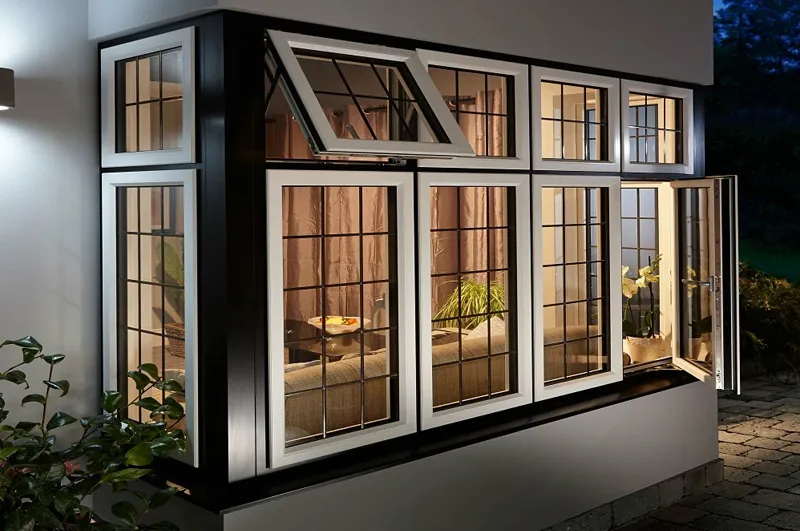
Side-hung sashes with continuous EPDM gasketing and multi-point hardware preparation for tight air and water performance.
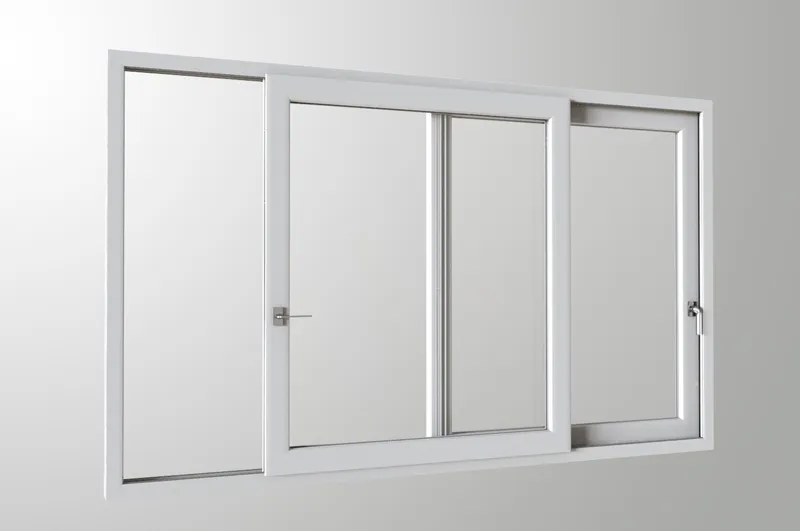
Two-, three- and four-track frames with stainless rollers and drainage slots — the workhorse system for residential towers.
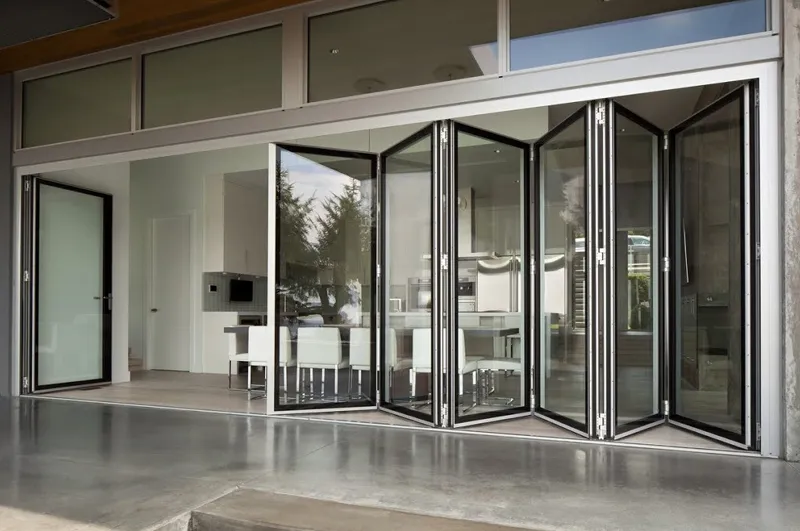
Folding leaf sets that stack to one or both jambs, running on load-rated top-hung or bottom-rolling gear for wide openings.
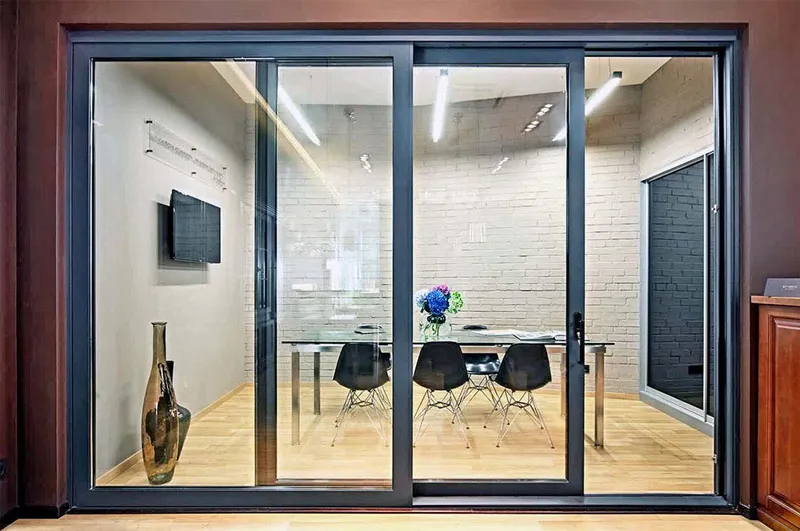
Heavy-duty sliding leaves with fixed side lights, detailed for large glass weights and flush-track thresholds.
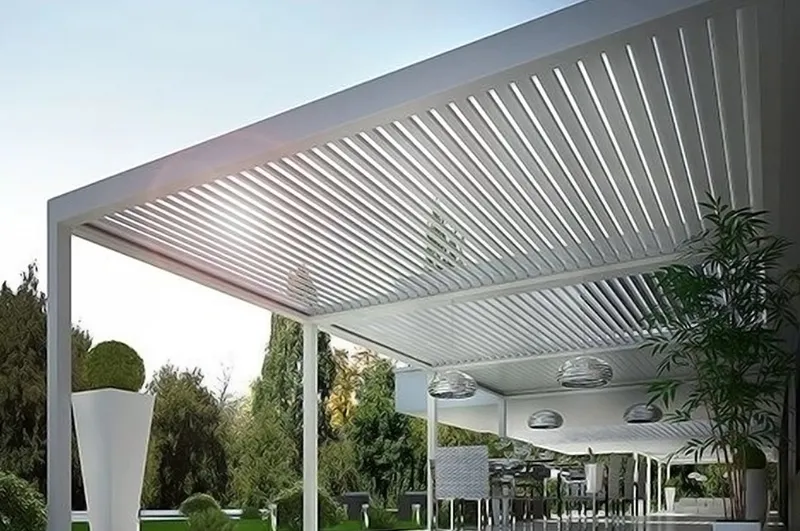
Fixed and adjustable blade profiles for plant screening, solar control and facade rhythm, with concealed carrier framing.
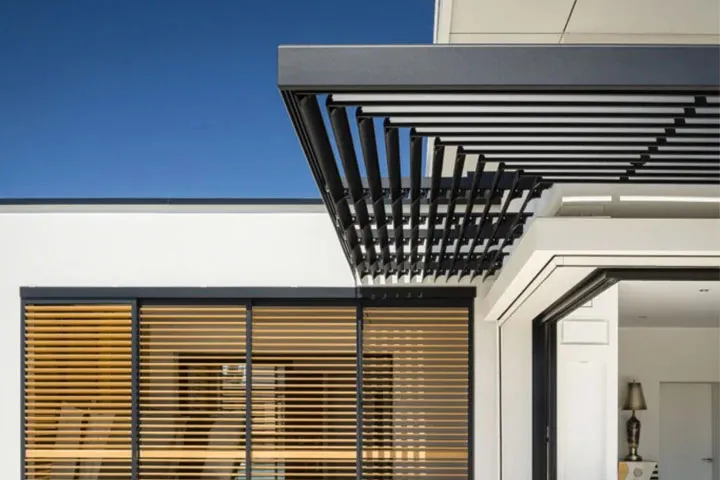
Horizontal and vertical fin systems that cut direct gain on east and west elevations while keeping daylight levels high.
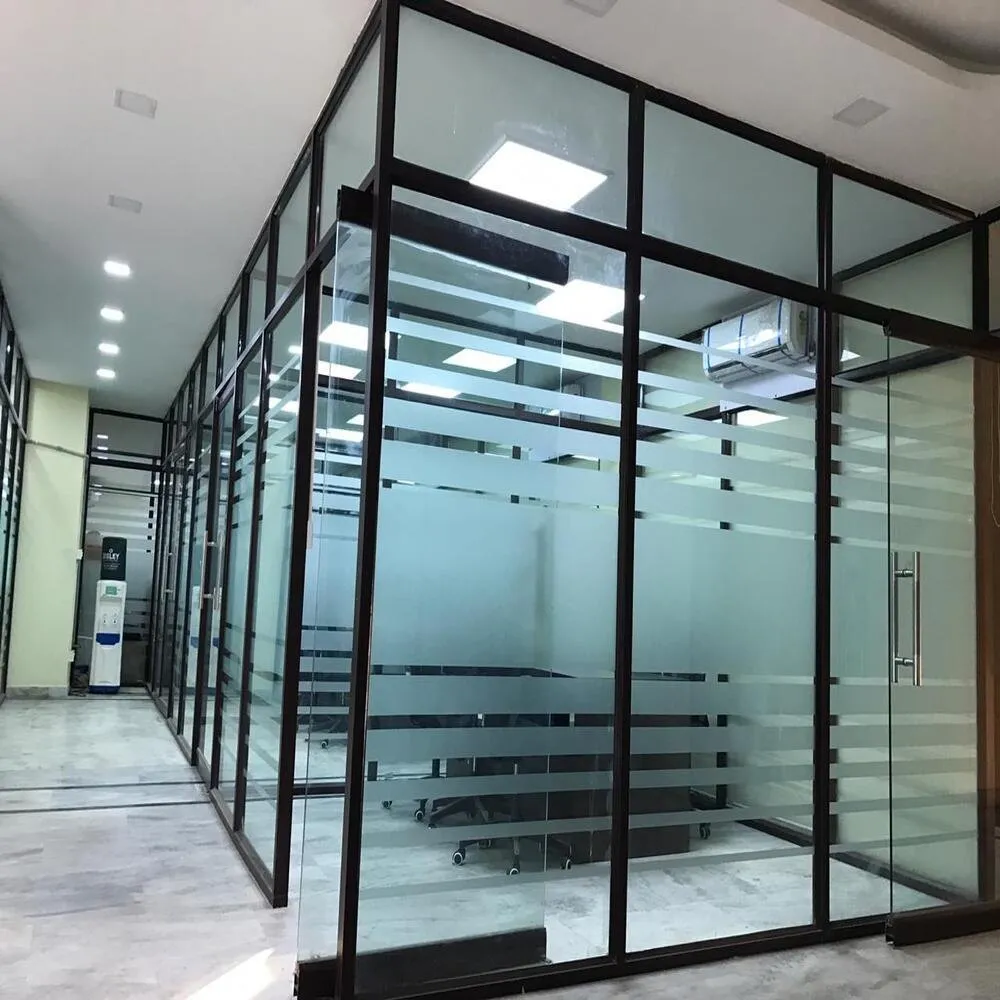
Single and double-glazed partition frames with door integration, cable routing and acoustic gasket options for workplace fit-outs.
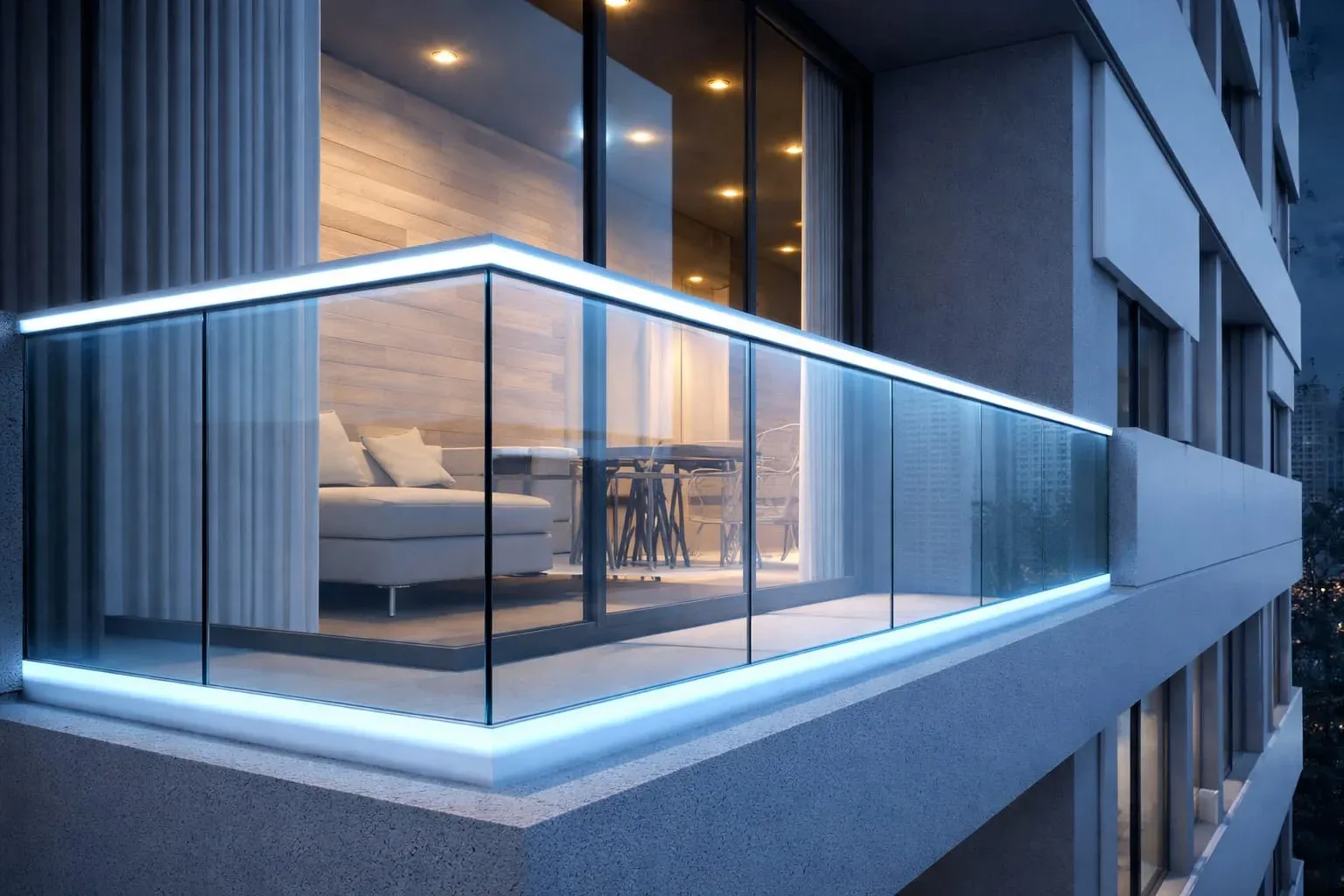
Base-shoe and post-and-rail balustrades with glass or blade infill, finished to match adjacent window and door frames.
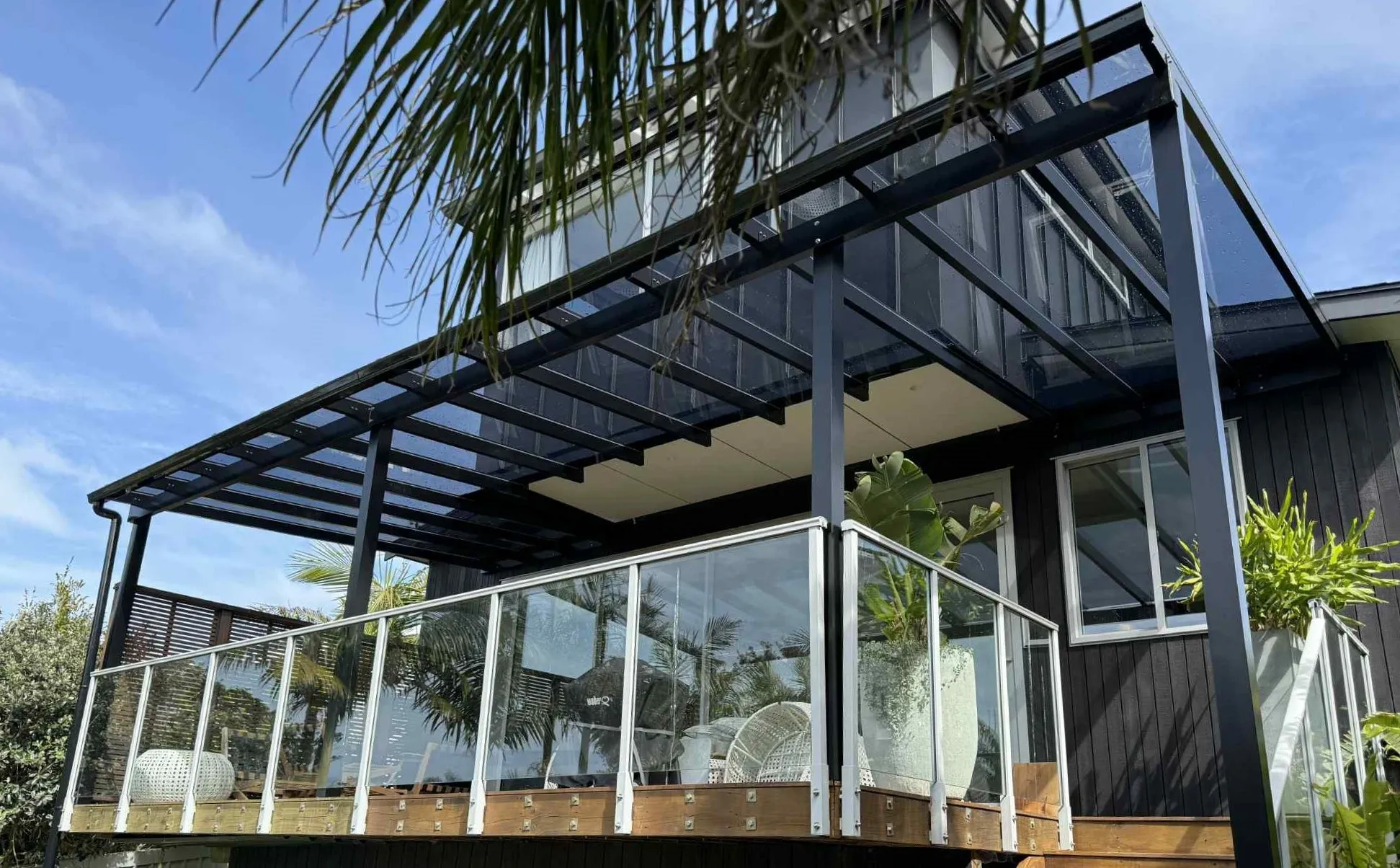
Beam, rafter and louvered-roof pergolas with integrated gutters — corrosion-free alternative to timber and steel canopies.
Finishing is where an aluminium facade earns or loses its service life. We pre-treat, coat and cure in-house, which means film thickness, adhesion and colour batching are recorded against the same job number as the extrusion itself.
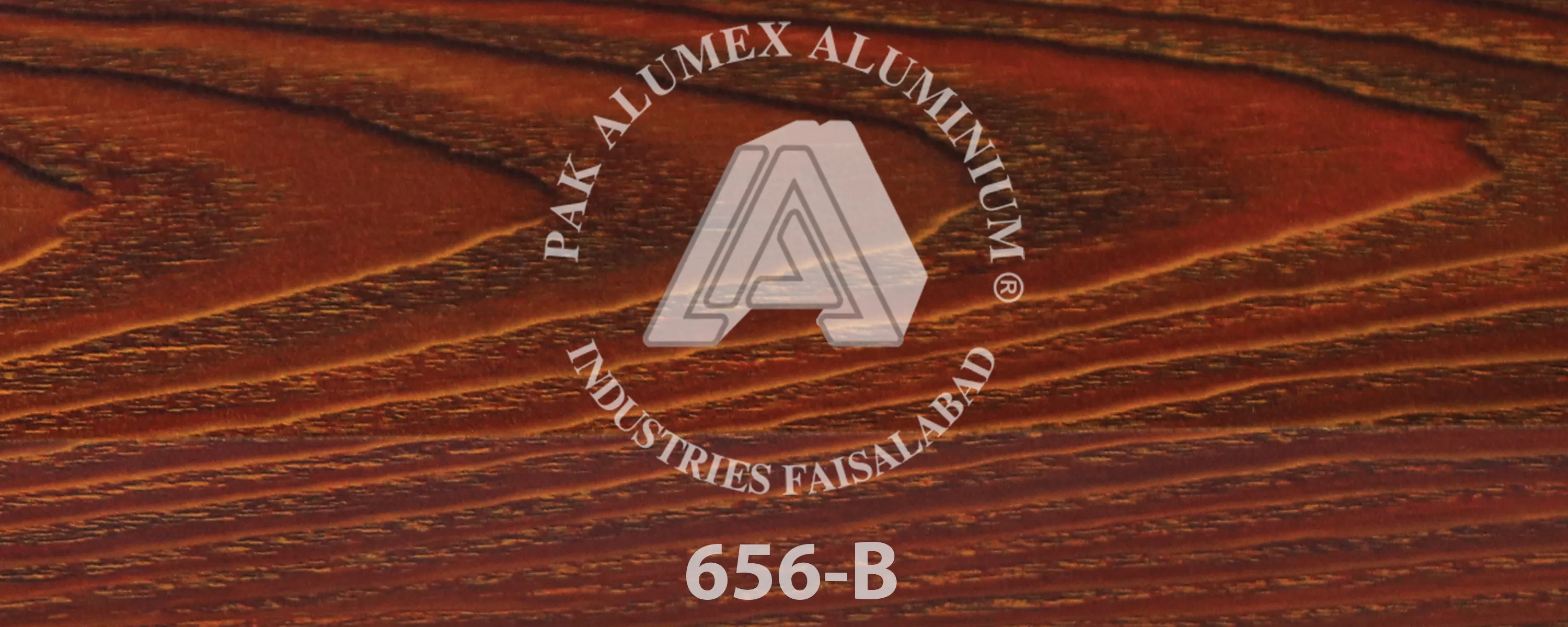
Sublimation transfer over a powder base layer reproduces oak, walnut and teak grain on aluminium — the warmth of timber with none of the warping, rot or annual re-coating.
Explore wood texture →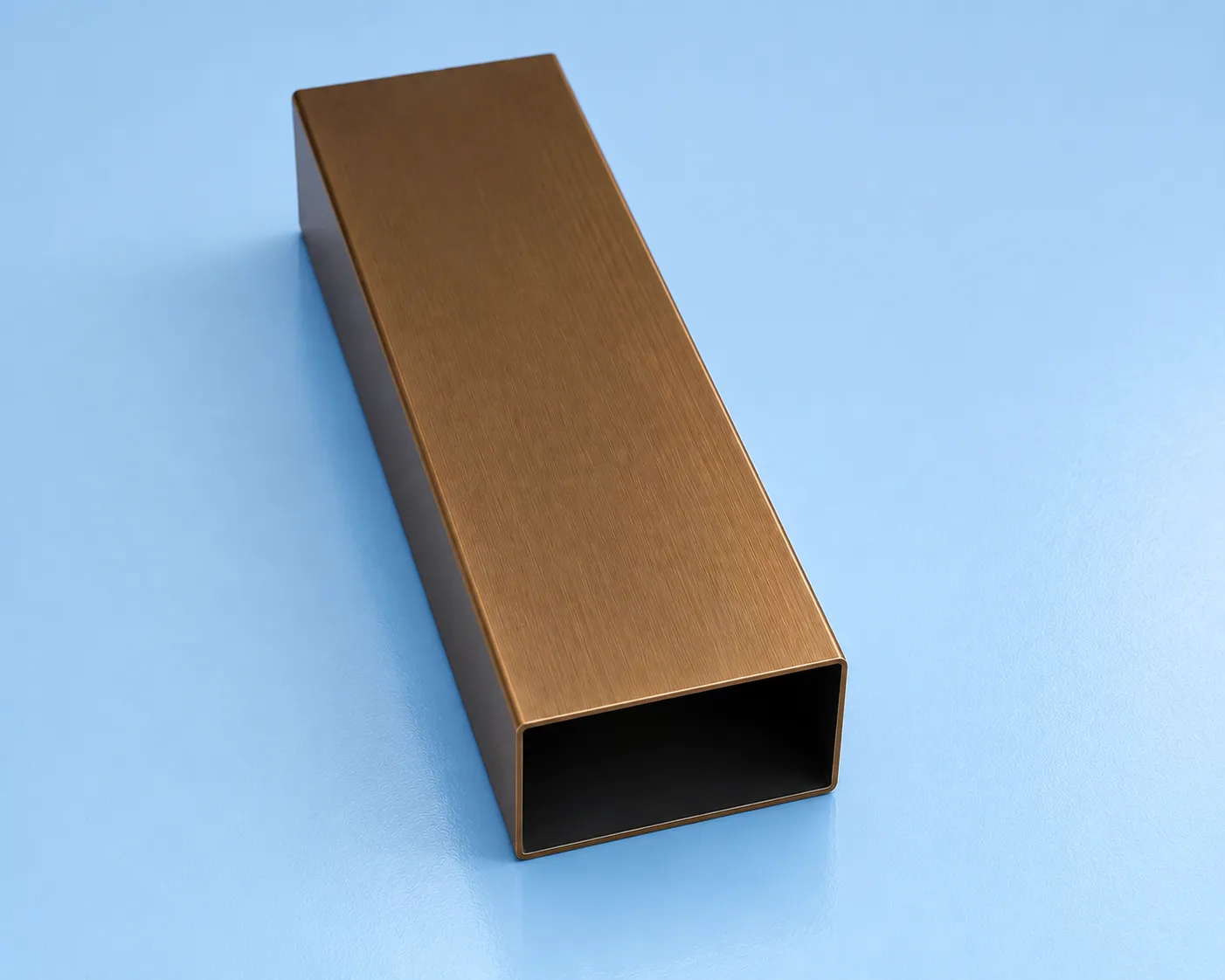
An electro-chemical oxide layer grown into the metal — not sprayed onto it. Specified from 10 µm for interiors up to 20–25 µm for exposed facades in natural silver, champagne, bronze and black.
Explore anodizing →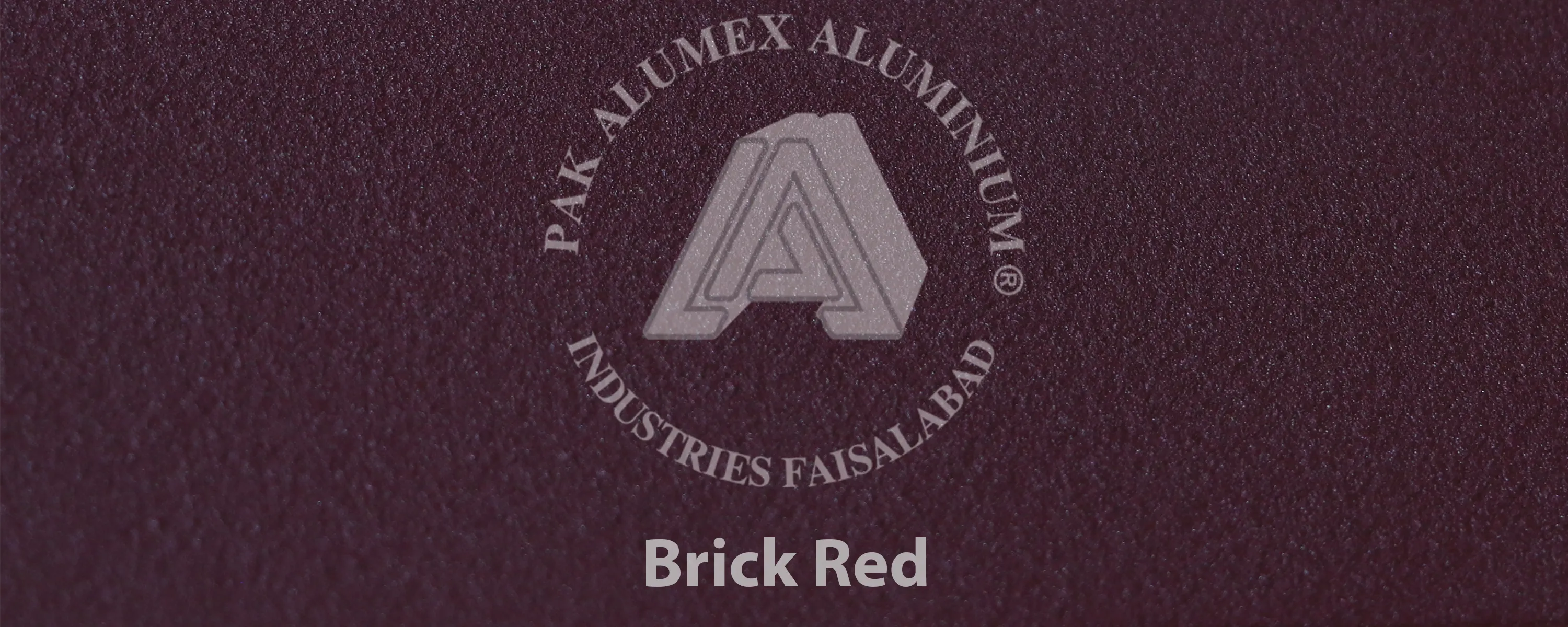
Electrostatically applied polyester powders cured at 180–200 °C to a 60–80 µm film, giving RAL colour freedom plus gloss, matt and textured surface choices.
Explore powder coating →| Criteria | Anodizing | Powder Coating | Wood Texture |
|---|---|---|---|
| Typical film build | 10–25 µm oxide | 60–80 µm polyester | Powder base + transfer layer |
| Colour range | Metallic tones: silver, champagne, bronze, black | Full RAL palette, gloss / matt / texture | Oak, walnut, teak and custom grains |
| Best suited to | Coastal and high-UV exteriors, metallic architecture | Colour-led facades, windows, doors, louvers | Cladding, soffits, pergolas, feature screens |
| Scratch behaviour | Integral layer — marks are less visible | Surface film — touch-up paint available | Surface film — patterned, hides light wear |
| Maintenance | Plain water wash; no re-coating cycle | Mild detergent wash, 6–12 month cycle | Mild detergent wash; no sanding or varnish |
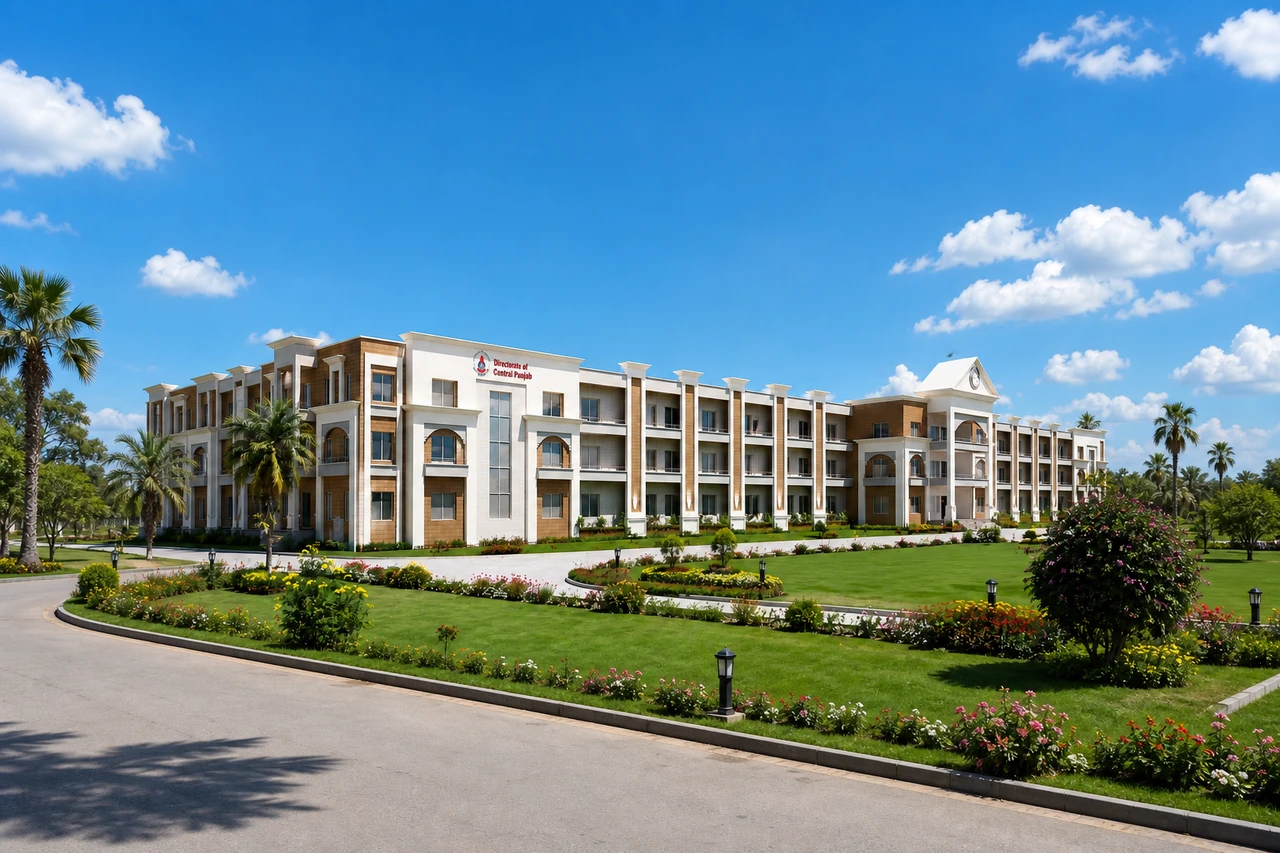
Every system we publish has been through a live site — coordinated with contractors, glazed, sealed and handed over. These four case studies show how the same profile families adapt to towers, government buildings, hospitality and retail plazas.
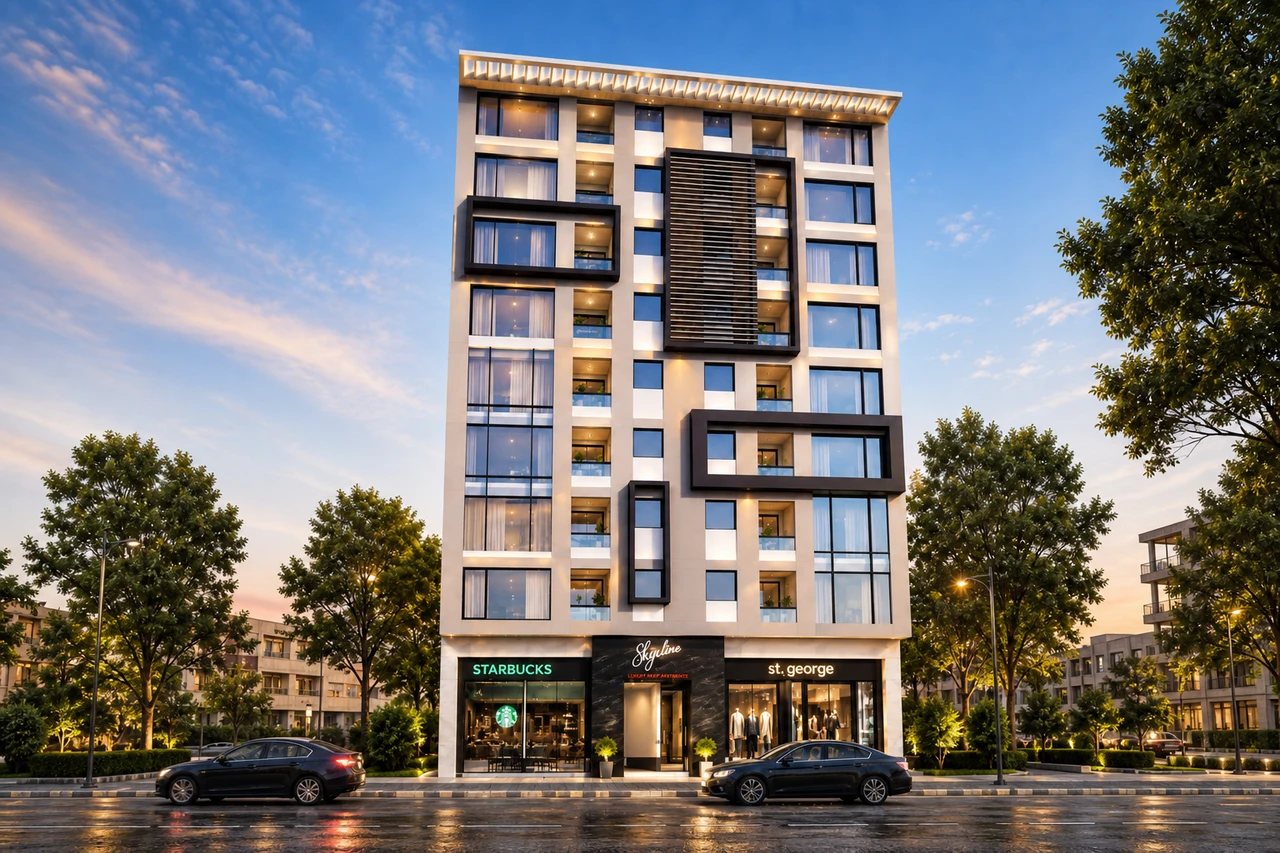
Architectural extrusion and powder coating supplied for a mega mixed-use tower, routed through our authorized distributor in Karachi.
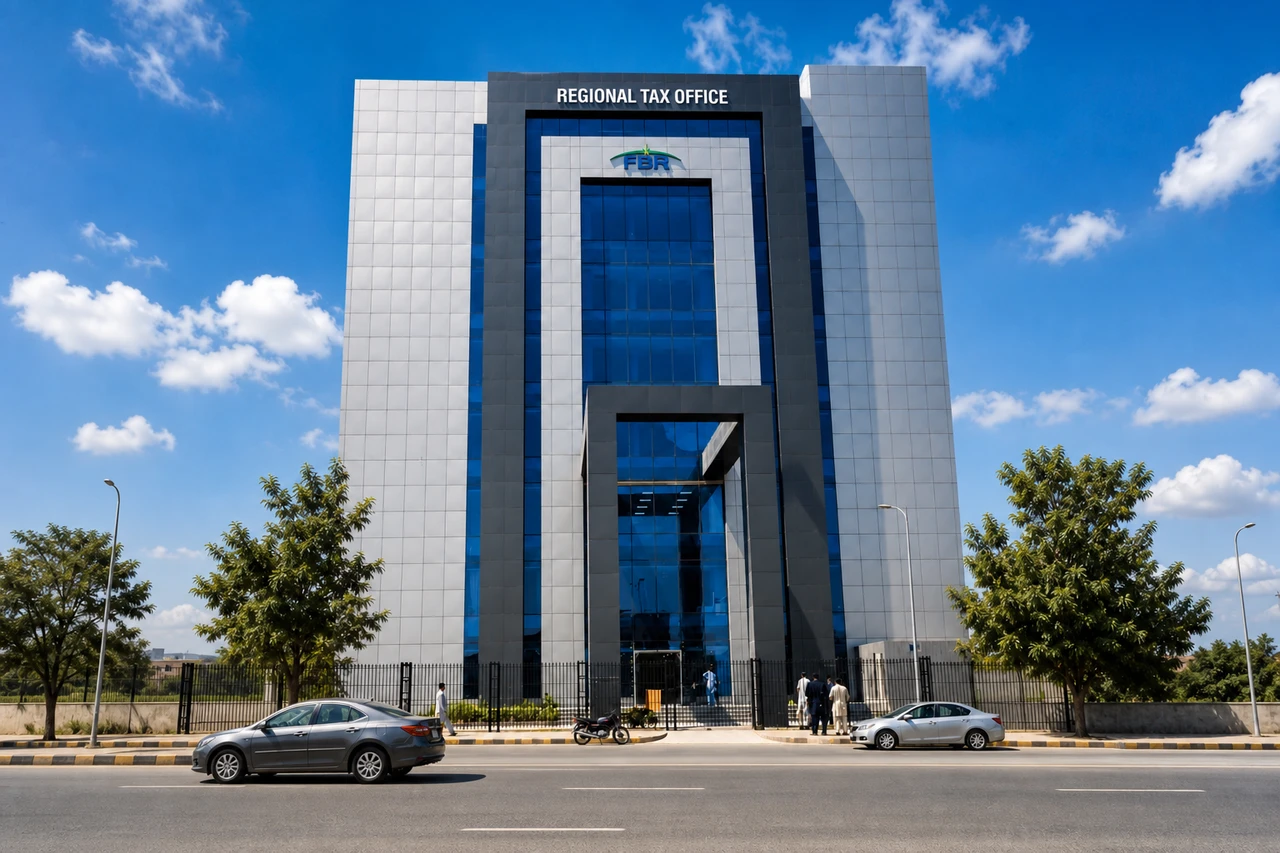
Commercial facade package delivered with fabricator coordination from Peshawar — profiles, finish and sealing detail approved before roll-out.
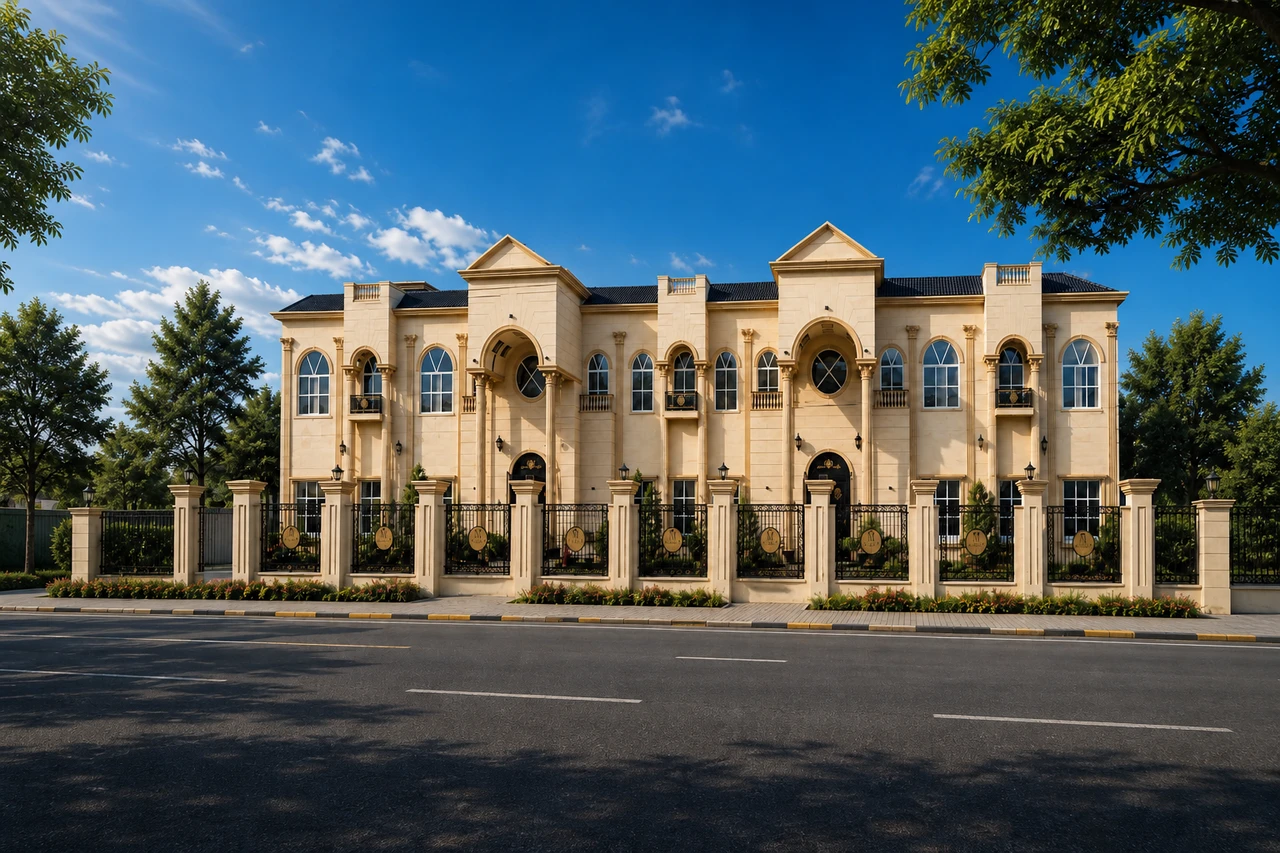
Classical arched openings and ornate facade detailing executed in powder-coated aluminium without losing the profile's structural depth.
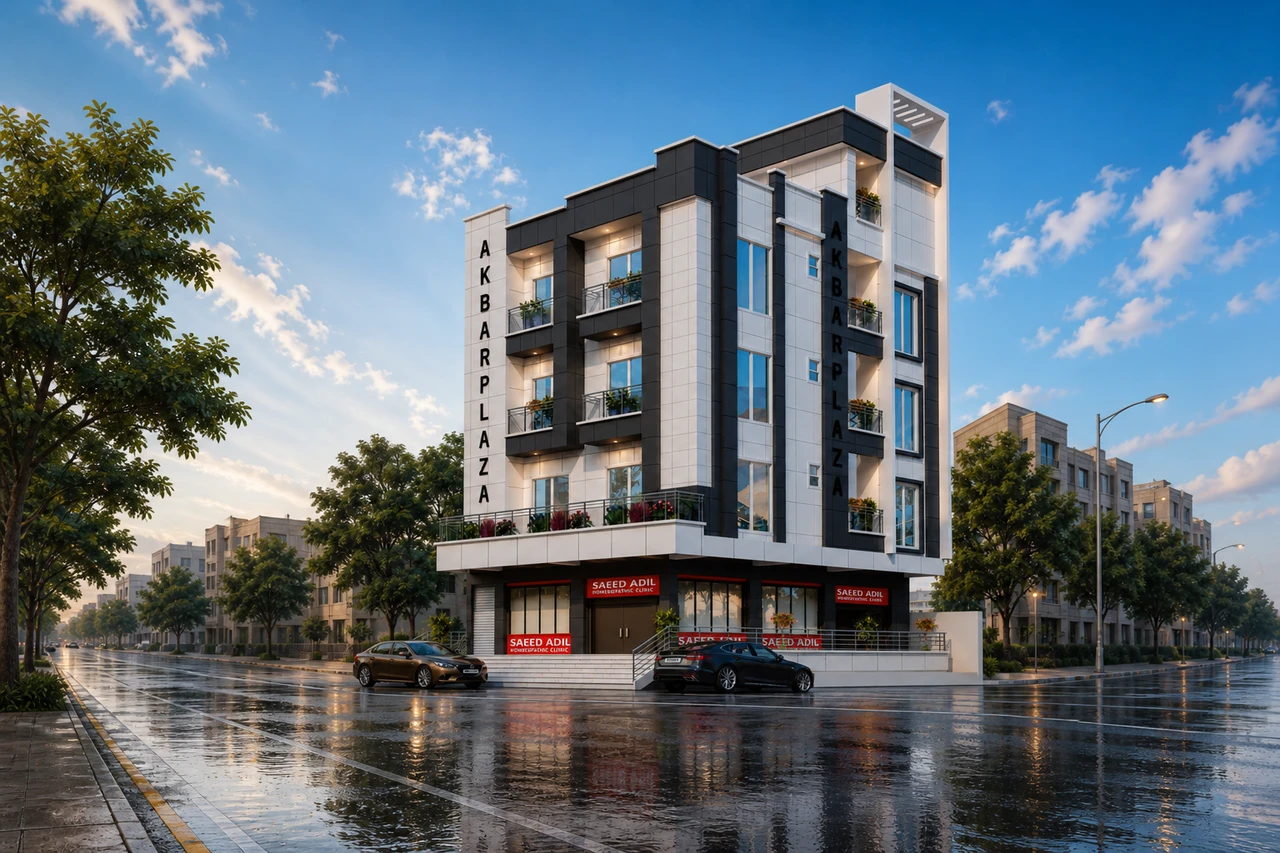
Retail-and-office plaza combining glazed shopfronts at grade with repeated window modules above, all colour-matched in one batch.
Aluminium failures on site are rarely about metal quality — they come from wall thickness shortcuts, unverified film build and hardware that never matched the section. Our process is built to remove those three risks.
Every enquiry is checked for wall thickness, extrusion ratio, tolerance class and press capability before a die is cut — so the profile you approve is the profile that can actually be produced repeatably.
Pre-treatment baths, oven curve, dry film thickness and adhesion are logged per batch. Anodized and coated lots are held until the readings sit inside the specified window.
Frames ship with the matching sashes, gaskets, beads, corner cleats and hardware preparation, so fabricators assemble to a tested geometry instead of improvising joints.
A dealer and fabricator network across 44+ cities means replacement lengths, accessories and colour-matched top-ups are reachable long after handover.
6063-T5 for standard frames; 6063-T6 where higher yield strength is needed for mullions and long spans.
Polyamide strips crimped between shells to cut conductive transfer and lift condensation resistance.
A predictable sequence keeps procurement teams, fabricators and site managers working from the same information.
Send elevations, sections or a sample. We confirm system family, profile weights per metre, glass thickness and finish feasibility.
Die trials, colour panels and first-article profile lengths are issued for written sign-off before bulk extrusion starts.
Extrusion, ageing, pre-treatment and coating run against one job number with film-thickness and adhesion records per batch.
Protective film, interleaved bundles, crating and labelling for road freight or export from Karachi with full documentation.
Our finish quality depends on who supplies the powder, the pre-treatment chemistry and the line equipment. These are the brands behind our production floor.





Aluminium is one of the few facade materials that can be melted and re-extruded repeatedly without degrading its mechanical properties. That makes specification decisions today part of tomorrow's material supply.
Process scrap and end-of-life profiles return to billet without losing structural quality, cutting the embodied energy of the next production run.
Polyamide-separated profiles reduce heat flow through the frame, lowering cooling load in hot climates and easing HVAC sizing.
Modern conversion chemistry removes hexavalent chromium from the coating line while still delivering the adhesion architectural finishes need.
High-durability anodized and powder finishes are designed for washing rather than repainting, reducing lifetime maintenance materials.
Straight answers on alloy, film thickness, custom dies, thermal breaks and export handling.
Our architectural range is extruded primarily in 6063 alloy, supplied in T5 and T6 tempers. 6063-T5 covers standard window, door and partition profiles, while T6 is used where higher yield strength is required — curtain wall mullions, louver blades and long-span members. Alloy certificates and profile weight-per-metre schedules are issued with the order.
Architectural powder coating is applied at a typical dry film build of 60–80 microns over chromate-free pre-treatment, in line with Qualicoat-style practice. Anodized finishes start at 10 microns for interior applications and are specified at 20–25 microns for exterior facade exposure, where the thicker oxide carries the UV and pollution load.
Yes. We develop project-specific dies from DWG/DXF sections or a physical sample. Before the die is cut, our engineering team reviews wall thickness, tolerance class, extrusion ratio and press capability, then releases first-article samples for written approval ahead of bulk production. This step is what prevents rework once fabrication starts.
Yes. Thermally broken systems use polyamide strips mechanically crimped between inner and outer aluminium shells. The break reduces conductive heat transfer through the frame and improves condensation resistance, which matters most on double-glazed windows, doors and curtain walls in extreme summer or winter climates.
Overseas purchasers receive profile drawings, weight-per-metre schedules, finish sample panels and packing specifications before shipment. Orders are bundled with interleaved protective film, strapped in wooden crates or bundles, and documented for export from Karachi port with complete commercial and quality paperwork. Technical queries during fabrication are answered by the same team that reviewed the drawings.
For saline, coastal and high-humidity environments we generally recommend anodizing at 20–25 microns, because the oxide layer is grown into the metal and resists undercutting at scratches better than a surface film. Where a specific RAL colour is non-negotiable, a high-durability powder system with fully controlled pre-treatment plus a disciplined washing schedule is the practical alternative.
Extrusion, anodizing, powder coating and wood-texture finishing on one site. Plant visits and technical audits are welcome by appointment, Saturday to Thursday.
Share sections, glass thickness and finish intent. Our engineering team responds with system options, profile weights and finish recommendations.