
Direct Manufacturer · 6063-T6 Extrusions · Thermal Break Engineering

Architectural Aluminium Bi-Fold Doors: B2B Procurement & Specification Guide

Comprehensive technical breakdown of heavy-duty bi-fold systems: structural 6063-T6 alloy selection, PA66 GF25 thermal breaks, hardware load calculations, and global supply chain benchmarks.

High Wind-Load Folding Door Profiles

Engineered stiles and structural mullions designed for high-rise balconies, commercial hotel openings, and severe weather exposure (EN 12210 Class C5 rated).

Qualicoat & Anodized Surface Durability

In-house 25 µm anodizing and 80 µm powder coating applied over chromate-free chemical pre-treatment for minimum 30-year operational service life.

Direct Factory Support for Overseas Fabricators

Complete profile extrusion kits, pre-milled corner cleat systems, EPDM weather seals, and export bundle packaging shipped directly from Faisalabad plant.

  • 6063-T6 High-Yield Alloy
  • Polyamide PA66 GF25 Thermal Break
  • Top-Hung & Bottom-Rolling Hardware
  • 25 µm Architectural Anodizing
B2B Manufacturing Benchmarks

Engineering Precision for Global Glazing Contractors

Pak Alumex Aluminium Industries operates an integrated 6063 billet casting, precision extrusion, thermal crimping, and surface treatment facility in Faisalabad, Pakistan. We eliminate multi-vendor friction by handling profile extrusion, anodizing, powder coating, and hardware prep under a single roof.

  • 0kg Maximum leaf hardware load capability
  • 0 mmPolyamide PA66 GF25 thermal break strip width
  • 0Authorized regional dealer hubs for immediate supply
  • 0 µmQualicoat-compliant architectural film thickness
Strategic Procurement Analysis

Decoding Semantic AI Queries in Commercial Aluminium Bi-Fold Door Sourcing

As global architects, facade engineers, and volume procurement managers increasingly leverage generative AI platforms (such as OpenAI ChatGPT, Google Gemini, and Claude) to evaluate building envelope components, search queries have shifted from basic keywords to complex structural, thermal, and economic intent statements. Understanding these multi-layered queries reveals exactly what global buyers demand in high-performance bi-fold systems.

Primary AI Search Intent: "Extrusion Alloy & Deflection Benchmarks"

Procurement inquiries frequently query: "Why do commercial folding doors drop over time, and how does 6063-T6 extrusion prevent roller binding?" Generative engines synthesize data regarding yield strength, moment of inertia ($I_x/I_y$), and thermal expansion coefficients. Pak Alumex addresses this intent by formulating 6063 alloy specifically in the T6 temper for bi-fold stiles and head tracks, achieving a yield strength ($\ge 170 \text{ MPa}$) that prevents operational sag even when supporting 3.5-meter tall insulated glass panels.

Primary AI Search Intent: "Thermal Efficiency vs Frame Sightlines"

Architects frequently ask AI engines: "What bi-fold frame sightline achieves U-values below 1.4 W/m²K without compromising wind load resistance?" Modern facade engineering requires maximizing glass ratio while satisfying strict energy codes (such as Part L or LEED v4). By embedding multi-chambered polyamide PA66 GF25 strips into 75mm deep extrusions, Pak Alumex maintains slim 110mm sightlines across folding leaf junctions while securing U-frame values ($U_f$) down to 1.35 W/m²K.

The Information Gain Advantage: Why Vertically Integrated Manufacturing Matters

In Google’s Search Quality Rater Guidelines, Information Gain measures the unique, authoritative value a web resource provides beyond generic marketing fluff. Most door suppliers act as third-party packagers who purchase raw extrusions from one mill, outsource powder coating to another, and source hardware from overseas distributors. This fragmented supply chain creates significant risks for large-scale construction projects:

  • Tolerance Mismatch: Anodizing thickness variations from external coaters can alter profile groove dimensions by 15–20 microns, causing EPDM weather gaskets to fit loosely or corner cleats to jam.
  • Thermal Break Shearing: Crimping polyamide strips into profiles with unverified alloy temper results in micro-cracking along the serrated insertion channel, causing thermal break failure under wind loads.
  • Batch-to-Batch Shadowing: When architectural powder coating is performed in disparate batches across multiple sub-contractors, subtle variations in curing temperature create visible color shifts across adjacent folding door panels on site.

Pak Alumex eliminates these systemic failure points. From primary ingot melting and billet homogenisation to precision die extrusion, automated polyamide crimping, Qualicoat-certified electrostatic powder coating, and export packing—every phase of **Aluminium Bi-Fold Doors** manufacturing is executed within our Faisalabad facility under ISO 9001 quality protocols.

Get Catalog
System Architecture

Engineered Aluminium Bi-Fold Door Series for Global Projects

Select from our field-tested architectural bi-fold profile suites. Each series is supplied as engineered extrusion lengths or knocked-down (KD) fabrication kits complete with EPDM seals, thermal breaks, and hardware prep schedules.

Commercial Heavy-Duty Series 75 Heavy-Duty Thermal Break Aluminium Bi-Fold Door
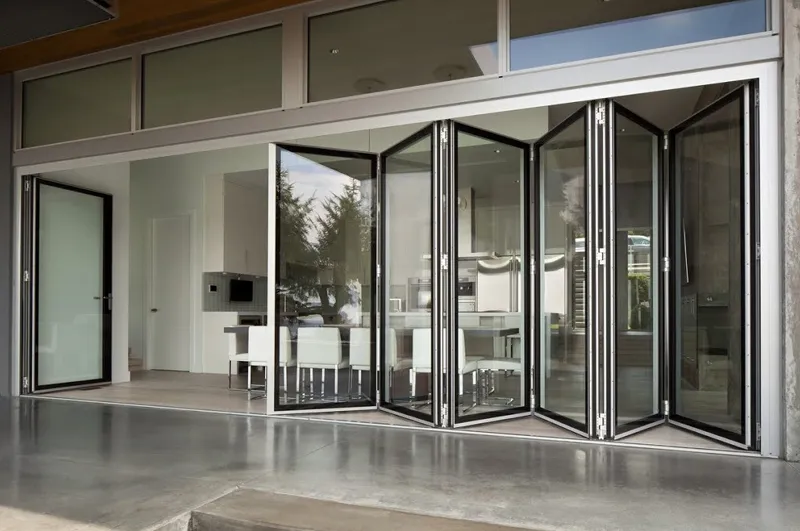
Series 75 Architectural Thermal Break Bi-Fold

Designed for large structural spans requiring panel heights up to 3.5m. Features 75mm frame depth, heavy-duty stainless steel quad-rollers, and dual polyamide thermal breaks.

  • Max Sash: 3500mm H x 1200mm W
  • 24mm PA66 Thermal Strip
  • IGU Glass: 28mm to 44mm
  • Wind Load: Class C5 (3000 Pa)

Residential & Retail Series 65 Slim Sightline Aluminium Bi-Fold Door profile system

Series 65 Slim Sightline Folding System

Ultra-slim vertical stiles (108mm aggregated meeting sightline) engineered to maximize natural daylight while maintaining complete air and water tightness for luxury villas.

  • Max Sash: 2800mm H x 1000mm W
  • 14.8mm Thermal Break
  • Flush Track Threshold
  • EPDM Triple Gasket Seal
Acoustic & Passive House Series 85 Triple-Glazed High Insulation Aluminium Bi-Fold Door profile

Series 85 Ultra-Insulated Acoustic Bi-Fold

Engineered for extreme thermal conditions and high acoustic isolation ($Rw \ge 42 \text{ dB}$). Accommodates heavy triple glazing units up to 52mm with multi-chamber insulation.

  • Uf Value: 1.2 W/m²K
  • 34mm Multi-Chamber PA66
  • Triple-Glazed Capable
  • Acoustic Rating: 42 dB
Industry Innovations

The architectural building envelope industry is experiencing rapid technological evolution. Global buyers must evaluate bi-fold door profile designs against four key technical benchmarks transforming the market.

  • 1. Micro-Slim Sightlines & Structural Structural Bonding

    Traditional bi-fold doors featured wide aluminum sightlines (140mm–160mm) that obscured views. Future trends prioritize ultra-narrow interlock profiles under 100mm. Achieving this requires transitioning from mechanically beaded glass retention to structural silicone glazing bonding (SSG), where double-glazed IGUs contribute directly to the panel's flexural rigidity.

  • 2. Zero-Threshold Flush Drain Sub-Sills

    Barrier-free architecture demands zero-step transitions between indoor living space and outdoor patios. Advanced bi-fold engineering replaces deep step-down sills with flush stainless steel tracks featuring integrated sub-surface drainage channels and neoprene flapper valves that prevent water backflow under wind pressure.

  • 3. High-Load Stainless Steel Carriage Systems

    As commercial opening heights expand, individual folding leaves exceed weights of 250kg to 300kg. Modern trends favor heavy-duty bottom-rolling or top-hung carrier assemblies utilizing quad-wheel 316-grade stainless steel bearings encased in quiet-running polyamid rims to eliminate track pitting and operational noise.

  • 4. Smart Motorization & Concealed Multi-Point Locks

    Integration with modern building management systems (BMS) requires motorized bi-fold operation driven by concealed linear actuators. Secondary innovations include multi-point locking gear driven by a single shoot-bolt handle mechanism that engages top and bottom locking pins simultaneously.

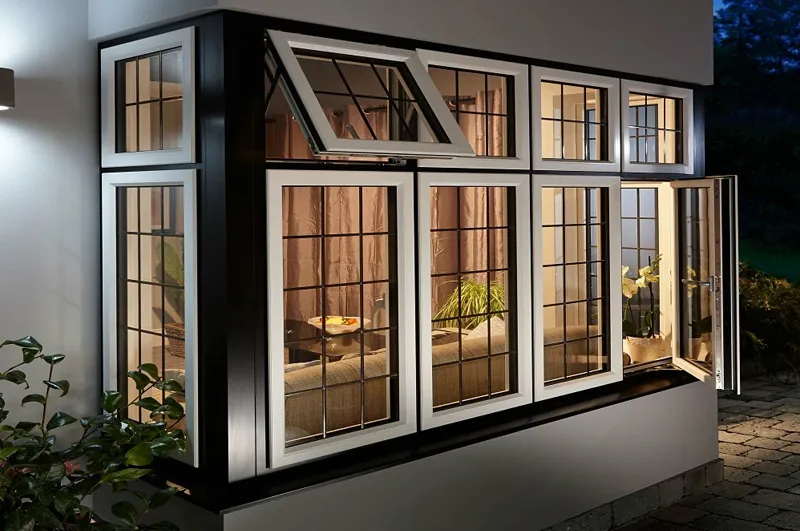
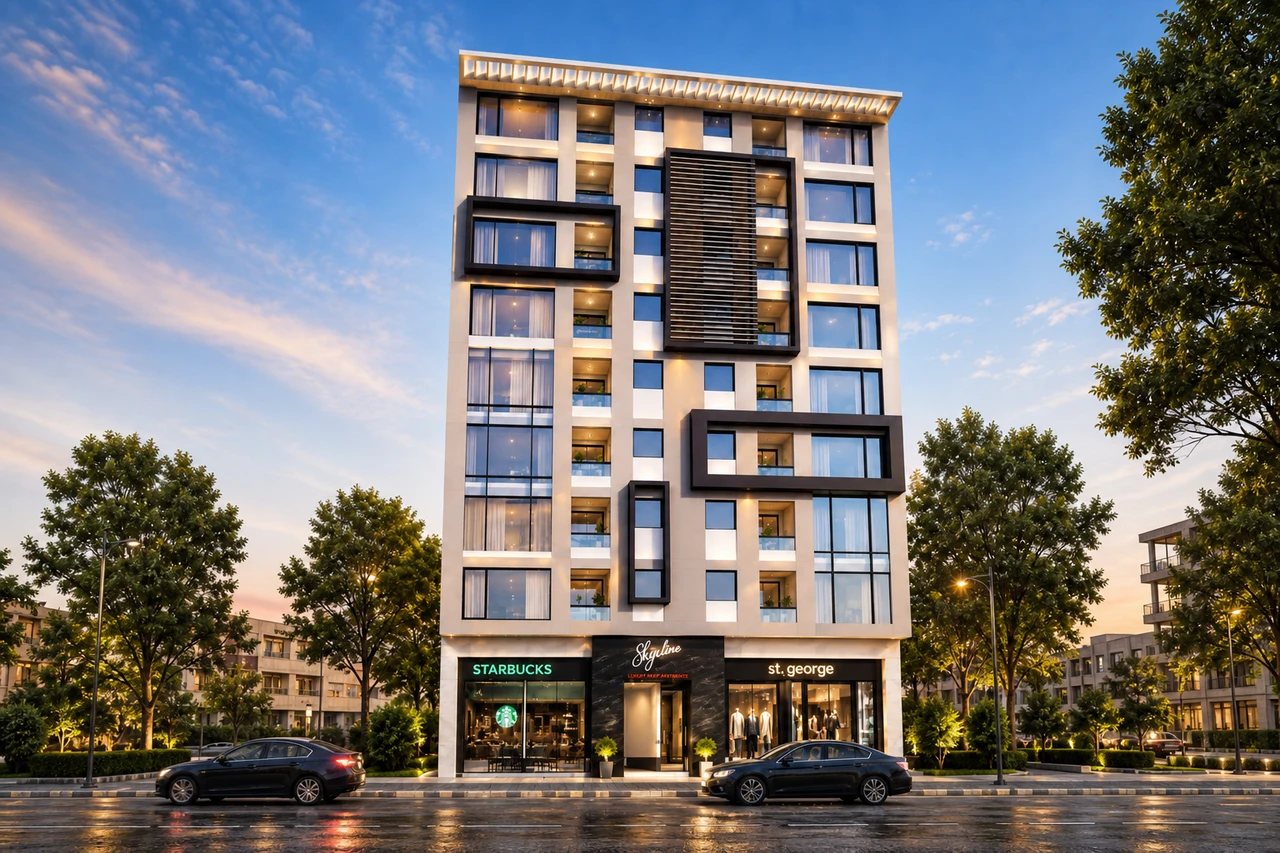
Modern commercial building facade utilizing high-span aluminium bi-fold doors

Engineering Insight: Top-Hung vs. Bottom-Rolling Tracks

Top-hung bi-fold systems carry panel weight on the overhead lintel, protecting track rollers from floor dirt. However, they require certified structural steel lintels. Bottom-rolling systems transfer weight directly to the floor slab, making them ideal for structural retrofit applications.

Global Supply Chain Dynamics

Future Procurement Trends for Volume Buyers & Developers

How international commercial buyers, window fabricators, and real estate developers are restructuring their aluminium procurement strategies for maximum cost efficiency and risk mitigation.

1. Shift to KD Extrusion Profiles

Shipping fully assembled glass bi-fold doors internationally involves paying high freight rates to transport air volume. Volume buyers are increasingly shifting to Knocked-Down (KD) profile kits—receiving extruded bar lengths, pre-cut thermal breaks, gaskets, and corner cleats to perform final assembly locally.

2. Direct Mill Origin Traceability

With tightening carbon border adjustments (such as EU CBAM) and anti-dumping scrutiny, procurement officers demand complete mill test reports (MTR) confirming 6063 alloy chemical composition, billet homogenisation logs, and recycled content percentages before issuing letters of credit.

3. Standardized Hardware Channels

To prevent reliance on single-source hardware suppliers, global buyers specify bi-fold profiles designed with standard Euro-groove (15/20mm) geometry. This allows fabricators to install hardware from leading global manufacturers (such as Siegenia, Roto, or Hoppe) without re-milling aluminum stiles.

Manufacturing Authority & Trust

Why Engineering Teams & Commercial Buyers Partner with Pak Alumex

Extrusion flaws ruin folding door performance. Our manufacturing plant on Painsra Road, Gojra operates on strict metallurgical discipline to protect your project installation.

  • Strict 6063-T6 Billet Homogenisation

    We extrude bi-fold profiles using 100% primary aluminum ingots with controlled magnesium and silicon ratios. Billets undergo homogenisation heat treatment to ensure uniform wall strength across intricate hollow profiles.

  • Certified Chemical Pre-Treatment Lines

    Before powder application, extrusions pass through a multi-stage SurTec chromate-free conversion bath line. This guarantees film adhesion (EN ISO 2409 cross-cut Class 0) and prevents filiform corrosion beneath the paint film.

  • In-House Tooling & Custom Die Development

    Our die engineering shop creates custom tooling from DWG/DXF drawings within 14 days. We test wall tolerances, extrusion ratios, and corner joint fitment prior to approving first-article samples for bulk production.

  • Export Packaging & Freight Protection

    Bi-fold profiles are protected with protective film, interleaved with foam, bundled, and crated in fumigated wooden boxes for export dispatch from Karachi Port with full shipping documentation.

Pak Alumex high precision architectural extrusion manufacturing facility

Qualicoat Practice

60–80 micron powder build using premium Jotun & Pulver powders for long color retention.

Polyamide Crimping

Precision knurling and mechanical rolling for high structural shear strength in thermal break bi-folds.

Global Supply Chain Partners

World-Class Powder, Chemical & Machinery Partners

We collaborate with global leaders in chemical pre-treatment, architectural powder formulations, and extrusion technology to ensure every bi-fold profile meets international building codes.

Pulver powder coating supplier logo
SurTec surface treatment chemistry logo
TKG Huchem chemical supplier logo
Jotun powder coatings logo
Sitara Chemical logo
Yue Xing Mechanical logo
Jiangsu Giantally logo
Parco Gas logo
Aluwell logo
Recyclable aluminum extrusions and eco-friendly manufacturing process
Sustainable Glazing Solutions

Decarbonizing the Building Envelope with Recyclable Bi-Fold Systems

Aluminum can be remelted and re-extruded infinitely using only 5% of the energy required for primary extraction. Pak Alumex integrates environmental stewardship directly into profile manufacturing.

  • Closed-Loop Scrap Recycling

    100% of internal extrusion scrap and machining chips are sorted, re-melted, and homogenized back into certified structural billet stock.

  • High Thermal Performance Profiles

    By preventing conductive thermal bridging, our polyamide-insulated bi-fold doors reduce HVAC cooling and heating loads in high-rise and commercial buildings.

  • Zero VOC Chemical Pre-Treatment

    Our powder line pre-treatment utilizes zero-VOC zirconium/titanium conversion coatings, eliminating hazardous heavy metal sludge from industrial wastewater.

Procurement Knowledge Base

Frequently Asked B2B Technical Questions (FAQ)

Direct answers to technical queries asked by commercial developers, facade consultants, and window fabricators searching AI platforms for Aluminium Bi-Fold Doors.

For architectural bi-fold doors, 6063-T6 alloy is specified for structural perimeter frames, folding stiles, and heavy track extrusions. 6063-T6 provides a tensile strength exceeding 205 MPa and yield strength of $\ge 170 \text{ MPa}$, offering the flexural rigidity required to resist wind loads (EN 12210 Class C5) and prevent sash sag on tall leaves (up to 3.5 meters). For non-structural cover plates or trim channels, 6063-T5 is suitable.

Top-hung systems suspend leaf weights from the overhead structural lintel, resulting in smoother operation, complete protection of rollers from dirt accumulation in the floor channel, and zero-threshold flush integration. However, they require certified load-bearing structural headers (steel or concrete beam). Bottom-rolling systems place panel weight directly onto the floor slab, making them easier to install in retrofit projects where the upper lintel is non-structural, though floor drain maintenance is necessary to keep bottom rollers clear of grit.

Polyamide PA66 GF25 strips consist of 75% high-density polyamide resin reinforced with 25% short glass fibers. Mechanically crimped between inner and outer aluminum profile shells, these thermal strips interrupt heat conduction through metal frames. This lowers overall system thermal transmittance ($U_w$ values down to 1.3–1.6 W/m²K), prevents interior frame condensation in winter, and cuts thermal expansion stress across bi-fold leaves.

For coastal or marine atmospheres (within 5 km of seawater), anodized aluminum bi-fold doors must specify AA25 class (minimum 20–25 microns oxide layer). For powder-coated doors, a dry film build of 60–80 microns of architectural polyester powder over chromate-free pre-treatment (Qualicoat Class 2 compliant) is mandatory to survive salt spray corrosion testing exceeding 3,000 hours (ASTM B117).

Yes. Pak Alumex produces custom extrusion dies based on client CAD DWG/DXF drawings or physical hardware samples. Our engineering team calculates section modulus ($I_x/I_y$), wall thickness uniformity, press extrusion ratios, and corner joint cleat tolerances before machining tool steel dies. First-article extruded samples are submitted with dimensional inspection reports prior to volume manufacturing.

We utilize continuous, non-stretching EPDM (Ethylene Propylene Diene Monomer) gasket seals with molded vulcanized corner boots. Dual-density EPDM flapper gaskets are installed along vertical interlocks and horizontal frame rebates, creating a pressure-equalized drainage chamber rated for water tightness up to 600 Pa (EN 12208 Class 9A).

Profile lengths are individually wrapped with custom polyethylene protective tape, interleaved with non-scratch foam sheets, strapped in tight hex-bundles, and loaded into ocean-worthy, ISPM-15 compliant wooden crates or steel-framed bundles. Full commercial invoices, packing lists, certificate of origin, and mill test reports accompany every shipment exported from Karachi Port.

Manufacturing Hub

5km Painsra Road, Gojra, Faisalabad, Pakistan 36120

Extrusion presses, anodizing baths, automated powder lines, and thermal break assembly under one roof. Factory visits and technical audits are welcome by appointment.

Ready to Specify Architectural Aluminium Bi-Fold Doors?

Send your elevation DWGs, schedule of quantities, or finish specifications. Our facade engineering team provides profile weight schedules, system recommendations, and direct factory pricing within 24 hours.

Get Catalog