0%

Aluminium Railing Systems are used on balconies, stairways, terraces, and commercial walkways. In China, manufacturers offer a wide range of profiles, finishes, and installation options. Comparing them takes more than looking at product photos or headline prices. The details matter.

A useful supplier review checks alloy specifications, profile dimensions, surface treatment, and connection design. Ask how the company controls extrusion quality and coating consistency. Request drawings, finish samples, and relevant test documentation before approving a system. A smooth powder-coated rail may look durable, but sample inspection alone cannot confirm its long-term performance. That needs evidence.

Manufacturing capacity is only part of the picture. Clear communication, accurate measurements, protective packing, and responsive technical support can affect a project just as much. Buyers should also confirm lead times and whether custom components are produced in-house or sourced elsewhere. These points are easy to overlook. They should not be.

This guide introduces notable aluminium railing manufacturers in China and the practical differences buyers may encounter. It considers product range, customization, quality processes, and export experience, while recognizing that a strong fit depends on the project. No supplier is perfect for every site, and published information may not answer every question. Treat each profile as a starting point, then verify specifications directly with the manufacturer.
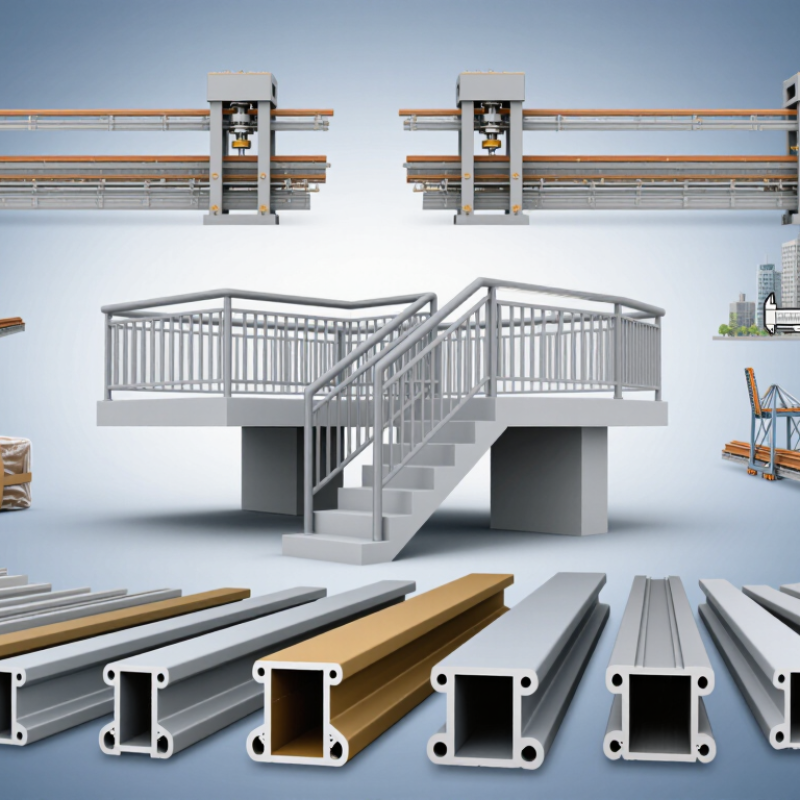
Top Aluminium Railing Systems Manufacturers in China

Aluminium Railing Systems: Definition and Key Features

An aluminium railing system combines posts, rails, infill, and connectors into a barrier for stairs, balconies, or walkways. Its frame is commonly made from extruded aluminium profiles, which are cut and assembled to suit the installation. Infill may use vertical pickets, horizontal bars, or panels. It is a system, not just a row of posts.

Aluminium is relatively light, which can make handling easier than with heavier metal options. It also resists corrosion, though coastal salt, trapped moisture, and exposed cut edges still need attention. A durable finish helps. Powder coating can provide colour and surface protection, but its performance depends on preparation and application. Smooth edges and aligned joints matter in daily use.

When reviewing manufacturers in China, ask about alloy grades, profile wall thickness, finish testing, and installation details. Drawings should show fixing points and the supporting surface, not only the visible railing shape. A railing that looks solid may still need better anchoring. I would treat catalogue dimensions as a starting point, not a final specification. That distinction matters.

Common Railing Types and Their Applications

Top Aluminium Railing Systems Manufacturers in China
Common Railing Types and Their Applications

Aluminium railing systems suit balconies, stairs, decks, and commercial walkways. Horizontal-bar designs provide a clean look for residential balconies, while vertical balusters are often chosen for stairs and elevated platforms. Glass-panel systems preserve open views on terraces, though they need regular cleaning to keep water marks and dust from becoming noticeable. For busy public areas, simple bar or panel designs can be easier to inspect and maintain.

Tips: Match the railing to the site. Check the fixing surface, exposure to wind, and expected use before choosing a style. Details matter.

Powder-coated aluminium can offer a durable finish, but scratches around joints may still need attention. A slim profile looks elegant; it can also feel less substantial than expected if the proportions are poorly selected. On sloped staircases, measure each section carefully and confirm that posts align with the steps. Coastal or humid locations call for suitable finishes and compatible fasteners. The right system depends on the building, not just its appearance.

Top Aluminium Railing Systems Manufacturers in China - Common Railing Types and Their Applications
Railing Type Typical Components Common Applications Key Advantages Selection Considerations
Glass Infill Railing Aluminium posts or base channels with glass panels and compatible clamps or gaskets Balconies, terraces, stairways, commercial interiors, and areas where an open view is preferred Allows light and views through the barrier; suits contemporary architectural designs Specify suitable safety glass, panel thickness, edge treatment, and fixing details for the project and local codes
Vertical Picket Railing Aluminium top and bottom rails with evenly spaced vertical balusters Residential decks, porches, walkways, apartment buildings, and public spaces Familiar appearance; individual components can be straightforward to inspect and maintain Check opening sizes, guard height, connection strength, and applicable fall-protection requirements
Cable Infill Railing Aluminium posts and rails with horizontal stainless-steel cables and tension fittings Decks, balconies, stairways, and view-oriented outdoor areas Provides a visually light infill with limited obstruction of sightlines Cable tension and post spacing require careful design; verify opening limits and maintenance access
Perforated Panel Railing Aluminium frame or posts with perforated aluminium sheet panels Balconies, walkways, public buildings, and projects requiring more visual screening Offers greater screening than open infill while allowing some airflow; panel patterns can be varied Consider panel open area, wind loading, drainage, cleaning access, and attachment details
Horizontal Slat Railing Aluminium posts with horizontal bars or slats Residential and commercial balconies, patios, and boundary areas Creates a linear appearance and can provide partial screening Review local safety rules for climbability, openings, guard height, and structural loads
Solid Panel Railing Aluminium posts or channels with solid or largely opaque aluminium panels Balconies, rooftop areas, service zones, and locations needing privacy or wind screening Provides more privacy and coverage than open-bar systems Solid panels can increase wind loads; confirm engineering requirements, drainage, and secure anchorage
Stair Railing System Aluminium handrail, brackets, posts, and compatible picket, glass, or panel infill Interior and exterior stairs in homes, offices, and public buildings Can be configured for different stair layouts and infill preferences Check handrail continuity, graspability, mounting height, stair geometry, and local accessibility rules

How Aluminium Railing Systems Are Designed and Manufactured

Designing an aluminium railing system starts with the site, not the catalogue. Engineers measure floor edges, stair angles, fixing points, and exposure to wind or salt air. They select the railing height, post spacing, infill, and alloy around the project’s required loads. CAD drawings help check clearances, but real walls are rarely perfect. A small installation tolerance can matter.

Manufacturing usually begins with aluminium billets heated and pushed through shaped dies to create profiles. The profiles are cut, drilled, deburred, and finished by anodizing or powder coating. Teams check dimensions and surface quality, then trial-assemble critical connections before packing. The International Aluminium Institute estimates that recycling aluminium uses about 95% less energy than producing primary aluminium. Recycled content can reduce material impacts, though its quality and traceability still need checking. This detail is easy to overlook.

Tips: Ask for load calculations, finish specifications, and a sample corner joint. Check drainage paths near post bases. Keep installation records. A polished drawing is not proof of a sound railing.

Leading Aluminium Railing System Manufacturers in China

Leading Aluminium Railing System Manufacturers in China

Leading aluminium railing system manufacturers in China should be assessed by engineering depth, not catalogue size. A polished profile proves little. The International Aluminium Institute’s 2023 outlook projects global aluminium demand to rise nearly 40% by 2030, from about 86 million tonnes in 2020 to 119.5 million tonnes. This forecast covers aluminium broadly, not railing alone, but it highlights the importance of dependable material sourcing. Buyers should request alloy and temper certificates, coating specifications, and traceable batch records. Details matter.

Factory audits should check extrusion consistency, machining accuracy, finish control, and packaging protection. Ask how corner joints, post bases, and stair transitions are tested. These details affect how well a system handles site installation. Request project-specific load calculations and test reports, rather than relying on brochures. Confirm that test samples match the proposed alloy, finish, span, and fixing method. Scratched coatings can create costly rework. Suppliers vary in documentation and export experience. No checklist is perfect; unusual balconies may reveal design gaps only after installation. Before ordering, clarify installation guidance, replacement-part availability, and manufacturing tolerances.

These reference minimum heights provide a practical specification benchmark when comparing aluminium railing systems for residential projects in China. Applicable requirements may vary by project and local regulations; confirm the current code before design or installation.

Reference: GB 50096-2011, Code for Design of Residential Buildings. Verify the applicable current standard and local requirements for each project.

How to Compare Manufacturers and Select a Supplier

Top Aluminium Railing Systems Manufacturers in China

Compare manufacturers using the same project details, not just headline prices. Share your drawings, railing height, installation location, finish, and expected order volume. Then request itemized quotations showing material specifications, fabrication, packaging, delivery terms, and exclusions. A polished catalogue is useful, but it is not proof of consistent production. Ask for recent project photos and references for installations with similar exposure and design requirements.

Check how the supplier verifies dimensions, finish quality, and assembled components before shipment. Request available test reports and clarify what each report covers; requirements can differ by project and destination. Compare sample rails or finish swatches under natural light. Small differences in color and texture may become obvious across a long balcony. Also discuss replacement parts, packaging protection, and response times for technical questions. A spreadsheet helps, but it cannot tell you everything.

Tips: Ask for a sample and a written inspection checklist. Confirm who handles installation guidance and shipping damage claims. Keep specifications in one document. One detail is easy to miss: confirm whether quoted accessories match your drawings. If answers stay vague, pause and ask again.

FAQS

What parts make up an aluminium railing system?

It combines posts, rails, infill, and connectors. Infill may use vertical pickets, horizontal bars, or panels. It is more than posts.

Why is aluminium often chosen for railings?

Its light weight can simplify handling compared with heavier metals. It also resists corrosion, but salt and trapped moisture still need attention. Not maintenance-free.

Which material and finish details should buyers request?

Ask for alloy grade, temper, profile wall thickness, coating specifications, and traceable batch records. Check how exposed cut edges are protected. Details matter.

What should technical drawings include?

Drawings should show fixing points and the supporting surface, not only visible shapes. Confirm post bases, corner joints, and stair transitions. A solid-looking rail may still need better anchoring.

How can buyers compare supplier quotations?

Send each supplier the same drawings, location, railing height, finish, and order volume. Request itemized pricing for materials, fabrication, packaging, delivery, and exclusions. Compare like with like.

How should finish quality be checked?

Review test reports and ask what each report covers. Compare sample rails or swatches in natural light; color differences can show across a long balcony. Small things show.

What factory checks are useful?

Check extrusion consistency, machining accuracy, finish control, and packaging protection. Ask how assembled components are inspected before shipment. A brochure cannot answer everything. No checklist is perfect.

What should be confirmed before placing an order?

Confirm installation guidance, replacement-part availability, manufacturing tolerances, and who handles shipping damage claims. Ensure accessories match the drawings. Keep one written specification.

Conclusion

Aluminium Railing Systems combine lightweight construction, corrosion resistance, and a clean appearance, making them suitable for residential, commercial, and public spaces. Common options include balcony, stairway, deck, and poolside railings, with designs selected according to the setting, safety needs, and visual preferences. Systems may use different post styles, infill panels, and handrails to balance openness, durability, and ease of maintenance.

Manufacturing typically involves design planning, material selection, cutting, forming, surface finishing, and quality checks to ensure components fit together reliably. China has a broad range of manufacturers serving different project requirements and production scales. When comparing suppliers, buyers can consider product specifications, customization capabilities, manufacturing consistency, communication, delivery arrangements, and after-sales support. Reviewing samples and confirming project details in advance can help identify a supplier whose products and service align with the intended application and budget.


Julian

Julian

Julian is a dedicated marketing professional and a trusted voice behind the company’s educational content. With a strong understanding of the company’s products, customer needs, and changing market trends, he transforms complex information into clear, practical, and engaging insights. Through......