Choosing the right Chinese manufacturer for Architectural Louver Systems takes more than comparing catalog photos or quoted prices. Performance depends on details such as blade spacing, frame strength, finish quality, and how accurately each unit fits the project opening. China has a broad supplier base, but product ranges and production capabilities vary considerably.
For a fair comparison, look for clear technical drawings, material specifications, documented quality checks, and relevant project references. Ask whether the supplier can explain airflow, rain resistance, wind-load considerations, and maintenance requirements for your intended application. A sample can reveal practical details: smooth blade edges, consistent coating, secure joints, and packaging that protects corners during transit. Small things matter.
Manufacturers may offer aluminum, steel, fixed, or operable designs, along with custom dimensions and finishes. Confirm which features are produced in-house and which are outsourced. Lead times, communication, installation guidance, and after-sales support also deserve attention. A confident sales claim is not proof; request records or test evidence where applicable, and verify that the documents match the proposed model. Some information may be incomplete, even from an experienced supplier. That deserves a closer look.
This guide introduces Chinese manufacturers and the questions buyers can use to assess them. Rather than naming one company as universally “best,” it focuses on evidence, project fit, and dependable service. The right choice should suit the building, climate, budget, and maintenance plan—not just the brochure.
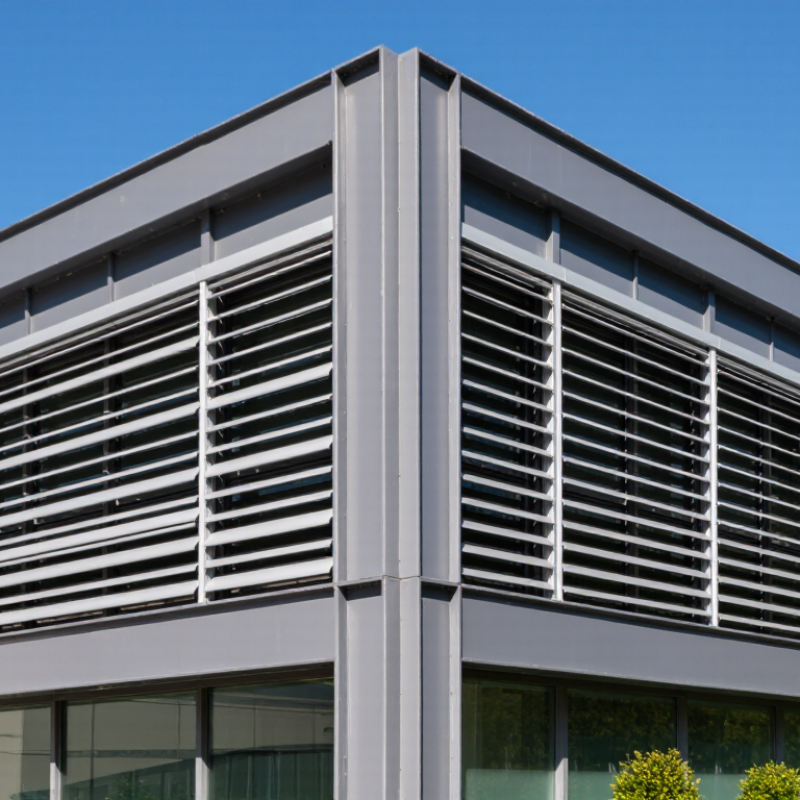
Architectural Louvers Defined: AMCA 500-L Airflow and Water-Test Data
Architectural louvers manage ventilation while helping limit rain entry. AMCA 500-L provides laboratory procedures for evaluating louver airflow and water penetration. Airflow results typically show pressure drop at stated air velocities. Water-test results describe performance under defined spray and airflow conditions. Read the test setup, not just the headline rating. A small change in louver size, blade spacing, or installation can affect results.
Tips: Ask for the complete test report. Check the tested dimensions, airflow, pressure drop, and water conditions. Compare like with like.
When assessing manufacturers, look for data tied to the proposed model and configuration. Free-area velocity and face velocity are not interchangeable, so confirm which value the report uses. A low pressure drop may suit a ventilation opening, but it does not alone prove strong rain resistance. Conversely, water-test performance does not tell you how much fan power the system needs. Lab results are useful, not a promise of identical field performance. Nearby walls, wind direction, and poor drainage can change what happens on site. I would also flag missing details rather than assume they are harmless; reports can be surprisingly easy to misread.
Core Performance Metrics: Free-Area Ratio, Pressure Drop, and Water Penetration
China Best Architectural Louver Systems Manufacturers?
For architectural louvers, three figures help explain real-world performance:
free-area ratio,
pressure drop, and
water penetration. Free-area ratio describes the open portion of the louver face. A higher ratio can support greater airflow, but it does not guarantee low resistance. Blade shape, spacing, and frame depth also affect airflow.
Pressure drop measures the resistance air meets as it passes through the assembly. Compare results at the same airflow rate; otherwise, the numbers can be misleading. Water penetration testing matters too, especially on exposed façades. Wind-driven rain may pass through openings that look modest on a drawing. Ask for test reports that state the test method, airflow, and water conditions. Installation details matter. A small gap at the perimeter can undermine otherwise strong test results, and specifications sometimes overlook that.
Tips: Compare all three metrics at your project’s design airflow. Check that the tested size resembles the proposed unit. Treat a high free-area ratio as one useful clue, not a complete performance verdict. The trade-offs are not always tidy.
China’s Louver Manufacturers: Compare Materials, Production, and Customization
China Best Architectural Louver Systems Manufacturers?
China’s Louver Manufacturers: Compare Materials, Production, and Customization
When comparing Chinese louver manufacturers, look beyond catalog photos. Aluminum is lightweight and corrosion-resistant; galvanized steel can suit larger, impact-prone assemblies. The International Aluminium Institute reported 70.6 million tonnes of global primary aluminum production in 2023. The World Steel Association recorded 1,888.2 million tonnes of crude steel that year. These figures show industrial scale, not individual factory quality. One caution: output totals reveal little about coating consistency or blade alignment. Ask for material certificates, coating specifications, production tolerances, and recent project references. Inspect a full-size sample; uneven gaps and loose pivots become obvious.
Tips: Request matching configurations in each supplier’s quote. Compare blade depth, spacing, finish, frame thickness, drainage details, and tested pressure data. Confirm custom colors and dimensions in writing.
Production capability matters when openings vary across a façade. Ask whether the plant controls extrusion, punching, assembly, and finishing, or outsources key steps. For coastal projects, specify suitable corrosion protection and maintenance intervals. For mechanical screens, check free area and pressure drop against the design airflow. A custom drawing is useful, but it does not prove performance. Request a representative mock-up and documented tests for wind-driven rain or structural loading. Small details matter. Inconsistent tolerances can complicate installation, so verify a production batch before approving a large order.
China’s Architectural Louver Systems: Material Comparison
Typical material density offers a useful starting point when comparing louver options. Lower density generally means less material weight for the same volume, but it does not by itself determine strength, durability, cost, or suitability.
Indicative nominal densities: rigid PVC 1.40 g/cm³, aluminum alloy 6063 2.70 g/cm³, carbon steel 7.85 g/cm³, and stainless steel 304 8.00 g/cm³. Actual values vary by grade and product; confirm specifications with the manufacturer.
Supplier Verification: AMCA 500-L, AMCA 550, and ASTM E283 Test Reports
When evaluating architectural louver suppliers in China, request complete test reports—not just certificates or a performance table. Check the laboratory, report date, tested model, specimen dimensions, and installation details. Small differences matter. Blade spacing, frame depth, seals, and drainage paths can change results.
AMCA 500-L reports help show how a louver performed under specified laboratory tests, including relevant airflow and water-related procedures. AMCA 550 addresses high-velocity wind-driven rain performance. ASTM E283 measures air leakage through a specimen at stated pressure differences; it does not, by itself, set a universal pass level. Compare the report’s pressure, test area, and leakage rate with your project requirements. A number without its test conditions is not very useful.
Ask whether the tested assembly matches the offered product. Request drawings, photographs of the test specimen, and written confirmation of any changes. One detail is often overlooked: a tested louver may perform differently when field-installed beside a wall opening, with different sealant or supports. Reports reduce uncertainty, but they cannot remove it. Review the evidence with the project’s façade or mechanical consultant before approving a supplier.
Project Selection: Match Airflow, Rain, Wind, and Corrosion Ratings to Requirements
China Best Architectural Louver Systems Manufacturers?
Project selection should start with the opening’s actual job, not a catalog image. Compare airflow at the required pressure drop, and check free-area data against the grille’s face dimensions. A louver that looks open may still restrict supply air. For rain control, review test results at relevant wind speeds and rainfall conditions. Wind-load ratings should match the building’s exposure and design pressures, especially near corners and rooftops. Ask for documented test methods and confirm the proposed size matches the tested configuration.
Tips: Write down the airflow target, rain exposure, wind pressure, and corrosion environment before requesting quotes. Coastal salt, pool chemicals, and industrial pollutants can affect finish life. Check the specified coating or material against those conditions, not just a general “corrosion-resistant” label. Small details matter.
A useful submittal review compares ratings side by side and flags missing assumptions. Confirm that frames, blades, fasteners, and insect screens are included in the performance data. One detail is easy to miss: adding a screen can change airflow and pressure drop. No rating covers every installation, and project assumptions can be wrong. When conditions are uncertain, request clarification or project-specific testing rather than relying on a broad performance claim.
Conclusion
Architectural Louver Systems help buildings manage ventilation while limiting the entry of rain and other environmental elements. Comparing manufacturers in China requires looking beyond product appearance to materials, production capabilities, and customization options. Key performance measures include free-area ratio, which affects available airflow; pressure drop, which indicates resistance to air movement; and water-penetration results, which show how well a louver performs under wet conditions.
Before selecting a supplier, review relevant test documentation, including AMCA 500-L airflow and water-test data, AMCA 550 results where applicable, and ASTM E283 reports for air leakage. Match the tested performance to project requirements for airflow, rainfall exposure, wind conditions, and corrosion resistance. A careful comparison of verified data, construction quality, and customization capacity can help identify a suitable louver solution for the building’s operating environment.