CE Certified Anodized Aluminium Manufacturers & Supplier

Precision Extrusion, Architectural-Grade Surface Finishing, and Custom OEM Solutions Compliant with EN 755, ISO 7599, and Qualanod Standards.

CE Certified ISO 9001:2015 Qualanod Standard RoHS & REACH Compliant

Featured CE Certified Anodized Products

Engineered for high thermal dissipation, extreme marine resistance, and architectural elegance.

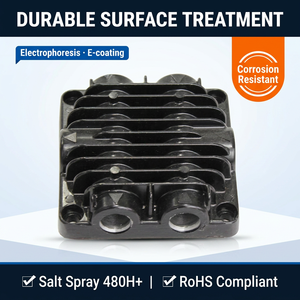
Anodized Aluminum Die Casting Heat Sink Custom Design Thermal Management Parts

Anodized Aluminum Die Casting Heat Sink Custom Design Thermal Management Parts

Alloy: ADC12 / A380 / 6063
Finish: Hard Anodized (15-25µm)
Thermal Conductivity: Up to 201 W/m·K
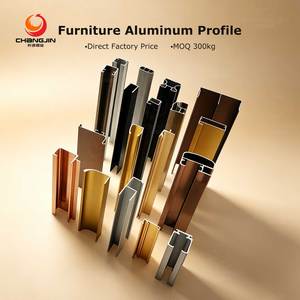
6063-T5 Custom Anodized OEM Aluminum Profile for Furniture

6063-T5 Custom Anodized OEM Profile Manufacturer for Furniture Systems

Alloy & Temper: 6063-T5 / T6
Film Thickness: 10µm - 15µm
Application: Modular Furniture & Interior
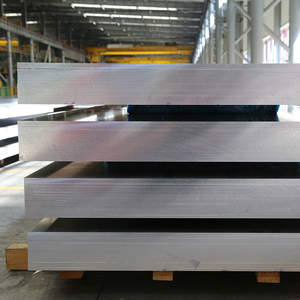
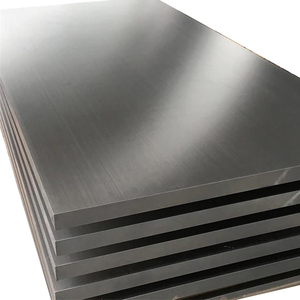
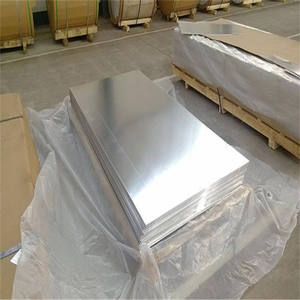
Black Surface 6061-T651 Aluminum Plate Premium Anodized Finish

Black Surface 6061-T651 Aluminum Plate - Premium Matte Anodized Finish

Alloy: 6061-T651 Stress Relieved
Color: Electrolytic Black Anodized
Flatness Tolerance: Acc. to EN 485-3
Marine Grade Alloy Aluminum Sheets Transportation Anodized Coating

Marine Grade Alloy Aluminum Sheets (5083, 5754, 5052) Anodized Coating

Grades: 5083-H112 / 5754-H111 / 5052-H32
Salt Spray Test: ASTM B117 > 3000 Hours
Certification: CE & DNV Marine Certified
Anodized Aluminum Alloy Sheet Scratch Resistant Anti Corrosion Building Curtain Wall

Anodized Architectural Aluminum Sheet Scratch Resistant & Anti-Corrosion

Thickness: 1.5mm - 4.0mm
Coating: Architectural Class 1 (20µm+)
UV Resistance: ISO 105-B02 Grade 8
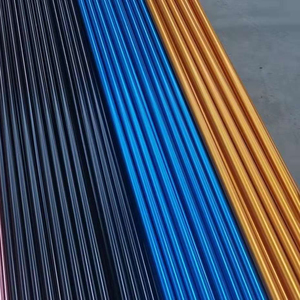
Colorful Anodized Aluminum Profile Alu Tube poles Blue Black Gold

Colorful Anodized Aluminum Profiles & Tubes (Blue, Black, Gold, Bronze)

Process: Organic & Electrolytic Dyeing
Shapes: Round, Square, Custom Hollow
Color Uniformity: ΔE < 0.5 Batch-to-Batch
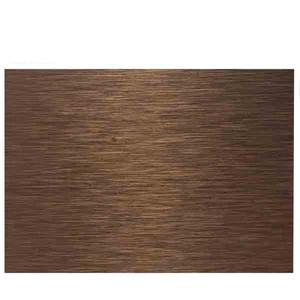
2026 New Color Brushed Aluminum Sheet Anodized

2026 Series Mechanical Brushed & Anodized Decorative Aluminum Sheets

Surface: 180-240 Grit Mechanical Brush
Protection: Sealed Oxide Layer + PE Film
Usage: Interior Cladding & Consumer Tech
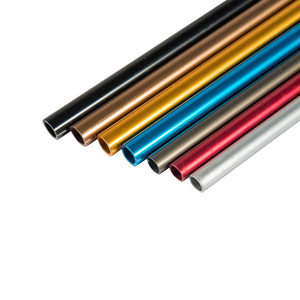
Color Anodized Aluminum Round Tube

High-Precision Color Anodized Structural Seamless Aluminum Round Tubes

Outer Diameter: 6mm - 250mm
Concentricity: ±0.05mm Precision
Hardness: Webster Hardness ≥ 12 HW

Industrial Manufacturing Rigor & Enterprise Authority

Vertical integration from billet casting to advanced anodic oxidation ensures absolute material integrity.

25+
Years Manufacturing Excellence
25μm
Max Architectural Anodizing
100%
CE & ISO Batch Traceability
3000h+
ASTM B117 Salt Spray Qualified

Full CE & EN Compliance

Our anodized extrusions and plates strictly adhere to EN 755 (extrusion tolerances), EN 12020, and EN 12373-1 for anodic oxidation coatings. Certified under European CE Directives for architectural safety.

Precision Anodizing & Sealing

Operating fully automated anodizing lines equipped with temperature-controlled sulfuric acid baths, pulse rectifiers, and eco-friendly hot/cold sealing processes guaranteeing zero powdering or blooming.

In-House Metallurgical Testing

Every batch undergoes stringent laboratory testing: Eddy-current film thickness measurement, ISO 2143 sealing quality tests, Webster/Vickers hardness checks, and spectrophotometric color matching.

Engineering White Paper: Anodic Oxidation Technology & Metallurgy

A comprehensive technical reference for structural engineers, facade consultants, and procurement managers.

1. Fundamentals of Anodic Film Formation & Microstructure

Anodic oxidation is an electrochemical conversion process that converts the base aluminum metal surface into a durable, extremely hard aluminum oxide ($\text{Al}_2\text{O}_3$) ceramic structure. Unlike organic coatings such as liquid paint or powder coating, which rely on mechanical adhesion, the anodized layer is fully integrated with the underlying aluminum substrate. It cannot peel, chip, or flake under thermal stress or elastic deformation.

During the anodizing reaction in a controlled acid bath (typically 150–200 g/L $\text{H}_2\text{SO}_4$ at $18-22^\circ\text{C}$), a dense thin barrier layer forms immediately adjacent to the metallic aluminum, followed by the growth of a porous hexagonal columnar outer oxide layer. The pore density ranges from $10^{10}$ to $10^{11}$ pores per square centimeter, with pore diameters between 10 to 25 nanometers depending on voltage, bath temperature, and electrolyte concentration.

2. Anodizing Classifications & Engineering Specifications Matrix

Selecting the appropriate anodizing class is crucial to balance mechanical wear, atmospheric corrosion, and dimensional tolerances.

Anodizing Type Standard Specification Typical Thickness (μm) Micro-Hardness (HV) Primary Engineering Application
Type I (Chromic Acid) MIL-A-8625 Type I 0.5 - 7.5 μm 200 - 300 HV Aerospace fatigue-critical structural components
Type II (Sulfuric Acid Class 1) ISO 7599 Class 10/15 10 - 15 μm 250 - 350 HV Furniture, decorative trim, consumer electronics
Type II (Architectural Class 1) EN 12373-1 / CE Architectural 20 - 25 μm 300 - 400 HV Curtain walls, marine structures, exterior facades
Type III (Hardcoat Anodizing) MIL-A-8625 Type III / ISO 10074 25 - 100 μm 400 - 600+ HV Thermal management heat sinks, pistons, wear plates

3. Sealing Metallurgy & Long-Term Corrosion Performance

An unsealed anodized oxide porous structure is susceptible to staining and atmospheric degradation. To achieve long-term corrosion resistance, the porous anodic film must undergo a hydrothermal sealing process. Hydration converts the amorphous $\text{Al}_2\text{O}_3$ into crystalline boehmite ($\text{AlOOH}$), expanding the volume by ~33% and effectively plugging the hexagonal nanopores.

Our manufacturing plant utilizes dual-stage nickel-free eco sealing that meets ISO 2143 weight loss tests ($< 30 \text{ mg/dm}^2$). This ensures zero surface blooming, superior resistance against acid rain ($\text{SO}_2$ testing), and extends coastal marine salt-spray endurance beyond 3,000 continuous hours without pitting (ASTM B117 compliance).

Future Procurement & Technological Trends (2026–2030)

Key market shifts driving global B2B supply chain strategy for anodized aluminum products.

1. Carbon Footprint Traceability & Low-Carbon Billets

Procurement buyers across Europe and North America are prioritizing primary aluminum extruded from renewable energy sources (hydroelectric/solar). Expect stringent Scope 1, 2, and 3 carbon accounting requirements (CBAM compliance) with embedded Digital Product Passports (DPP) detailing embodied $\text{CO}_2$ per kilogram of finished anodized profile.

2. Transition to Chromate-Free & Heavy-Metal Free Chemistry

Global environmental mandates (REACH Annex XVII, RoHS 3) are phasing out nickel-based cold sealers and chromate pre-treatments. Future-proof manufacturers are deploying titanium/zirconium conversion chemistry and eco-friendly hydrothermal sealing baths that maintain Class 1 weatherability without toxic effluent generation.

3. High-Thermal Dissipation Hard Anodizing for EV & AI Tech

With the surge in High-Performance Computing (HPC), AI servers, and Electric Vehicle power electronics, the demand for die-cast thermal management heat sinks with ultra-thin, high-dielectric breakdown hard anodizing is escalating. Specialized electrolyte formulations now provide dielectric strength > 1000V DC alongside superior emissivity coefficients (ε ≥ 0.92).

4. Automated Optical Quality Inspection (AOI) & Color Match ΔE < 0.3

Manual color visual inspection is rapidly being replaced by inline spectrophotometric scanning systems. Multi-angle spectral colorimeters ensure batch-to-batch color consistency for bronze, champagne, and black architectural anodized runs, eliminating color variation disputes on multi-story building facade installation sites.

Frequently Asked Questions (FAQ) for Global Buyers

Technical and commercial guidance for engineering procurement, die design, and custom order logistics.

Q1: How do I verify if an anodized aluminum supplier's CE certification is authentic for architectural extrusions?

To verify authentic CE compliance under the Construction Products Regulation (CPR 305/2011), request the factory's Declaration of Performance (DoP) along with the Certificate of Factory Production Control (FPC) issued by a European Notified Body. The documentation must reference EN 15088 for structural aluminum products, detailing alloy grade, mechanical properties, and anodic coating thickness class per EN 12373-1.

Q2: What aluminum alloy is best for anodizing: 6063, 6061, or 5083?

It depends on your structural and aesthetic requirement. Alloy 6063 is the absolute premier choice for architectural extrusions due to its fine grain structure, enabling an exceptionally smooth, uniform anodized cosmetic finish. Alloy 6061 offers higher yield strength for structural CNC components, though its higher silicon/copper content results in a slightly darker grayish anodic appearance. Alloy 5083 (non-heat treatable magnesium alloy) is recommended for extreme marine environments where outstanding seawater corrosion resistance is required.

Q3: What thickness of anodized film is required for severe outdoor and coastal marine exposure?

For standard indoor applications (furniture, partition frames), a 10μm to 12μm coating (Class 10 per ISO 7599) is sufficient. For outdoor exterior building facades and industrial pollution exposure, an Architectural Class 1 coating (20μm to 25μm) is required. For aggressive marine environments within 1 km of saltwater, specify a minimum 25μm anodic film thickness with nickel-free hydrothermal sealing to prevent salt-air pitting.

Q4: Can custom extrusion dies be fabricated, and what are the tooling lead times?

Yes, we offer complete custom extrusion die development based on DWG/DXF drawings or physical samples. Tooling design and CAD simulation take 3-5 days. Die fabrication and initial sample extrusion take approximately 10-14 days. Once first-article samples pass dimensional tolerance (EN 755-9 standard) and anodizing surface approval, bulk production commences immediately.

Q5: How do you prevent scratches and chemical oxidation during long-distance oceanic freight transit?

All finished anodized profiles and sheets are inter-layered with protective PE protective film (70μm UV-resistant layer or inter-leaving paper). Bundles are wrapped in water-resistant plastic film, reinforced with corner edge protectors, and secured inside fumigated wooden crates or steel-framed export pallets with desiccant bags to prevent condensation moisture staining during maritime shipping.

Start Your OEM Anodized Aluminium Project Today

Partner with a CE-Certified manufacturer. Contact our engineering team for instant die feasibility analysis, alloy selection support, and competitive factory-direct quotes.