Engineered structural extrusions, precision angle trims, custom corner profiles, and specialised hatches compliant with EN 755 & EN 12020 standards.
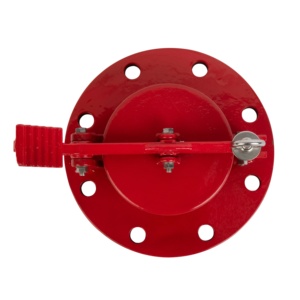
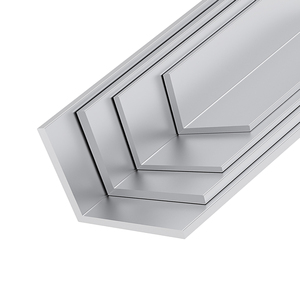
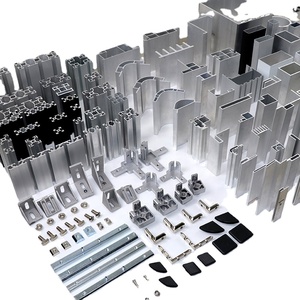
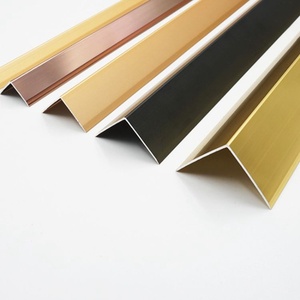
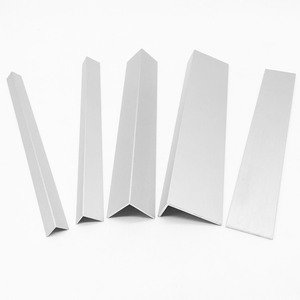
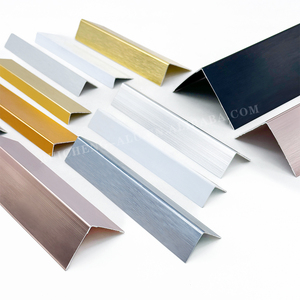
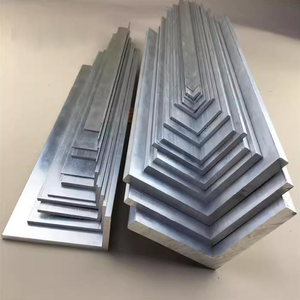
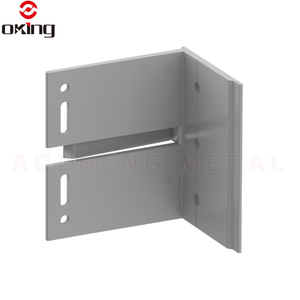
In modern industrial, structural, and architectural engineering, selecting verified CE Certified Extruded Aluminium Factories & Suppliers is no longer merely a procurement preference—it is a critical compliance requirement under the European Union Construction Products Regulation (CPR No 305/2011) and EN 15088 standard. CE marking verifies that extruded structural profiles, curtain wall members, and industrial extrusions meet strict load-bearing safety, chemical composition purity, dimensional tolerances, and mechanical property thresholds.
Our integrated extrusion manufacturing ecosystem operates advanced hot-extrusion presses ranging from 600-ton to high-capacity 3,600-ton hydraulic lines. We specialize in processing prime 6000-series aluminum alloys—primarily 6063-T5/T6 for high-finish architectural framing and 6061-T6 for heavy-duty structural applications, marine framing, oil tank gauge hatches, and dry-hanging curtain wall brackets.
Unlike standard suppliers who outsource post-processing, our facility centralizes every stage of production under a unified Quality Management System (ISO 9001:2015 & ISO 14001:2015):
In-house CAD/CAM tooling department equipped with wire EDM to manufacture complex custom dies from DWG/DXF files, maintaining ultra-tight EN 12020-2 dimensional tolerances.
Qualicoat-compliant horizontal and vertical powder coating lines along with sulfuric acid anodizing tanks providing 10–25 µm micron film thickness for coastal/saline resistance.
Multi-axis CNC machining, precision miter cutting, bending, punching, friction stir welding, and custom assembly (e.g., oil tank leakage-proof gauge hatches).
The global aluminium extrusion landscape is undergoing a massive transformation driven by carbon-neutral policies, stringent European regulatory oversight, and the rapid adoption of automated building envelope technology. Industrial buyers, EPC contractors, and automotive/architectural fabricators must realign their procurement strategies to capture these emerging technological vectors:
Driven by the European Union's Carbon Border Adjustment Mechanism (CBAM) and corporate ESG mandates, the procurement of recycled low-carbon aluminum (utilizing >75% pre- and post-consumer scrap) has shifted from a niche initiative to a core commercial driver. Advanced sorting technologies, such as X-ray fluorescence (XRF) scrap sorting, enable extruders to melt secondary aluminum while maintaining mechanical performance identical to primary metal, cutting embodied carbon footprint by up to 85% ($<2.0\text{ kg CO}_2/\text{kg Al}$).
Energy codes for modern building envelopes (such as Germany's EnEV and international LEED v4.1 standards) demand high thermal resistance across aluminium window frame assemblies. Future extrusions heavily incorporate mechanically crimped polyamide (PA66 GF25) thermal barriers between inner and outer profile shells. This cuts thermal bridging, mitigates interior condensation risks, and satisfies strict $U$-factor requirements ($U_f \le 1.3\text{ W/m}^2\text{K}$) without compromising structural wind-load resistance.
Global procurement teams are moving away from importing raw 6-meter mill-finish extrusions that require extensive local secondary processing. Sourcing trends favor "ready-to-install" sub-assemblies directly from specialized factories. Factory-controlled CNC precision cutting, hole punching, notch milling, corner cleat crimping, and sub-assembly of hardware (such as precision sealing locks on gauge hatches or dry-hanging curtain wall brackets) reduce job-site labor costs, eliminate scrap waste at destination ports, and shorten installation schedules.
When evaluating international aluminium extrusion suppliers, focusing strictly on basic FOB ingot prices can lead to catastrophic long-term costs associated with off-spec wall thickness, poor coat adhesion, or structural failure under wind load. Buyers must apply a Total Cost of Ownership (TCO) evaluation framework:
Verify factory CE certification under EN 15088 (Factory Production Control system audited by an EU Notified Body) alongside ISO 9001 quality documentation and EN 10204 3.1 chemical/mechanical mill test certificates.
Review press ratios and wall thickness tolerances. Qualified suppliers run computer simulations (metal flow dynamics) prior to die trial, minimizing profile twisting and residual stress during heat treatment.
Ensure chemical pre-treatment utilizes chromate-free zirconium conversion coatings for powder adhesion, or anodic bath temperature control for uniform oxide film growth in coastal environments.
Direct answers to technical, regulatory, and metallurgical questions asked by structural engineers, procurement managers, and facade fabricators.
CE Certification under EN 15088 verifies that the aluminium extrusion factory operates a certified Factory Production Control (FPC) system. It guarantees that load-bearing extrusions supplied for construction and structural engineering satisfy mandatory EU mechanical resistance, weldability, and alloy purity standards. Without EN 15088 CE marking, structural aluminium profiles cannot legally be placed on European market sites or specified in major global municipal tenders.
Alloy 6063 provides exceptional surface finish quality, making it the industry standard for architectural window framing, curtain walls, wall angle trims, and decorative profiles. It offers excellent anodizing response and extrudability. Alloy 6061 features higher concentrations of magnesium and silicon, delivering significantly higher yield and ultimate tensile strength ($\ge 240\text{ MPa}$). 6061-T6 is preferred for heavy structural load applications, marine deck components, oil tank gauge hatches, and curtain wall dry-hanging support brackets.
For interior decorative profiles, an anodizing layer of 10–12 microns is sufficient. However, for exterior facade exposure, coastal buildings, and marine applications, an anodizing depth of 20–25 microns (Class 1 / AA25) is required to prevent pitting corrosion under saline atmospheric conditions. For electrostatic powder coating, a dry film build of 60–80 microns over a chromate-free pre-treatment layer ensures long-term resistance against UV chalking, impact, and flaking.
Upon receiving client DWG/DXF section drawings or physical samples, our engineering team performs a die-flow review to verify wall thickness ratios and tolerance classes (conforming to EN 12020-2). Custom tooling is wire-EDM cut, followed by press trial extrusion. We supply first-article profile samples along with CMM dimensional inspection reports and material test certificates for client written approval prior to launching mass production.
Yes. We provide comprehensive in-house post-extrusion processing including precision miter cutting, multi-axis CNC drilling and notch milling, profile bending/curving, punching, and TIG/MIG/friction stir welding. This enables us to supply fully finished assemblies—such as precision-sealed oil tank gauge hatches, boat angle brackets, and pre-drilled curtain wall mounting brackets—ready for immediate job-site installation.
All finished extrusions receive protective PE interleaving film over decorative faces. Profiles are shrink-wrapped in protective waterproof paper or bundled with non-abrasive strapping. For overseas containerized freight, export orders are secured in fumigated wooden crates or steel-framed bundles equipped with corner guards, moisture-absorbent desiccant packs, and lifting slings to guarantee damage-free arrival at destination ports.
Connect directly with our engineering and procurement team. Submit your DWG/DXF CAD section drawings, alloy specs, or project bill of quantities for direct factory pricing and technical assessment.