Explore our precision-engineered structural aluminium profiles, heavy-duty dry hanging brackets, and specialised industrial hardware certified for global export and demanding structural facades.
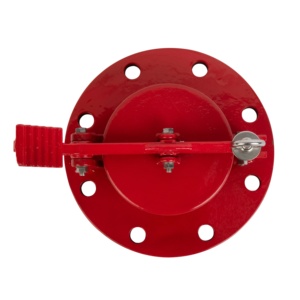
Modern architectural envelope design has shifted decisively toward maximum transparency, dynamic thermal performance, and high structural resilience. Point-supported glass facades, widely recognized as spider glazing systems, represent the apex of structural glazing engineering. By transferring dead loads and wind pressures directly to underlying steel trusses, glass fins, or tension cable systems via articulated stainless steel routels and multi-arm spider castings, architects achieve frameless aesthetic clarity without compromising mechanical integrity under severe atmospheric conditions.
Achieving rigorous CE Certification (EN 13830 for curtain walling and EN 1090 for structural components) requires precise metallurgical selection, advanced Finite Element Analysis (FEA), and strict manufacturing quality control. As global tier-1 exporters and extrusion specialists, our manufacturing facilities integrate precision investment casting, CNC 5-axis machining, and heavy-duty 6000-series structural aluminium alloy extrusion to deliver fully compliant facade attachment solutions.
Manufactured utilizing high-density AISI 316 / CF8M stainless steel castings. Features chemical composition controls ($Ni \ge 10.0\%$, $Cr \ge 16.0\%$, $Mo \ge 2.0\%$) ensuring superior pitting resistance equivalent numbers (PREN $\ge 25$) against aggressive coastal atmospheres and severe industrial pollution.
Engineered to integrate seamlessly with toughened laminated glass fins or prestressed steel cable trusses. The ball-jointed articulated routels accommodate up to $\pm 15^\circ$ dynamic angular deflection, effectively dissipating cyclic wind loads and seismic inter-story drifts.
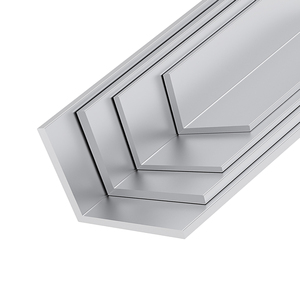
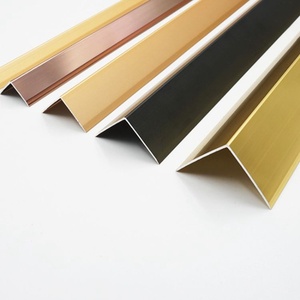
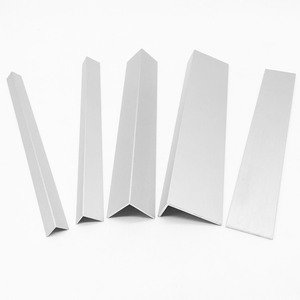
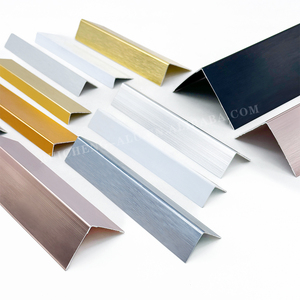
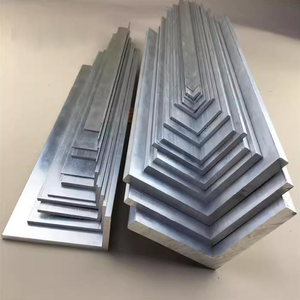
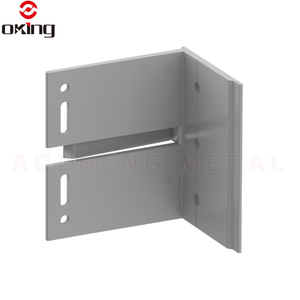
Heavy-duty extruded 6063-T6 and 6061-T6 aluminium alloy wall angle brackets specifically designed for ventilated rainscreen cladding, terracotta tile, and curtain wall stone dry-hanging support systems with thermal bridge isolation breaks.
Direct technical comparison of architectural spider fittings, routels, and structural extrusion supporting systems under CE EN standards.
| System Parameter | Spider Fittings (200mm / 220mm / 250mm) | Articulated Glass Routels | Aluminium Wall Angle Brackets |
|---|---|---|---|
| Primary Material Standard | Stainless Steel AISI 316 / CF8M (Cast) | AISI 316L / EN 10088-3 Stainless Steel | Extruded Aluminium 6063-T6 / 6061-T6 |
| Tensile Strength ($R_m$) | $\ge 520 \text{ MPa}$ | $\ge 600 \text{ MPa}$ | $\ge 245 \text{ MPa}$ |
| Yield Strength ($R_{p0.2}$) | $\ge 220 \text{ MPa}$ | $\ge 310 \text{ MPa}$ | $\ge 200 \text{ MPa}$ |
| Design Wind Load Capacity | Up to $5.0 \text{ kPa}$ (Project Specific FEA) | $3.5 \text{ kPa}$ - $6.0 \text{ kPa}$ Axial Pullout | $4.2 \text{ kPa}$ Shear & Bending Load |
| Rotational Articulation | Fixed Rigid / Swivel Adapter Integration | Integrated Ball Joint ($\pm 15^\circ$ Flexibility) | Slotted Hole Adjustment ($\pm 15\text{mm}$) |
| Surface Finish Options | Mirror Polished (PSS), Satin Brushed (SSS) | Passivated Satin / Electropolished | Anodized 20-25µm / Qualicoat Powder 60-80µm |
| Compliance Certificates | CE EN 1090-1, ISO 9001:2015, ASTM A240 | CE EN 12150-1, Passivation ASTM A967 | Qualicoat Class 1 & 2, ISO 14001 |
Global architectural procurement frameworks now prioritize low-carbon materials. Major EPC contractors and commercial developers require Environmental Product Declarations (EPD) compliant with ISO 14025 and EN 15804. Future procurement of spider fittings and structural aluminium wall angles will heavily favor factories utilizing recycled scrap billets (low embodied carbon aluminium) and clean energy smelting, reducing total Scope 1 and Scope 2 emissions across the facade life cycle.
With stringent energy codes demanding lower whole-wall $U$-values ($U_w \le 0.8 \text{ W/m}^2\text{K}$), traditional single-glazed spider fittings are evolving. The market is accelerating toward thermally isolated point-support routels specifically engineered for double and triple-glazed insulated glass units (IGUs). Procurement specifications increasingly mandate heavy-duty polyamide structural breaks within the routel shaft to prevent thermal bridging and interior condensation risks.
Procurement teams no longer accept static physical catalogs alone. Leading engineering buyers require 3D BIM-native parametric models (Revit, IFC formats) embedded with structural load data and material stress limits. Exporters capable of supplying pre-validated Finite Element Analysis (FEA) reports alongside physical hardware win preferential vendor status on international high-rise developments.
As vertical building envelopes become active power generators, spider glazing fittings are being redesigned to incorporate internal wireways and sealed conduit passages for BIPV glass modules. Future-proof exporters are pioneering multi-functional spider routels that provide secure structural attachment while safely routing solar electrical wiring through the structural frame.
Driven by extreme climate events, higher seismic performance demands, and complex geometric architecture (such as double-curved and freeform glazed canopies), structural spider hardware is undergoing continuous engineering refinement:
Transitioning from standard 316 stainless steel to Duplex 2205 (EN 1.4462) for marine and super-high-rise projects. Offers double the yield strength ($\ge 450 \text{ MPa}$) and exceptional resistance to stress corrosion cracking (PREN $\ge 34$).
Integration of internal heavy-duty Belleville washer springs and fluoropolymer dynamic bushings inside routel heads to absorb inter-story shear displacements up to $\pm 25\text{mm}$ without transferring destructive bending moments to tempered glass sheets.
Application of 3-coat AAMA 2605 compliant PVDF fluoropolymer finishes and 25µm hard-anodizing on extruded aluminium angle supports, providing 30+ year resistance to intense UV degradation, acid rain, and chalking.
Addressing essential technical, quality control, and compliance queries for international spider glazing procurement.
Every shipment of CE-marked spider glazing hardware is backed by comprehensive factory production control (FPC) documentation in accordance with EN 1090-1 and EN 13830. This includes mill test certificates (MTC) according to EN 10204 3.1 verifying chemical composition and mechanical tensile/yield properties, 3D Finite Element Analysis (FEA) stress reports under maximum local wind suction, liquid penetrant testing (NDT) reports for casting soundess, and Salt Spray Corrosion Test certificates (ASTM B117 minimum 1,000 hours without red rust).
Direct metallic contact between dissimilar metals with different electrochemical potentials (such as AISI 316 stainless steel and 6000-series aluminium) creates galvanic corrosion in humid or exterior environments. To eliminate this risk, our engineering packages include high-density isolation gaskets made from EPDM, POM, or Neoprene washers and isolation sleeves. These components isolate the fasteners and contact faces, breaking the electrical connection while maintaining full structural shear transmission.
Yes. Our in-house engineering team develops project-specific extrusion dies and casting molds directly from client DWG/DXF/STEP files. Prior to bulk manufacturing, we conduct die-flow simulations and FEA load modeling to verify wall thickness tolerances, extrusion ratios, and structural safety margins. First-article samples are machined, finished, and submitted alongside dimensional inspection reports for client sign-off before mass production begins.
Spider glazing routels accept glass panels ranging from 10mm single toughened glass up to 31.52mm double-laminated or insulated units. Glass holes must be CNC countersunk or straight-drilled with polished edges prior to thermal toughening in strict compliance with EN 12150. Hole diameter tolerances are held to $\pm 0.5\text{mm}$, with countersink depth held within $\pm 0.2\text{mm}$ to guarantee uniform gasket pressure and eliminate stress concentrations during wind suction events.
For anodized finishes (10µm to 25µm class), film thickness is measured using eddy-current instruments according to ISO 2360, followed by sealing quality testing via stain tests (ISO 2143). For powder-coated profiles, electrostatically applied polyester finishes are cured at 180–200°C to achieve a dry film thickness of 60–80 microns, verified via cross-hatch adhesion testing (ISO 2409) and Qualicoat-compliant impact and bend tests.
Export orders are packed for heavy maritime transit. Extruded aluminium profiles receive continuous protective surface masking film, interleaving paper protection, and bundled plastic shrink wraps before being secured in fumigated ISPM-15 wooden crates or heavy steel-framed bundles. Stainless steel spider castings and routels are individually wrapped in anti-corrosion VCI bags, boxed in reinforced master cartons, and palletized for safe containerized transport worldwide.
Combining heavy architectural profile extrusion, advanced surface finishing lines, and strict metallurgical testing under a single unified manufacturing umbrella.
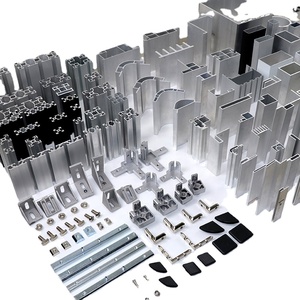
Operating high-capacity extrusion presses capable of producing 6063-T5, 6063-T6, and 6061-T6 structural wall angles, curtain wall mullions, and heavy-duty L-profiles with precise wall thickness consistency and superior structural straightness.
Integrated state-of-the-art anodizing baths (up to 25 microns for coastal corrosion protection), electrostatic powder coating lines (Qualicoat standard 60-80 microns), and wood-texture vacuum sublimation transfer systems under one roof.
From pre-treatment bath chemistry logs and oven curing temperature charts to digital film build checks and spectrographic alloy verification, every manufacturing lot is tracked against a master mill certificate for full accountability.
Providing end-to-end technical support for facade contractors, fabricators, and architectural consultants worldwide. Orders ship with complete commercial paperwork, profile schedules, and custom assembly hardware ready for immediate installation.