
China Top Aluminium Trim Factory & Exporter

Engineered Architectural Profiles, Custom Extrusions, and Advanced Surface Finishing Solutions for Global Sourcing & Infrastructure Projects

High-Performance Aluminium Trim & Profile Systems

Directly manufactured at our state-of-the-art China extrusion facilities. Engineered with premium 6000-series alloy billets for unmatched structural longevity and finish fidelity.
Integrated Extrusion, Anodizing & Fabrication Capabilities

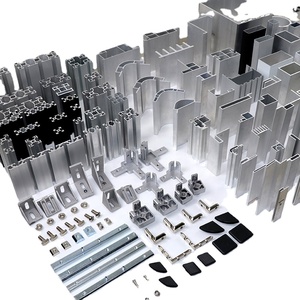
From raw billet casting to fully machined architectural profiles, our vertically integrated OEM production line guarantees structural precision and surface durability.

25,000+
Metric Tons Annual Extrusion
<0.05mm
Precision CNC Machining Tolerance
25 µm
Max Architectural Anodizing Build
60+
Countries Export Destination

In-House Custom Tooling & Die Engineering

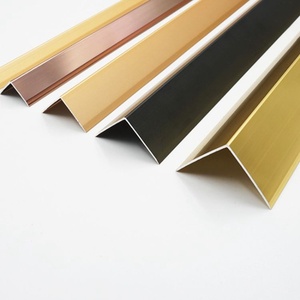
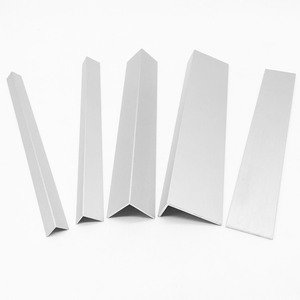
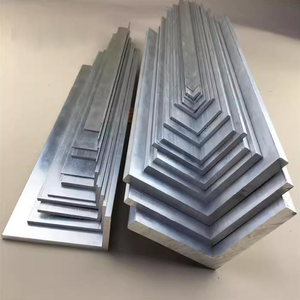
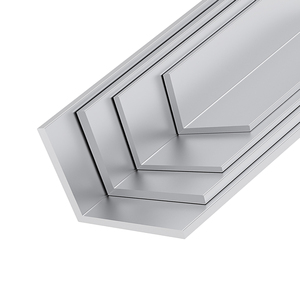
We design and manufacture bespoke CAD/CAM extrusion dies in-house. Whether your project requires intricate L-shape profiles, wall angle protection trims, or complex hollow thermal break geometries, our engineers deliver first-article samples within 7–10 days.

Advanced Surface Finishing Lines

Featuring modern vertical and horizontal powder coating lines, acid-etch anodizing tanks, and thermal transfer wood grain systems. We operate under Qualicoat and AAMA standards to guarantee uniform film thickness, UV color fastness, and high salt-spray resistance.

Rigorous QA & Traceable Metallurgy

Every batch of 6063, 6061, and 6005A alloy undergoes optical emission spectrometer testing before extrusion. Mechanical properties (T5 and T6 tempers) are validated via tensile testing, Webster hardness, and cross-hatch adhesion checks.

Architectural Aluminium Trim & Extrusion Sourcing Guide: Metallurgy, Tolerance Engineering, and Supply Chain Strategy

In modern architectural engineering and industrial fabrication, aluminium trim profiles and L-shaped corner protectives represent critical functional and aesthetic junction components. From dry-hanging facade curtain wall support systems to tile edge transitions, cleanrooms, and high-load marine structural framing, the quality of the extruded section directly impacts structural integrity, installer productivity, and long-term building envelope durability.

As a leading China top aluminium trim factory and exporter, we provide a complete engineering breakdown of key alloy selection criteria, thermal treatment physics, advanced surface finishing chemistry, and global market trends driving bulk procurement decisions across North America, Europe, the Middle East, and Southeast Asia.

1. Metallurgical Analysis: Selecting the Right 6000-Series Alloy & Temper

Aluminium extrusion performance is rooted in chemical composition control during raw billet casting. The 6000-series (Al-Mg-Si) alloys remain the undisputed standard for architectural trims, structural angles, and decorative wall protection due to their ideal balance of extrudability, corrosion resistance, surface finish reflectivity, and weldability.

Alloy & Temper Tensile Strength (MPa) Yield Strength (MPa) Typical Applications Key Performance Attribute
6063-T5 ≥ 150 ≥ 110 Wall angle trims, tile edges, LED channels Exceptional surface smoothness; ideal for intricate anodizing.
6063-T6 ≥ 205 ≥ 180 Curtain wall brackets, mullions, structural angles Higher mechanical yield for load-bearing building skins.
6061-T6 ≥ 290 ≥ 240 Marine fittings, heavy machinery, boat angles Superior structural rigidity and fatigue endurance limit.
6005A-T6 ≥ 270 ≥ 225 Commercial vehicle frames, long-span trims Balanced extrudability with high resistance to structural buckling.

For standard wall angle trim profiles, 6063-T5 delivers optimal ductility for post-extrusion bending and punching while accepting micron-thin decorative anodic coatings without grain boundary streakiness. Conversely, structural curtain wall bracket systems require 6061-T6 or 6063-T6, where precise artificial precipitation hardening in aging ovens elevates yield strength to resist localized wind-shear forces and seismic structural stress.

2. Surface Finishing Technologies & Atmospheric Protection Chemistry

Bare aluminium rapidly forms a thin natural oxide film (~0.01 micron) when exposed to air; however, commercial applications demand robust industrial surface barriers to resist chemical exposure, atmospheric acid rain, UV radiation degradation, and abrasive handling during construction.

Our manufacturing plant deploys three primary surface treatment technologies designed to exceed international architectural performance standards:

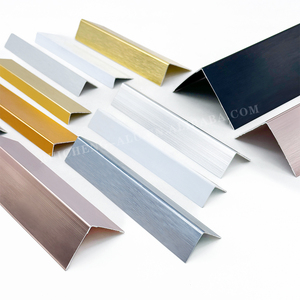
  • Architectural Anodizing (ISO 7599 / Qualanod): Through electrochemical oxidation in sulfuric acid baths, the natural oxide film is artificially grown into a dense, integral layer ranging from 10 µm (interior decorative trim) up to 25 µm (Class I exterior marine/coastal grade). Electrolytic coloring techniques allow rich champagne, bronze, dark brown, and deep metallic black tones that never peel or blister because the finish is physically bonded into the metallic matrix.
  • Electrostatic Powder Coating (Qualicoat / AAMA 2604 & 2605): Thermosetting polyester or PVDF resin powders are electrostatically applied over a chromate-free titanium/zirconium conversion layer. Cured at temperatures between 180°C and 200°C, the resulting dry film build of 60–80 microns provides an infinite spectrum of RAL colors, varying gloss levels, and textured anti-scratch finishes highly resistant to color fading.
  • Thermal Vacuum Wood Grain Sublimation: Combining a powder-coated base layer with specialized printed film, vacuum heat-transfer technology embeds authentic timber patterns (oak, teak, walnut) deep into the coating. This allows architects to achieve natural wood visual aesthetics for exterior wall trims and soffits while maintaining non-combustible Class A fire safety ratings and zero rot maintenance.

3. Future Procurement Trends in the Global Aluminium Trim Market

Procurement teams and international buyers are navigating shifting trade policies, decarbonization mandates, and digitized construction workflows. Sourcing strategic aluminium profiles from OEM China exporters now involves evaluating several macro-trends:

  • Low-Carbon Billet Utilization (Green Aluminium): Institutional developers are actively requiring Environmental Product Declarations (EPDs). Leading manufacturing facilities now utilize hydropower-smelted primary aluminium or high-ratio post-industrial recycled billets, reducing carbon intensity from 16 kg CO2/kg Al down to under 4 kg CO2/kg Al.
  • Modular Pre-Fabrication & Ready-to-Install Assemblies: Field labor costs in Developed markets have driven demand away from raw, random-length extrusions towards value-added fabrications. Buyers increasingly specify custom cut-to-length profiles, CNC multi-axis milling, pre-drilled countersunk mounting holes, and pre-fitted protective films.
  • Supply Chain Transparency & Digital Twin Integration: Enterprise buyers require full batch traceability. Heat numbers, mill test reports (MTRs), and dimensional inspection sheets are digitally linked via QR codes stamped on bundle packaging, streamlining quality audits for large-scale infrastructure projects.

4. Technological Innovations & Manufacturing Process Evolution

The manufacturing of premium aluminium angle trims and specialized profiles has transitioned from manual press operation to fully automated smart factory networks:

A. Isothermal Extrusion Control: Infrared pyrometers continuously track the temperature of the billet during press exit. By automatically modulating press ram speed based on real-time thermal feedback, isothermal extrusion eliminates grain growth variance, ensuring uniform grain structure and mechanical properties along the entire 6-meter profile length.

B. Multi-Axis CNC Precision Machining: Modern architectural trim requires complex secondary operations such as compound angle mitering, slotting, and precision notch shearing. Utilizing high-speed 5-axis CNC machining centers running under flood coolant, tolerances as tight as ±0.03mm are maintained, allowing seamless field joint alignment on intricate curtain wall grids.

Frequently Asked Questions for B2B Sourcing

Everything global buyers need to know about custom die costs, lead times, dimensional tolerances, minimum order quantities, and export logistics.

What is your factory's Minimum Order Quantity (MOQ) for custom profile extrusions?

For standard existing die profiles (such as standard architectural L-shape angle trims), our baseline MOQ starts at 500 kg per section finish. For fully custom tooling profiles, our minimum order quantity typically ranges from 1,000 kg to 3,000 kg depending on section cross-sectional weight and alloy selection. Tooling costs are fully refunded once cumulative order volumes reach negotiated project milestones.

What dimensional tolerances does your extrusion production adhere to?

Our standard production adheres strictly to EN 755-9 and EN 12020-2 precision extrusion tolerances as well as ISO 2768-m. For specialized industrial and optical profile applications requiring ultra-tight assembly gaps, our precision CNC secondary processing department can achieve high-precision tolerances down to ±0.03mm.

How do you ensure surface coating quality during overseas ocean transportation?

All finished profiles are applied with protective surface films (polyethylene self-adhesive films with custom laser printing). Profiles are bundled with interleaved soft foam, wrapped in protective waterproof shrink film, and packed into steel-reinforced wooden crates or heavy-duty cardboard tubes to eliminate friction scratches, moisture ingress, and bending during sea container transit.

What is the standard lead time for new die development and sample approval?

New custom die design, matrix manufacturing, and initial physical extrusion sample production take approximately 7–10 days. Once samples are confirmed via dimensional optical scanning and approved by your engineering team, mass production typically takes 15–20 days depending on the chosen surface finish (anodizing, powder coating, or wood texture) and order volume.

Which surface treatment is best suited for high-salinity coastal environments?

For projects located within 5 km of coastal waters, we recommend either Class II Anodizing (thickness ≥ 20 µm) or AAMA 2605-compliant PVDF powder coating over a non-chromate conversion layer. Both treatments demonstrate superior salt-spray testing performance exceeding 2,000 to 3,000 hours in neutral salt spray (NSS) test chambers according to ASTM B117 standards.

Partner with China's Premier Aluminium Trim Manufacturer

Looking for reliable OEM/ODM extrusion supply, precision custom dies, or factory-direct bulk pricing? Upload your CAD drawings or technical specs today for a rapid engineering quote.

Send an Inquiry