Explore our top-tier precision-extruded profiles, structural corner keys, and sealing hatches manufactured strictly under ISO 9001 and Qualicoat architectural specifications.
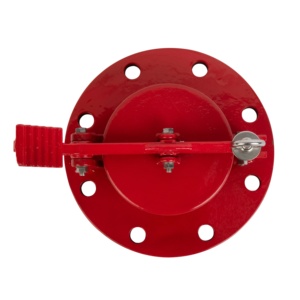
Features zero-leakage elastomeric sealing and high-grade spark-proof aluminum construction tailored for industrial tank access.
Contact Us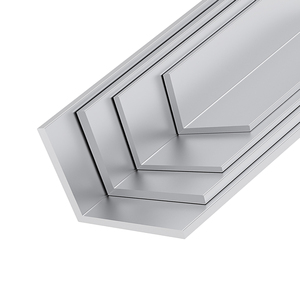
Architectural grade 6063-T5/T6 corner profile delivering ultra-high flexural strength for heavy curtain wall and frame joining.
Contact Us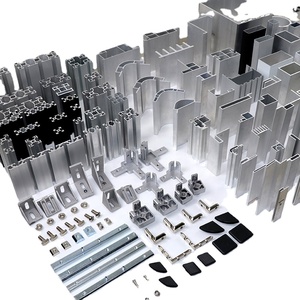
Versatile square, round, and I-shape structural profiles finished with durable sublimation wood texture coating.
Contact Us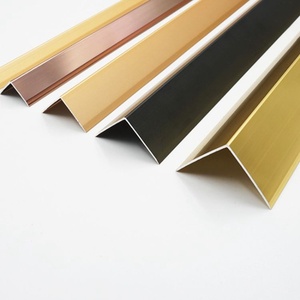
Designed with micro-dimensional tolerances, perfect for interior wall protection, facade framing, and cabinetry support.
Contact Us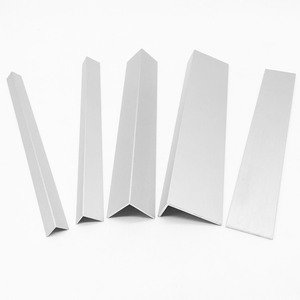
Powder-coated architectural trim engineered specifically for post-extrusion CNC machining, welding, and decorative bending.
Contact Us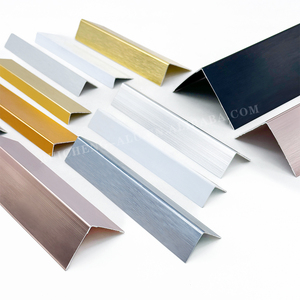
Multi-purpose metal profiles offering superior impact resistance and precise punch hole positioning for commercial cladding.
Contact Us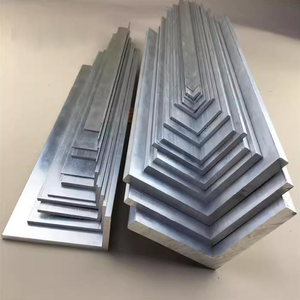
Corrosion-resistant marine alloy profiles built to withstand high salinity, saltwater exposure, and severe mechanical stress.
Contact Us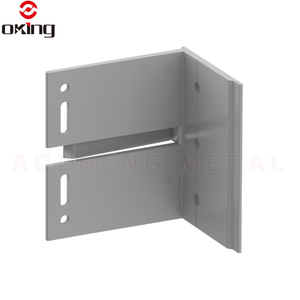
High-load bearing bracket assembly providing secure anchorage for granite, terracotta, and unitized glass facade panels.
Contact UsAn authoritative technical analysis of energy efficiency, structural mechanics, and metallurgical advances in modern building envelope systems.
Aluminum is inherently a highly conductive material ($\lambda \approx 160-200 \text{ W/m}\cdot\text{K}$). Thermal break systems physically isolate the interior and exterior aluminum profiles using 25% glass fiber reinforced polyamide (PA66 GF25) strips, lowering thermal conductivity to $\approx 0.3 \text{ W/m}\cdot\text{K}$.
A critical engineering consideration is linear thermal expansion. PA66 GF25 exhibits a thermal expansion coefficient ($\alpha \approx 2.8 \times 10^{-5}/\text{K}$) remarkably close to aluminum ($\alpha \approx 2.3 \times 10^{-5}/\text{K}$), preventing structural shear failure under extreme thermal shock cycling.
From 60–80 micron Qualicoat-certified architectural powder coatings to 10–25 micron marine-grade anodizing, profiles undergo multi-stage chromate-free pre-treatments, securing robust resistance against UV radiation, acid rain, and coastal salt spray corrosion.
| Performance Parameter | Standard Non-Thermal Aluminum | Pour-and-Debridge Polyurethane | Polyamide (PA66 GF25) Crimped Break |
|---|---|---|---|
| Frame Thermal Transmittance ($U_f$) | > 6.5 W/m²K | 2.8 – 3.5 W/m²K | 1.0 – 2.2 W/m²K (Passive House Ready) |
| Mechanical Shear Strength | Monolithic (High) | Moderate (Degrades over time) | Structural Grade (> 70 N/mm) |
| Thermal Expansion Match | N/A | Poor Coefficient Differential | Optimal (Matched Expansion Differential) |
| Multi-Cavity Integration | Not Possible | Limited Cavity Geometry | Supports Aerogel & Multi-Chamber Foams |
| Dual-Color Finish Option | Single Color Only | Extremely Difficult | Seamless Exterior/Interior Color Separation |
How global building codes, LEED v4.1 standards, and automated supply chains are reshaping architectural aluminum sourcing in China.
Global developers are mandating aluminum produced via hydropower or secondary scrap recycling. Utilizing certified post-industrial and post-consumer scrap cuts embodied energy by up to 95%, drastically reducing Scope 3 greenhouse gas emissions for high-rise developments.
Procurement is no longer restricted to physical die catalogs. Leading Chinese factories provide LOD 350 / 400 Building Information Modeling (BIM) files directly to facade consultants, accelerating structural Finite Element Analysis (FEA) and approval workflows.
Tier-1 buyers are consolidating their vendor base. Modern facilities combine in-house die shop, extrusion presses (800T to 3600T), automated polyamide crimping, anodizing, powder coating, and precision CNC fabrication under a single Quality Management System.
Why international contractors and architectural firms select our manufacturing eco-system for complex curtain wall and window projects.
Custom die manufacturing utilizing wire-cut EDM and high-speed CNC machining center ensures profile wall thickness tolerances within ±0.15mm, supporting bespoke architect-designed cross-sections.
Computer-controlled knurling machines create mechanical teeth in the aluminum cavity prior to inserting PA66 GF25 strips. Automated crimping guarantees superior transverse tensile and shear strength under load.
Every batch undergoes destructive tensile shear testing, coating thickness verification (micro-gauge), cross-hatch adhesion testing, and thermal cycling chambers prior to export sign-off.
Detailed technical answers to common queries from curtain wall engineers, procurement officers, and developers.
Architectural thermal break systems primarily utilize 6063 alloy in T5 or T6 tempers. 6063-T5 offers smooth surface finishes ideal for anodizing and powder coating, suitable for standard window and door frames. For heavy curtain wall mullions, structural transoms, or long-span members requiring higher yield strength, 6063-T6 or 6061-T6 temper is recommended due to its superior tensile property profile.
PA66 GF25 consists of Polyamide 66 reinforced with 25% glass fiber. It exhibits significantly higher mechanical strength, heat deflection temperatures (up to 240°C), and UV resistance compared to PVC. Crucially, PA66 GF25's thermal expansion coefficient closely matches aluminum, preventing profile distortion, structural shearing, or seal degradation during ambient temperature fluctuations.
For high-salinity marine or industrial atmospheric environments, we recommend either architectural anodizing with a film thickness of 20 to 25 microns (Qualanod certified) or high-durability PVDF / Qualicoat Class 2 fluorocarbon powder coatings applied at 60 to 80 microns over a chromate-free pre-treatment chemical conversion layer.
The client submits CAD (DWG/DXF) drawings or physical samples. Our engineering team conducts extrusion feasibility, wall thickness, and structural ratio reviews. Upon drawing approval, die manufacturing takes approximately 10–14 days, followed by sample extrusion, surface finishing, and first-article dimensional report sign-off before full-scale commercial production.
All extrusions are protected with interleaved protective films, bundled with shrink wrap, and packed inside reinforced export-grade wooden crates or steel frames. Cargo is documented with mill test certificates, packing list, certificate of origin, and custom shipping paperwork for seamless clearance at destination ports globally.
Submit your CAD section drawings, alloy specifications, or project bill of quantities. Our senior technical team will respond within 24 hours with engineering analysis, U-factor estimations, and direct factory pricing.