

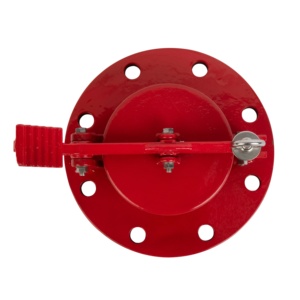
Direct factory-extruded solutions manufactured to ISO 9001 and ASTM standards, customized for curtain walls, structural protection, marine applications, and industrial enclosures.
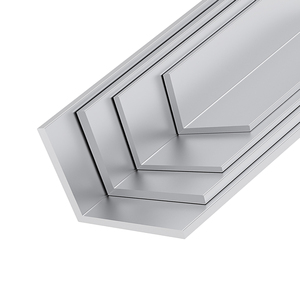
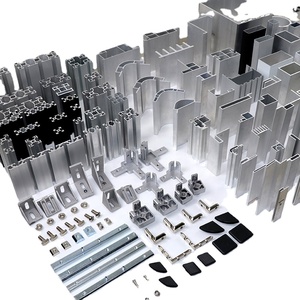
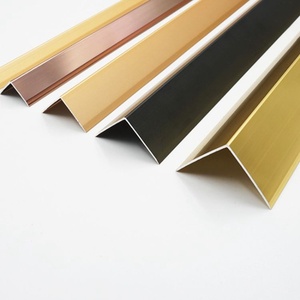
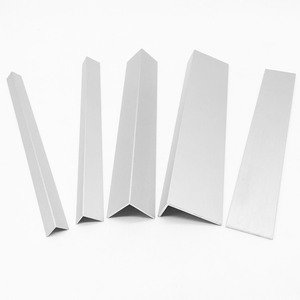
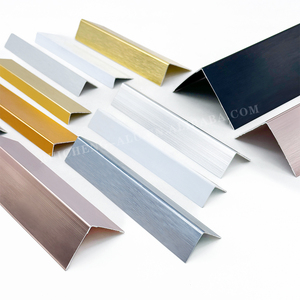
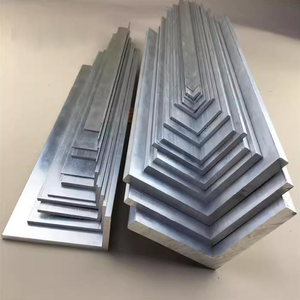
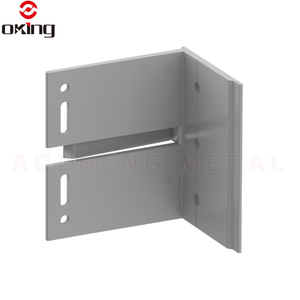
The global demand for structural, architectural, and industrial aluminum extrusions has undergone a fundamental transformation. Modern commercial construction, renewable energy infrastructure, automotive lightweighting, and heavy engineering require uncompromising dimensional tolerances, verified metallurgical purity, and specialized surface treatments. As the world's premier extrusion manufacturing hub, China's wholesale supplier base provides international procurement teams with unprecedented economies of scale, vertical integration, and advanced metallurgical processing capabilities.
Selecting the optimal OEM/ODM extrusion partner in China requires evaluating critical manufacturing parameters beyond simple unit pricing. High-performance projects require strict adherence to international standard chemical compositions (such as ASTM B221, EN 755, and GB/T 5237 standards), automated aging ovens for exact temper control (T5 vs. T6 hardness levels), and state-of-the-art multi-cavity die engineering. Leading Chinese manufacturers now operate unified manufacturing campuses containing billet casting, die development, high-tonnage hydraulic extrusion presses (ranging from 600 to 10,000+ metric tons), in-house anodizing, electrostatic powder coating, thermal break assembly, and multi-axis CNC deep processing.
How global decarbonization mandates, regulatory shifts, and technical advancements are reshaping bulk aluminum purchasing strategies.
With the European Union's Carbon Border Adjustment Mechanism (CBAM) and global ESG directives coming into full effect, top-tier procurement agencies prioritize suppliers utilizing primary aluminium smelted with hydroelectric power or certified green recycled content. Green billets drastically cut Scope 3 embedded carbon emissions without compromising yield tensile strength.
Energy efficiency standards for modern envelope facades mandate high thermal performance. Future profile procurement heavily leans toward polyamide strip crimping technology (PA66GF25 reinforced nylon) and polyurethane pour-and-debridge systems that eliminate conductive heat gain/loss in curtain wall framing and fenestration.
Global buyers are moving away from importing raw 6-meter mill-finish lengths. Modern procurement demands ready-to-install finished components—fully cut, precision mitered, CNC milled, punched, bent, welded, and hardware-drilled directly at the factory, reducing expensive local site labor costs.
Use this technical reference table to match project requirements with the appropriate alloy designation, temper, and surface coating thickness.
| Alloy & Temper Specification | Yield Strength (MPa) | Tensile Strength (MPa) | Primary Industrial Application | Optimal Surface Finishing |
|---|---|---|---|---|
| 6063-T5 | ≥ 110 MPa | ≥ 160 MPa | Residential fenestration, trim, interior office partitions | Anodizing (10-15μm), Powder Coating (60-80μm) |
| 6063-T6 | ≥ 170 MPa | ≥ 205 MPa | High-rise curtain wall mullions, louver blades, solar framing | Qualicoat Powder Coating, Fluorocarbon (PVDF) |
| 6061-T6 | ≥ 240 MPa | ≥ 290 MPa | Structural bridges, marine boat hulls, heavy brackets, oil hatches | Hard Anodizing (20-25μm), Anti-Corrosive Primer |
| 6005A-T6 | ≥ 215 MPa | ≥ 260 MPa | High-speed rail cars, heavy structural framing, truck beds | Electrophoretic Coating, PVDF Spraying |
How modern precision engineering converts raw alloy billets into tight-tolerance structural solutions.
Modern extrusion facilities utilize fully automated PLC-controlled hydraulic presses equipped with nitrogen die cooling. Isothermal extrusion maintains uniform exit temperatures across complex profile cross-sections, preventing internal micro-fractures and eliminating dimensional variance across 6-meter bundle lengths.
Leading suppliers implement rigorous raw material verification prior to pre-heating. Billets undergo 100% ultrasonic flaw detection to identify internal voids or iron contamination. During extrusion, continuous laser gauge scanners measure wall thickness tolerances down to ±0.1mm accuracy.
From chromate-free pre-treatment baths that satisfy stringent environmental regulations to vertical powder coating towers, surface technology guarantees color longevity. Sublimation vacuum grain transfer processes reproduce natural timber aesthetic tones (oak, teak, walnut) on outdoor profiles while retaining non-combustible A1 fire ratings.
Partnering directly with established Chinese wholesale extrusion manufacturers provides structural contractors, distributors, and industrial original equipment manufacturers (OEMs) with significant operational advantages:
Answers to key engineering, quality control, and logistics questions raised by international procurement managers.
6063 alloy provides superior surface finish quality, making it the industry standard for architectural window frames, curtain walls, wall trim angles, and decorative partitions. It extrudes easily into intricate, thin-walled shapes. 6061 alloy contains higher silicon and magnesium ratios, offering significantly higher yield strength (≥240 MPa) suitable for structural load-bearing frames, marine boat components, heavy dry hanging brackets, and oil tank gauge hatches.
For architectural powder coating, standard dry film build ranges between 60 to 80 microns over chromate-free pre-treated aluminum. For harsh exterior or high-UV exposures, high-durability fluorocarbon (PVDF) coatings are applied at 30–40 microns (2-coat or 3-coat system). For anodizing, interior profiles typically utilize a 10–12 micron oxide layer, whereas marine environments or exterior building facades require a 20–25 micron class-1 architectural anodized coating.
Standard die creation from approved DWG or DXF technical drawings takes 7 to 10 calendar days. Upon die completion, first-article samples are extruded, surface-treated, and dispatched via express air courier for customer dimensional and fit testing. Bulk production proceeds immediately after written customer sample approval.
Each individual profile is co-extruded with protective PE film or interleaved with non-scratch paper. Extrusions are then bundled in waterproof craft paper, poly-wrapped, and bound with plastic strapping. For full container load (FCL) or less-than-container load (LCL) shipments, bundles are packed into fumigated ISPM-15 wooden crates or reinforced steel frame pallets.
Yes. Our 6000-series alloy profiles in T5/T6 tempers can be ordered with specific ductile properties ideal for post-extrusion fabrication. We provide in-house CNC cutting, precision bending, punching, slotting, and TIG/MIG welding services prior to final surface coating to ensure perfect joint adhesion without cracking the surface finish.
For standard stocked dies (such as standard L-shape angles, square tubes, and wall trim profiles), MOQ starts as low as 500 kg per section. For fully custom die shapes, initial sample runs require 1 metric ton per die setup, with scale discounts applied for multi-container production runs.