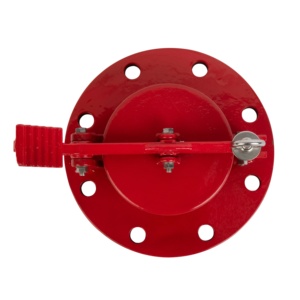
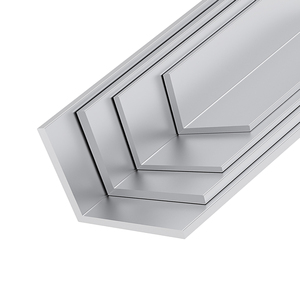
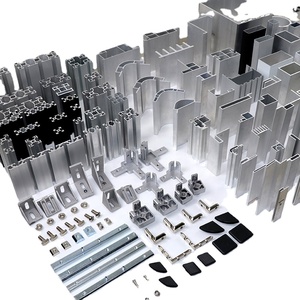
Explore industrial-grade 6000-series structural aluminium extrusions, heavy-duty mounting brackets, precision sealing gauge hatches, and specialized architectural angle profiles manufactured for global commercial compliance.
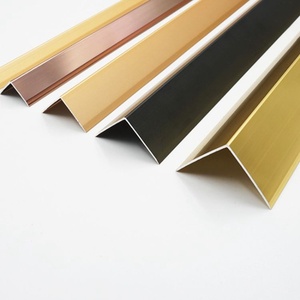
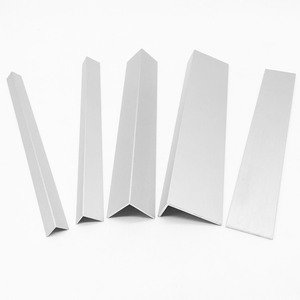
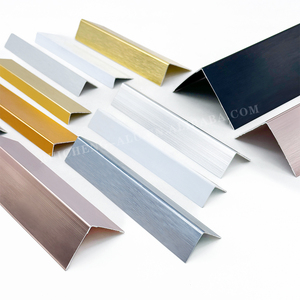
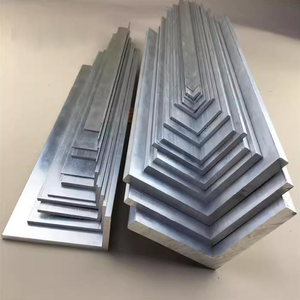
The global demand for high-strength, lightweight, and corrosion-resistant architectural metalwork has elevated aluminium railing systems from simple safety barriers to critical structural and aesthetic facade components. When evaluating a China Wholesale Aluminium Railing Factory, B2B procurement officers, structural engineers, and commercial developers must look beyond surface-level pricing to examine extrusion alloy integrity, thermal processing precision, surface treatment longevity, and strict adherence to international building codes such as ASTM B221, EN 755, and BS 6180.
Modern architectural balustrades, glass shoe railings, and perimeter guardrails demand precise mechanical performance. Structural stability relies on the microstructural quality of the extruded billet, control over temper aging (T5 versus T6), and advanced CNC post-processing (cutting, bending, welding, and punching). This technical procurement whitepaper serves as an authoritative guide for international buyers seeking to optimize supply chain security, achieve maximum information gain, and implement robust quality assurance protocols when sourcing aluminium railings, structural wall angles, and curtain wall mounting brackets directly from premier manufacturing facilities.
Core Procurement Insight: The mechanical performance of an architectural aluminium railing system depends heavily on metallurgical purity and artificial aging parameters. Achieving a minimum tensile strength of 205 MPa in 6063-T6 or 290 MPa in 6061-T6 requires continuous monitoring of quench rates exiting the extrusion press and tight temperature control during precipitation hardening.
A primary consideration when specifying custom extrusion aluminium profiles for railings, wall angle trims, and structural support systems is selecting the optimal alloy composition. The 6000-series aluminium-magnesium-silicon family remains the industry benchmark due to its superior extrudability, exceptional atmospheric corrosion resistance, and high strength-to-weight ratio.
Architectural workhorse alloy. Offers exceptional surface smoothness for anodizing and powder coating. 6063-T5 is ideal for decorative trims, whereas 6063-T6 delivers the elevated yield strength required for glass railing base shoes and structural posts.
Structural-grade alloy containing higher silicon and copper levels. Engineered for high load-bearing applications, such as heavy-duty dry hanging curtain wall brackets, marine-grade angle irons, and long-span commercial balustrades exposed to high wind loads.
Medium-strength alloy offering higher toughness than 6063 and superior extrudability over 6061. Highly recommended for complex hollow railing extrusions subject to cyclic impact loads and dynamic force distributions.
To assist procurement managers in setting detailed Purchase Order (PO) technical parameters, the table below outlines the mechanical thresholds required for architectural and industrial aluminium profiles:
| Alloy & Temper | Tensile Strength (MPa) | Yield Strength (0.2% MPa) | Elongation (%) | Webster Hardness | Primary Sourcing Application |
|---|---|---|---|---|---|
| 6063-T5 | ≥ 150 MPa | ≥ 110 MPa | ≥ 8% | ≥ 8 HW | Wall angle trims, light decorative posts, indoor glass channels |
| 6063-T6 | ≥ 205 MPa | ≥ 170 MPa | ≥ 8% | ≥ 12 HW | Heavy architectural railings, balustrades, louver support frameworks |
| 6061-T6 | ≥ 290 MPa | ≥ 240 MPa | ≥ 10% | ≥ 15 HW | Dry hanging curtain wall brackets, marine boat structural angles |
| 6005A-T6 | ≥ 270 MPa | ≥ 225 MPa | ≥ 8% | ≥ 13.5 HW | Impact-resistant balustrades, commercial high-rise structural handrails |
Architectural aluminium railings and exterior angle profiles face aggressive environmental forces, including solar ultraviolet radiation, acid rain, atmospheric salinity in C4/C5 marine environments, and thermal shock. A qualified China wholesale aluminium railing factory must maintain fully integrated, automated surface coating lines capable of meeting or exceeding Qualicoat, Qualanod, and AAMA 2604/2605 specifications.
For vibrant color matching (RAL spectrum) and exceptional weatherability, architectural profiles undergo multi-stage chromate-free chemical pre-treatment followed by electrostatic powder deposition. Applying a dry film build of 60 to 80 microns ensures superior adhesion and resistance to impact, chipping, and micro-cracking during on-site assembly.
Anodizing electrochemically grows a crystalline aluminium oxide layer directly from the parent metal. Unlike paint, anodized coatings cannot peel or flake. Specified film thicknesses range from Class II (10–15 microns) for interior work to Class I (20–25 microns) for exposed exterior railing handrails and marine boat angle corners.
Architectural designs often seek the natural elegance of hardwood combined with the structural strength, fire rating (Class A1), and zero-maintenance properties of aluminium. Utilizing a textured powder base coat combined with high-temperature vacuum sublimation film transfer, factories reproduce authentic oak, teak, walnut, and mahogany wood grains on extruded square, round, or custom-shaped rail profiles.
Achieving tight tolerances (according to EN 12020-2 or ANSI H35.2 standards) requires rigorous die engineering. Leading Chinese manufacturing plants employ computerized CAD/CAM tooling facilities and finite element analysis (FEA) software to model metal flow stress, thermal dissipation, and extrusion speed prior to cutting tool steel matrices.
Multi-axis CNC milling, precision mitering, punch pressing for mounting holes, and robotic TIG/MIG welding enable true turnkey fabrication directly from drawing files.
In-house toolmakers fabricate custom extrusion dies within 10 to 15 business days. Rapid 3D profile sampling verifies wall thickness and mechanical interlocking before volume press runs.
100% batch traceability linking finished profiles back to the primary aluminium ingot batch, extrusion press log, aging furnace charts, and coating thickness test sheets.
The global construction material supply chain is undergoing structural shifts driven by stringent environmental standards, rising labor costs, and accelerated construction schedules. Sourcing professionals must adapt their strategic purchasing models to account for five primary industry trends:
On-site installation costs in Western markets continue to escalate. Consequently, global buyers are moving away from traditional field-welded railings in favor of modular, knock-down (KD) aluminium railing kits. Modern designs incorporate pre-drilled posts, drop-in glass shoe clamps, concealed corner connectors, and snap-lock top rails that reduce installation time by up to 60%.
Embodied carbon regulations, including Europe's Carbon Border Adjustment Mechanism (CBAM), require detailed Environmental Product Declarations (EPD). Chinese extrusion manufacturers are increasingly utilizing primary billets smelted via hydropower rather than coal power, lowering the embodied carbon footprint from 16 kg CO2/kg Al to below 4 kg CO2/kg Al.
Contemporary commercial railings frequently integrate frameless structural glass panels, micro LED illumination channels routed along the underside of the top rail, and even integrated building-integrated photovoltaic (BIPV) balcony panels. Profiles must be designed with internal wireways, EPDM gasket channels, and precise thermal expansion gaps.
Top-tier suppliers now support project design teams by providing native Building Information Modeling (BIM) files (Revit, IFC) alongside standard 2D CAD profile sections. This streamlines engineering approvals and reduces design revisions on major commercial projects.
Our structural profiles and balustrade mounting systems are engineered to comply with major international building codes, including BS 6180 (UK), IBC/IRC (USA), AS/NZS 1170 (Australia), and EN 1991-1-1 (Europe). System designs can accommodate line loads ranging from 0.74 kN/m for residential applications up to 1.5 kN/m or 3.0 kN/m for high-occupancy commercial areas and public venues.
Direct contact between aluminium and dissimilar metals (like steel) or alkaline concrete can cause galvanic corrosion. We supply non-conductive isolation pads, neoprene shims, stainless steel 316 sleeves, and recommend specialized ceramic-coated anchor bolts to ensure long-term structural integrity.
Developing custom extrusion dies typically takes 10 to 14 days. Sample production and initial testing require 3 to 5 days following die completion. Once samples are approved, mass production runs are completed within 15 to 20 business days, depending on profile complexity, surface treatment requirements, and order volume.
Every commercial consignment includes a comprehensive Quality Certificate package containing Mill Test Certificates (MTC) conforming to EN 10204 3.1, chemical composition analysis, mechanical test reports (tensile, yield, elongation), coating film thickness reports (Qualicoat/Qualanod compliant), and cross-hatch adhesion test results.
Profiles are individually wrapped with protective PE film or interleaved with non-abrasive paper to shield finished surfaces. Bundles are wrapped in heavy-duty shrink film, protected with rigid edge boards, and packed in reinforced steel-framed wooden crates designed for forklift handling and maritime container shipping.