
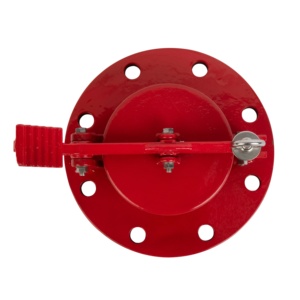
Precision Aluminum Angle Gauge Hatch with Lock
Precision-engineered sampling and measurement hatch with leak-proof mechanical sealing for industrial and architectural tank applications.
Get CatalogExplore our engineered aluminum profile solutions, heavy-duty curtain wall dry-hanging brackets, corner trim protectors, and custom extrusion components designed to international structural specs.
Precision-engineered sampling and measurement hatch with leak-proof mechanical sealing for industrial and architectural tank applications.
Get Catalog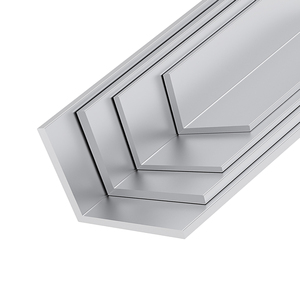
Heavy-duty structural L-angle profile crafted from 6063/6061-T6 alloy for exterior wall frame joining and corner alignment.
Get Catalog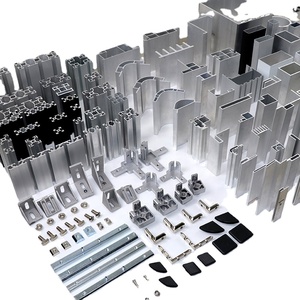
Architectural T5/T6 aluminum wall angles available in Square, Round, and I-shapes with sublimated weather-resistant wood texture.
Get Catalog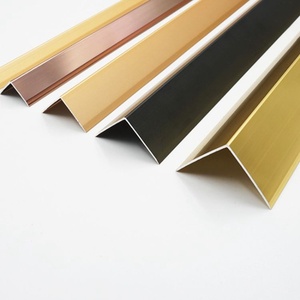
Custom-extruded interior and exterior corner angles engineered for seamless panel interlocking and crisp architectural edges.
Get Catalog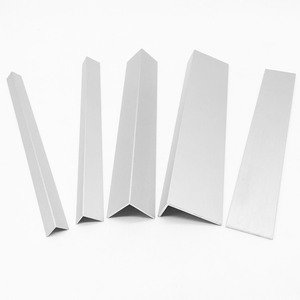
Qualicoat-standard coated profiles ready for cutting, bending, and welding. Ideal for decorative wall facade transitions.
Get Catalog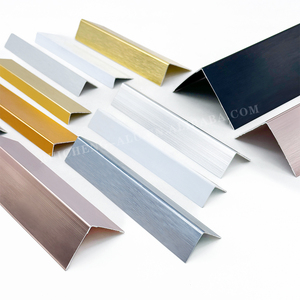
Versatile extrusion profiles featuring complete CNC punch, bend, and weld processing for facade cladding protection.
Get Catalog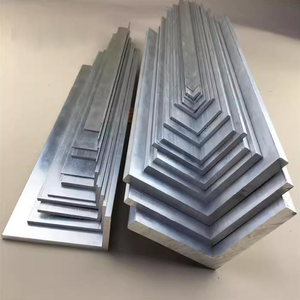
High-tensile structural aluminum angle sections tailored for marine structures, commercial watercraft, and heavy framing.
Get Catalog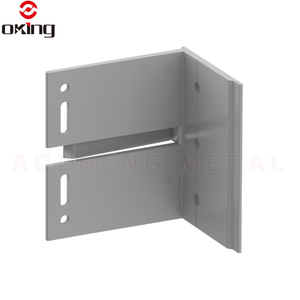
Load-certified dry-hanging structural support brackets for exterior stone, terracotta, and metallic facade cladding panels.
Get CatalogAs a premier China wholesale facade panels exporter, our industrial facility seamlessly unifies billet casting, custom die development, precision extrusion, surface finishing, and secondary CNC fabrication under one rigid quality control framework.
Utilizing high-purity primary aluminum billets (6063, 6061, 6005A, and 3003 alloys), our fully automated extrusion presses range from 800 to 5,000 metric tons. We produce high-complexity hollow mullions, solid transoms, and intricate dry-hanging brackets with exact wall-thickness consistency.
Our automated electro-chemical anodizing plant produces robust electrolytic oxide films from 10 microns for interior profiles up to 25 microns for marine and coastal facades. Available in natural silver, champagne, dark bronze, and black with exceptional UV stability.
Featuring vertical electrostatic powder coating lines running over chromate-free pre-treatment baths. We apply durable polyester and fluoropolymer (PVDF) dry film coats ranging from 60 to 80+ microns, certified against fading, chalking, and salt-spray corrosion.
Combine the natural aesthetic warmth of architectural timber with the structural longevity and non-combustible rating of aluminum. Our heat-transfer sublimation process locks detailed wood patterns deep into the powder base layer.
Every wholesale order undergoing export undergoes multi-stage inspection. From spectrometer chemical alloy verification to cross-hatch paint adhesion testing, webbing thickness callipering, and optical micro-structure evaluation, we guarantee zero defect rates prior to export container loading.
The global architectural envelope sector is undergoing a monumental shift toward carbon decarbonization, thermal energy efficiency, and off-site modular assembly. International buyers sourcing facade panels from China must align their supply chains with these pivotal market evolutions.
Global green building certifications (LEED, BREEAM) now prioritize low-embodied-carbon metal cladding. Leading exporters are implementing recycled scrap loops and hydroelectric-smelted primary ingots to reduce CO2 emissions below 4.0 kg per kg of aluminum.
Job site labor shortages are driving demand toward factory-assembled unitized curtain wall cassettes. Procurement is shifting from buying loose profiles to procuring pre-mitered, pre-gasketed, integrated panel sub-assemblies ready for crane hoisting.
Stricter municipal energy conservation codes demand lower frame U-values. Modern aluminum cladding systems require wide, fiber-reinforced polyamide (PA66GF25) thermal break strips to eliminate thermal bridging in extreme climates.
Next-generation architectural facades demand an optimal balance between structural lightweighting and extreme wind-load resistance. Engineered aluminum profile systems offer superior strength-to-weight ratios compared to traditional steel sub-frames.
| Performance Parameter | Architectural Aluminum (6063-T6) | Structural Aluminum (6061-T6) | Galvanized Steel Sub-Frame |
|---|---|---|---|
| Tensile Yield Strength | 170 MPa (Min) | 240 MPa (Min) | 250 MPa |
| Weight Density | 2.70 g/cm³ (Lightweight) | 2.70 g/cm³ (Lightweight) | 7.85 g/cm³ (Heavy) |
| Corrosion Resistance | Self-passivating / Anodized | High Marine Resistance | Requires Continuous Zinc Coating |
| Extrusion Machinability | Exceptional (Complex Geometry) | High Machinability | Limited (Roll formed / Welded) |
| Non-Combustibility | Class A1 / A2 Non-Combustible | Class A1 / A2 Non-Combustible | Class A1 Non-Combustible |
Our engineered aluminum brackets and wall angle profiles (such as Product #8) allow for 3D three-axis adjustment during site erection. This thermal-expansion-tolerant dry-hanging arrangement compensates for civil structure concrete tolerances, ensuring perfectly flush facade alignment while isolating vibration and wind loads up to 5.0 kPa pressure thresholds.
Expert answers to critical engineering, alloy selection, order MOQ, export packaging, and international compliance queries.
A: For primary structural members like mullions, transoms, and heavy dry-hanging brackets, 6063-T6 or 6061-T6 is recommended due to higher yield and tensile strength. For decorative wall angles, corner protection trims, and non-load-bearing extrusions, 6063-T5 provides smooth surface finishes and superior anodizing or powder coating aesthetics.
A: Powder coating follows Qualicoat or AAMA 2604/2605 standards with a typical dry film build of 60–80 microns over chromate-free pre-treatment. For anodized facade extrusions exposed to harsh outdoor weathering or coastal salt air, film thicknesses between 20 and 25 microns (AA20/AA25) are specified to guarantee corrosion resistance.
A: Overseas buyers send 2D/3D CAD section drawings (DWG/DXF/STEP) or physical samples. Our engineering team conducts finite element stress analysis (FEA) and press ratio evaluations. Once drawings are approved, custom dies are CNC-machined within 7–10 days, followed by sample extrusion and full dimensional inspection reports before mass production.
A: Profiles are individually wrapped with protective shrink film, interleaved with non-abrasive paper, strapped into protective bundles, and placed inside fumigated wooden crates or steel frame skids. This prevents scratching, denting, and water ingress during long-distance maritime transport.
A: Yes. Solid extruded aluminum profiles and structural brackets are naturally non-combustible, holding Class A1/A2 ratings under EN 13501-1 and ASTM E136 standard test methods.
A: Standard profile orders are completed within 15–20 days. Custom die development plus initial sample production adds 7–10 days. Full container load (FCL) orders are dispatched directly from major ports like Shenzhen, Guangzhou, Ningbo, or Shanghai.
Partner with an experienced China wholesale facade panels exporter. Send your CAD drawings or project specifications to receive detailed profile weight schedules, alloy recommendations, and instant price quotes.