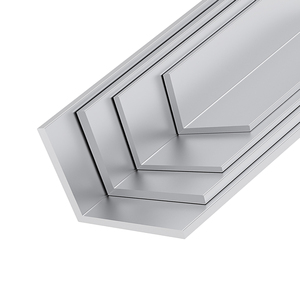
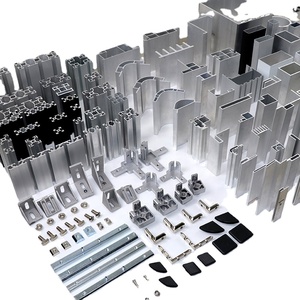
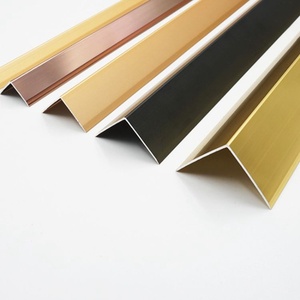
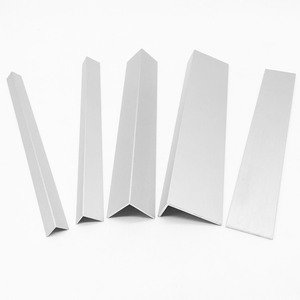
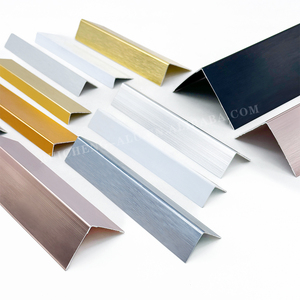
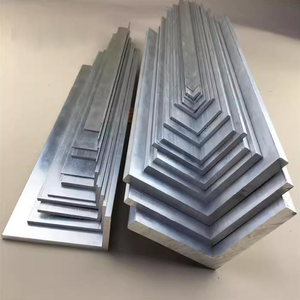
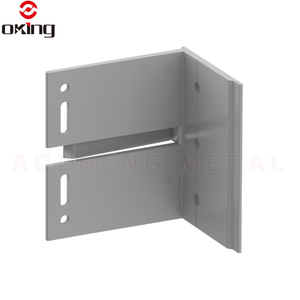
High-precision extruded aluminum angles, structural mounting brackets, and specialized hardware designed for commercial facade engineering and architectural cladding.
The global demand for energy-efficient commercial architecture, iconic skyscraper elevations, and high-performance exterior skins has positioned China as the global epicenter for glass facade manufacturing and architectural aluminum extrusion. As lead architects, structural engineers, and commercial procurement directors seek reliable Tier-1 manufacturing partners, understanding the intricacies of facade engineering—from thermal breakage limits and wind load deflection tolerances to structural silicone adhesion dynamics—becomes essential for risk mitigation and cost optimization.
A modern glass curtain wall is far more than a simple visual enclosure; it is a highly engineered, dynamic building envelope responsible for structural load transfer, solar heat gain mitigation, acoustic damping, and long-term weatherproofing. China wholesale glass facade factories offer unmatched economies of scale combined with advanced European-standard fabrication equipment. However, executing a successful international procurement campaign requires rigorous technical verification against international standards such as ASTM C1401, EN 13830, and GB/T 21086.
Selecting the optimal facade taxonomy directly influences construction scheduling, structural integrity, and total installed cost per square meter. Wholesale facade exporters in China predominantly specialize in two major structural typologies:
Pre-assembled and pre-glazed in climate-controlled factory environments. Interlocking split-mullions absorb differential structural drift and seismic motion. Reduces field installation labor by up to 70%.
Fabricated and assembled piece-by-piece on-site. Ideal for low-to-mid-rise buildings or non-standard geometrical elevations. Requires lower upfront shipping volume but demands skilled field labor.
Utilizes high-tensile 316-grade stainless steel spider fittings and articulated bolts to hold toughened glass sheets. Delivers ultra-clear, transparent architectural lobbies with minimal visual framing.
| Facade Performance Parameter | Unitized Glass Curtain Wall | Stick Glass Curtain Wall | Point-Supported Spider Glass |
|---|---|---|---|
| Factory Assembly Quality Control | Maximum (100% In-Factory) | Moderate (Field Dependent) | High (Hardware Factory-Set) |
| Acoustic Isolation (STC Rating) | 42 – 48 dB (Double/Triple IGU) | 35 – 40 dB | 32 – 38 dB |
| Air & Water Infiltration Resistance | Dual-barrier pressure-equalized rain screen | Field-applied wet sealant dependent | Single gasket / structural joint seal |
| Seismic Displacement Capacity | > 3.0% Inter-story drift | 1.5% – 2.0% Inter-story drift | 2.0% Inter-story drift |
| On-Site Erection Speed | Ultra-Fast (150–250 sqm/day) | Standard (40–80 sqm/day) | Moderate (60–100 sqm/day) |
The international architectural procurement landscape is undergoing a massive structural shift driven by carbon neutrality mandates, Environmental Product Declarations (EPDs), and digital supply chain integration. Leading developers across North America, Europe, the Middle East, and Australia are establishing strict ESG (Environmental, Social, and Governance) purchasing criteria when auditing wholesale facade factories in China.
Aluminum frame extrusion accounts for up to 40% of a glass facade's total embodied carbon footprint. Forward-thinking China exporters are shifting from traditional coal-powered smelting to hydro-powered and recycled aluminum scrap billets (such as 6063-T5 and 6061-T6 alloys). Utilizing post-consumer recycled aluminum lowers embodied energy consumption by up to 95%, enabling commercial building projects to secure LEED Platinum and BREEAM Outstanding certifications.
Procurement teams no longer accept static 2D CAD files. Tier-1 facade manufacturers in China now utilize fully integrated Building Information Modeling (BIM) workflows. Fabrication data is extracted directly from 3D Revit models into 5-axis automated CNC machining centers. This seamless digital continuity ensures dimensional tolerances as precise as ±0.5mm across thousands of custom-milled aluminum mullions and transoms.
International freight dynamics require innovative packaging and protective shipping engineering. Enterprise Chinese wholesale exporters now design custom modular steel-stillages and climate-sealed wooden crates featuring desiccant vacuum wraps. These protective measures prevent inter-layer moisture staining, glass coating degradation, and transit vibration micro-cracking across long ocean voyages.
The evolution of glass facade engineering focuses on achieving optimal visible light transmittance (VLT) while aggressively curtailing solar heat gain coefficient (SHGC) and U-factor values. Next-generation glass facade manufacturing incorporates state-of-the-art coatings, dynamic glazing, and thermal break engineering.
Sputtered nano-scale metallic silver layers reflect far-infrared heat rays while allowing high levels of natural daylight. Achieves SHGC values below 0.22 and VLT above 65%.
Integrating monocrystalline solar cells directly into the outer glass pane of unitized curtain walls, transforming passive building envelopes into active renewable energy generators.
High-strength PA66 GF25 (25% glass fiber reinforced) structural thermal barrier strips crimped between aluminum extrusions eliminate thermal bridging and condensation risk.
The structural integrity of a structural silicone glazed (SSG) facade relies on two-part high-modulus silicone sealants (e.g., Dow Corning or Sika grade). These elastomeric seals dynamically transfer negative wind suction loads directly from the glass edge to the extruded aluminum frame. Leading wholesale factories operate automated robotic sealant dispensers equipped with continuous quality-control monitoring of bite and cavity dimensions, ensuring zero air void entrapment.
Partnering directly with a primary Chinese exporter guarantees access to vertically integrated manufacturing facilities. From billet casting and matrix die engineering to electro-chemical surface treatment and robotic glazing assembly, complete in-house production control ensures strict adherence to technical project specifications.
Utilizing heavy-duty extrusion presses ranging from 1,000 to 7,500 metric tons capacity. Capable of extruding complex, thick-walled solid and hollow 6063-T6 profiles up to 300mm in cross-sectional depth.
Vertical powder coating and fluoropolymer (PVDF/FEVE) coating lines deliver 30-year chalk and fade resistance, enduring saline, coastal, and aggressive UV tropical climates.
In-house laboratory verification including spectrographic alloy purity testing, coating film thickness measurement, four-point mechanical glass bending, and mock-up air/water infiltration chamber testing.
A comprehensive Quality Assurance (QA) matrix tracks every extrusion bundle and glazed cassette from raw material ingot receipt to final port dispatch. Traceability tags embedded with QR codes grant site engineers instant digital access to mill test certificates (MTC), glass tempering stress records, and sealant adhesion test logs.
Structural mullions and transoms primarily utilize aluminum alloy 6063-T6 or 6061-T6. 6063-T6 provides an optimal balance of high tensile yield strength (minimum 170 MPa), excellent surface finish quality for anodizing/powder coating, and superior extrusion capability for intricate hollow profiles. For extra heavy-span applications, 6061-T6 provides even higher yield strength (minimum 240 MPa).
Tier-1 Chinese exporters perform mandatory third-party laboratory mock-up testing certified by international bodies such as Intertek, SGS, or TUV. Tests evaluate air permeability (ASTM E283 / EN 12152), static/dynamic water penetration (ASTM E331 / AAMA 501.1 / EN 12154), structural wind load performance (ASTM E330 / EN 13116), and seismic inter-story drift displacement (AAMA 501.4).
Typically, custom aluminum die matrix design and wire-EDM cutting require 10 to 15 days. First-article profile extrusion sampling and coating verification take approximately 7 days. Once dies and shop drawings are approved by the client's structural engineer, bulk extrusion, glass tempering, IGU assembly, and unitized cassette glazing take 30 to 45 days, depending on overall order volume in square meters.
All glass panels are manufactured using fully tempered or heat-strengthened safety glass complying with ANSI Z97.1 and EN 12150. Individual glass panes feature inter-layer protective cork pads or polymeric film. Complete unitized framing panels are secured inside custom-designed heavy-gauge steel stillages with rubber damping pads and polymer strapping, preventing glass-to-glass contact during container transit.
For aggressive climatic conditions, a multi-cavity polyamide PA66 GF25 thermal break system measuring between 24mm and 34mm in width is recommended. Combining deep thermal breaks with warm-edge composite spacer bars (e.g., Technoform) inside double or triple-glazed Low-E argon-filled IGUs achieves overall system U-values as low as 0.8 to 1.2 W/m²K, preventing interior condensation and lowering HVAC operating costs.
For coastal projects located within 3 km of saltwater, anodizing should be specified at a minimum Class I thickness of 18 to 25 microns (AAMA 611). Alternatively, a 3-coat or 4-coat 70% PVDF fluoropolymer wet spray coating complying with AAMA 2605 (dry film build > 30 microns) over chromate-free pre-treatment provides exceptional resistance to salt spray pitting, chemical chalking, and color fading.