

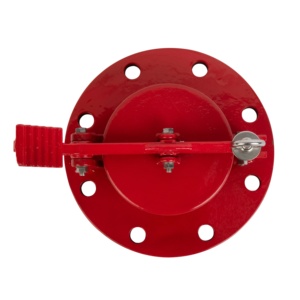
Aluminum Angle Gauge Hatch with Lock Precision Sealing
Engineered for oil tank measurement and sampling ports. Features leak-proof locking mechanisms and corrosion-resistant alloy finish.
Get CatalogExplore our industrial-grade, precision-extruded architectural aluminium cladding profiles, wall angle brackets, corner trims, and specialized sealing components manufactured for extreme environmental endurance.
Engineered for oil tank measurement and sampling ports. Features leak-proof locking mechanisms and corrosion-resistant alloy finish.
Get Catalog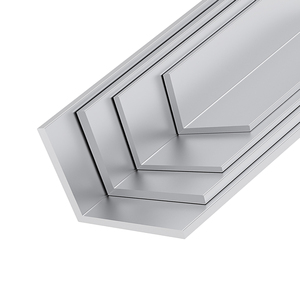
Architectural 6063-T5/T6 structural angle profiles tailored for edge trimming, heavy cladding frames, and corner protection.
Get Catalog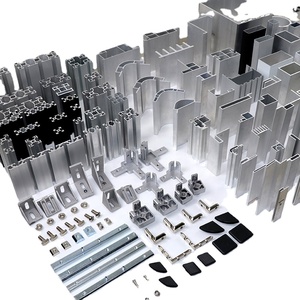
Versatile square, round, and I-shape aluminum extrusions featuring wood grain, anodized, or powder-coated surface treatments.
Get Catalog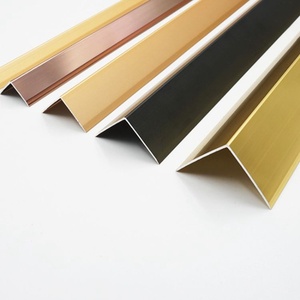
High-precision dimensional tolerance profiles designed for seamless jointing, facade backing, and high wind-load installations.
Get Catalog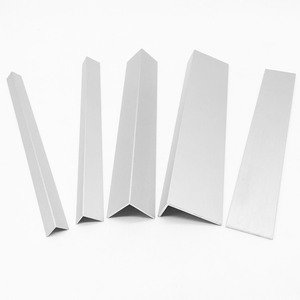
6000-Series architectural trims offering precision fabrication services including CNC cutting, bending, punching, and MIG welding.
Get Catalog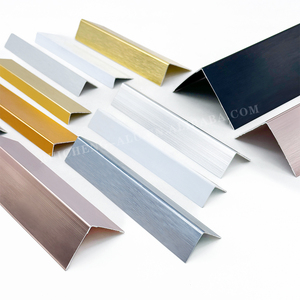
Heavy-duty protective angle extrusions for exterior facade reveals, wall corners, and architectural decorative framing.
Get Catalog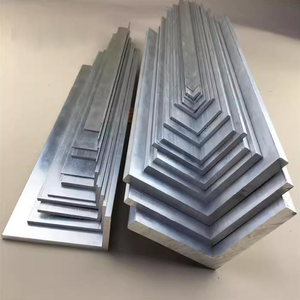
High-tensile corrosion-resistant marine alloy angle extrusions engineered to withstand salt-spray exposure and structural stress.
Get Catalog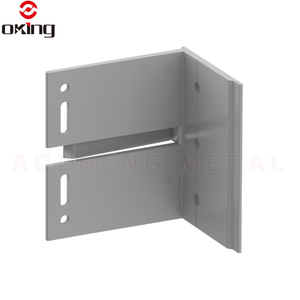
Structural aluminium brackets engineered for exterior cladding panel support, dead-load transfer, and dynamic wind-load anchoring.
Get CatalogCombining primary billet extrusions, advanced automated surface finishing lines, and in-house CNC toolmaker engineering under a single quality control standard.
Full CAD/CAM CAD-to-Die capability allows us to extrude intricate hollow, semi-hollow, and solid profiles. We conduct Finite Element Analysis (FEA) on custom wall thicknesses prior to press runs.
Integrated processing for Architectural Anodizing (Class I & II), Qualicoat-compliant electrostatic Powder Coating (using Jotun & Pulver chemistry), and Sublimated Wood-Grain finishes.
Every extrusion bundle undergoes Brinell/Webster hardness verification, cross-hatch adhesion testing (ASTM D3359), and salt-spray corrosion analysis (ASTM B117) before export release.
"High-performance architectural facades do not fail due to metal selection alone—failures stem from unverified film build, poor pre-treatment chemistry, and unmitigated thermal bridging. Our fully integrated facility eliminates these risks at the die level."
Architectural aluminium cladding serves as the primary protective skin for modern commercial high-rises, residential towers, and industrial complexes. Specifying custom OEM extrusions and panel systems requires a deep understanding of alloy metallurgy, temper selection, surface protection dynamics, and structural dry-hanging subframe mechanics.
The choice of primary aluminium alloy directly impacts structural rigidity, extrusion complexity, and surface finish aesthetics. In facade engineering, 6000-series magnesium-silicon alloys represent the benchmark balance between tensile strength and extrudability:
Exterior aluminium cladding panels and extruded trims are continuously subjected to solar UV degradation, atmospheric pollutants, thermal shock, and airborne moisture. To guarantee a 20+ year aesthetic and structural service life, three primary finishing technologies are deployed:
| Finish Specification | Film Build Thickness | Testing Protocol | Ideal Architectural Application |
|---|---|---|---|
| Fluoropolymer / PVDF Coating | 25 – 35 Microns (2/3 Coat) | AAMA 2605 / 4000 hr Salt Spray | High-rise curtain walls, extreme UV coastal zones |
| Architectural Powder Coating | 60 – 80 Microns | Qualicoat Class 2 / AAMA 2604 | Commercial exterior cladding, trims, louvers |
| Anodizing (Anodic Oxide) | 15 – 25 Microns (Class I) | ISO 7599 / AA-M10C22A41 | High-traffic entryways, metallic facades, marine angles |
| Sublimated Wood Grain | 60 – 70 Microns (Base+Film) | Qualideco Industrial Spec | Feature wall cladding, soffits, pergolas, solar fins |
Prior to powder application or anodizing, all extruded profiles undergo a non-chromate conversion pre-treatment (utilizing SurTec chemistry). This chemical conversion process creates an ultra-thin passivated surface layer that guarantees adhesion, preventing underfilm corrosion and filiform blistering in humid environments.
Insights into shifting supply chain dynamics, carbon accounting, offsite construction, and digital procurement workflows for B2B sourcing managers and façade contractors.
Global procurement directives are rapidly mandating Environmental Product Declarations (EPDs). Sourcing managers are prioritizing factories utilizing hydro-powered primary smelters and scrap recycling closed loops to reduce Embodied Carbon (Scope 3 emissions) ahead of Carbon Border Adjustment Mechanisms (CBAM).
On-site labor shortages and compressed construction schedules are driving demand away from traditional stick-built facades toward factory-assembled unitized cladding cassettes. OEM suppliers capable of pre-assembling brackets, gaskets, and thermal breaks directly onto extrusions are gaining preferred vendor status.
Modern developers require full Building Information Modeling (BIM) object libraries (Revit / IFC formats) with precise dimensional tolerances, material density parameters, and thermal performance coefficients. OEM partners must deliver certified CAD files alongside physical extrusion dies.
The facade industry is undergoing a technological transformation driven by energy efficiency standards, advanced CNC fabrication capabilities, and smart material chemistry. Key developmental trends reshaping aluminium cladding manufacturing include:
With stringent global building energy codes (such as LEED v4 and BREEAM), solid aluminium profiles are increasingly re-engineered as multi-chamber systems. Precision thermal breaks utilize glass-fiber-reinforced Polyamide (PA66) strips mechanically crimped between inner and outer extruded aluminium shells. This reduces frame thermal transmittance (U-value) significantly, preventing thermal bridging and surface condensation.
Architectural facade maintenance costs for high-rise structures are substantial. Modern OEM finishing lines are integrating hydrophobic micro-textured topcoats and nano-titanium dioxide (TiO2) photocatalytic additives. These coatings break down organic grime under sunlight exposure, allowing natural rainfall to wash away dust, maintaining facade clarity with minimal maintenance cycles.
Complex parametric architecture demands non-standard geometry. Modern OEM extrusion plants have integrated inline 5-axis CNC machining centers, automated roll bending for curved facade profiles, and robotic TIG/MIG welding units. This enables seamless conversion from raw mill-finish extrusions to job-site-ready curtain wall brackets and interlocking cladding corner assemblies.
Critical procurement considerations answered by our senior facade engineering and OEM export team.
For structural dry-hanging support brackets transferring cladding panel dead loads and dynamic wind loads back to the reinforced concrete slab, 6061-T6 or heavy-wall 6063-T6 is recommended. 6061-T6 provides high yield strength (≥240 MPa) and superior shear resistance, ensuring structural stability under high wind loads.
Custom die engineering typically takes 7 to 10 working days from 2D/3D CAD drawing sign-off. First-article mill-finish extrusion samples are produced immediately upon die trial and dispatched via express air freight for dimensional verification before full batch press production begins.
We utilize single-lot architectural polyester powders from certified global suppliers (e.g., Jotun, Pulver) and process orders under automated electrostatic spray booths. Spectrophotometer color readings (Delta E ≤ 0.5) and gloss level checks are conducted every 500 meters of extrusion to ensure complete visual uniformity across high-volume production batches.
Profiles are interleaved with protective non-adhesive PE film, wrapped in heavy-duty moisture-barrier shrink wrap, bundled with corner edge protectors, and secured inside steel-banded seaworthy wooden crates or ISPM-15 heat-treated pallets to prevent transit scratching and sea-air corrosion.
Yes. Our inline fabrication capabilities include automated high-speed mechanical punching and CNC routing for custom mounting slots, counter-sunk screw holes, and drain notches directly on extruded angles, significantly cutting on-site installation time for cladding contractors.
Every shipment is issued with full quality documentation, including EN 10204 3.1 Material Test Certificates (MTC) detailing chemical composition and mechanical tensile/yield test results, coating film thickness inspection logs, and Certificate of Origin (COO) for seamless customs clearance.
Send us your project section drawings, DWG profiles, or specification requirements. Our technical sales engineering department will deliver a comprehensive proposal with die feasibility analysis, weight schedules, and wholesale factory pricing within 24 hours.
Get Catalog