
Custom OEM Architectural Glass Manufacturer & Factories

Precision Sputtered Low-E Coating, Laminated Structural Glazing, Thermally Broken Profiles & Custom OEM Engineering for High-Rise Facades Worldwide.

OEM Catalog & Hardware Components

Featured Architectural Assemblies & Precision Profile Brackets

Engineered structural connection hardware, precision corner brackets, wall anchors, and high-tolerance extrusions manufactured to complement custom architectural glass and curtain wall installations.

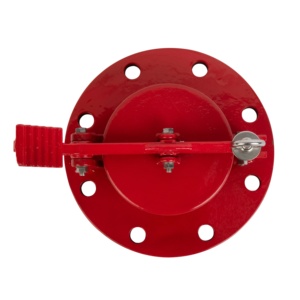
Tank & Glass Hatch Aluminum Angle Gauge Hatch with Lock Precision Sealing

Aluminum Angle Gauge Hatch with Lock Precision Sealing

Engineered sampling port with leak-proof elastomer seals for oil tank measurement, chemical containment, and industrial glass access ports.

Contact Us
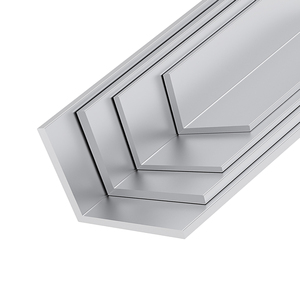
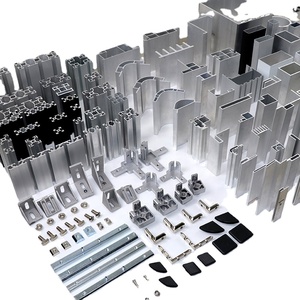
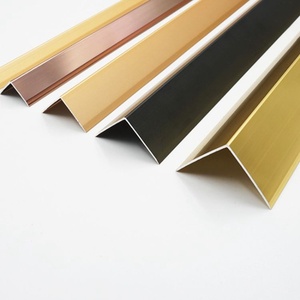
6000 Series Profile 6000 Series Extruded Aluminium L Shape Profile

6000 Series Extruded Aluminium L Shape Profile Corner

Heavy-duty structural L-angle profile in 6063-T6 alloy for reinforced curtain wall framing, structural corner stiffeners, and facade edging.

Contact Us
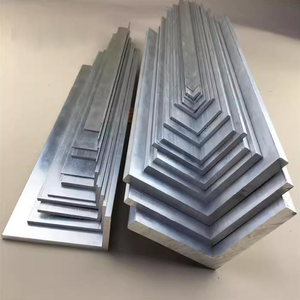
Custom Extrusion Factory T5 T6 6061 Aluminum Wall Angle Rail Profile

Factory T5 T6 6061 Aluminum Wall Angle Rail Profile

Precision-machined square, round, and I-shape aluminum rails featuring wood grain finishes for custom glass partitioning and wall framing.

Contact Us
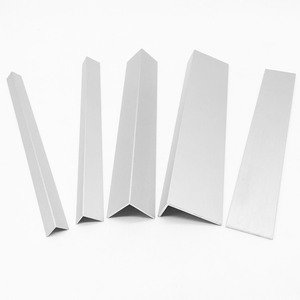
Facade Edging High Quality Custom Aluminium Angle L Shape Corner Profiles

High Quality Custom Aluminium Angle L Shape Corner Profiles

Anodized and powder-coated architectural corner trims designed to protect insulated glass unit (IGU) edges and structural glazing joints.

Contact Us
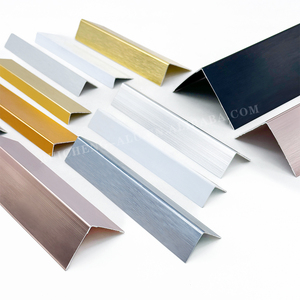
Architectural Trim 6000 Series Aluminum Alloy Wall Angle Trim Profile

6000 Series Aluminum Alloy Wall Angle Trim Profile

Qualicoat-certified powder-coated trim profiles with custom cut, bend, and weld processing for luxury architectural interior and exterior facades.

Contact Us
Corner Protection Aluminum L-Shape Angle Extrusion Profiles

Aluminum L-Shape Angle Extrusion Profiles for Corner Protection

Punch and weld processed corner protection profiles built for heavy traffic commercial fenestration and structural curtain wall integration.

Contact Us
Marine & Structural Wholesale Factory Aluminum Angle Iron Corner

Factory Aluminum Angle Iron Corner for Marine & Architectural Use

High-strength marine grade corner extrusions engineered for high humidity, coastal saltwater exposures, and structural glass balustrade bases.

Contact Us
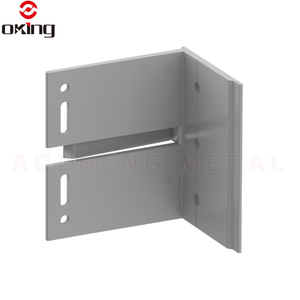
Cladding Bracket Aluminum Alloy Angle Bracket For Curtain Wall System

Aluminum Alloy Angle Bracket for Curtain Wall Dry Hanging System

Precision dead-load and wind-load aluminum support brackets designed for unitized curtain wall installation and rainscreen cladding systems.

Contact Us
E-E-A-T Technical Whitepaper

State-of-the-Art OEM Architectural Glass Processing & Fabrication

As a tier-one custom OEM architectural glass manufacturer, our integrated processing facilities combine advanced magnetron vacuum sputtering, computerized CNC edge processing, automated horizontal glass tempering, and ISO Class 7 cleanroom lamination.

0.28
Ug Value (W/m²K) Min.
99.4%
Argon Gas Retention Rate
>90 MPa
Tempered Surface Compression
3,300×12,000mm
Jumbo Glass Processing Capacity

Magnetron Sputtered Low-E Coatings (MSVD)

Utilizing double and triple-silver off-line vacuum deposition technology, our Low-E glass formulations achieve solar heat gain coefficients (SHGC) down to 0.22 while maintaining visible light transmittance (VLT) exceeding 68%. This micro-thin silver stack reflects far-infrared thermal radiation, dramatically reducing HVAC cooling loads in tropical and temperate climates alike.

SentryGlas® (SGP) & PVB Laminated Safety Glass

Engineered for typhoon resistance, blast mitigation, and structural overhead glazing. Our ionoplast SGP interlayers exhibit 5 times the tear strength and 100 times the stiffness of traditional PVB, ensuring post-breakage structural integrity where the glass pane remains rigid even under complete impact fracture.

Heat Soak Testing (HST) to DIN EN 14179

To eliminate spontaneous breakage caused by Nickel Sulfide (NiS) inclusions in fully tempered glass, 100% of our architectural tempered glass undergo rigorous Heat Soak Testing. Held at 290°C (±10°C) for a calibrated dwell time, any contaminated panes undergo accelerated phase transformation and controlled destruction inside the chamber, guaranteeing absolute field safety.

Technical Specification Matrix: OEM Glazing Configurations

Tested in accordance with NFRC 100/200 and EN 410 standards for structural facade engineering.

Glazing Configuration Type VLT (%) SHGC (Solar Factor) U-Value (W/m²K Air) U-Value (W/m²K Argon) Acoustic Rating (Rw dB)
6mm Clear + 12A + 6mm Clear IGU 78% 0.70 2.70 2.40 32 dB
6mm Double Silver Low-E + 16A + 6mm Clear 65% 0.32 1.40 1.10 36 dB
6mm Triple Silver Low-E + 16Ar + 6mm Clear (Ultra-Clear) 68% 0.23 1.10 0.85 38 dB
Triple Glazed: 6mm Low-E + 12Ar + 6mm + 12Ar + 6mm 58% 0.20 0.75 0.50 42 dB
Hybrid Vacuum Insulated Glass (VIG + Low-E IGU) 62% 0.21 0.40 0.28 45 dB
Market Foresight & Innovation

Future Purchasing & Technological Trends in Architectural Glass

Architectural fenestration is undergoing a paradigm shift driven by stringent carbon neutrality mandates, net-zero building directives, dynamic solar modulation, and digital supply chain integration.

1. Decarbonization & Low-Carbon Recycled Glass Sourcing

Global developers and facade consultants are actively demanding Environmental Product Declarations (EPDs) and Low-Carbon Glass produced via electric hybrid furnaces. Sourcing float glass with high post-consumer cullet percentages (>30%) reduces energy consumption by 3% for every 10% cullet melt ratio, yielding a substantial reduction in Scope 1 and Scope 2 embodied carbon.

2. Next-Gen Vacuum Insulated Glass (VIG) Systems

Vacuum Insulated Glass (VIG) eliminates thermal convection and gas conduction by introducing a 0.1mm micro-vacuum chamber sealed with inorganic metallic pillars. Providing the insulation performance of a 50mm solid brick wall in a slim 8.3mm profile, VIG is rapidly becoming the gold standard for high-rise retrofits and zero-energy building envelopes.

3. BIPV (Building-Integrated Photovoltaics) & Smart Electrochromic Glass

Facade envelopes are transitioning from passive weather barriers into active energy generators. Transparent solar BIPV glass incorporating cadmium telluride (CdTe) or perovskite micro-cells captures solar radiation directly from vertical curtain walls. Paired with electrochromic dynamic tinting, building management systems automatically modulate glass VLT based on real-time solar azimuth angles.

Landmark Project Executions & Glazing Integration

End-to-End Factory Integration

Why Engineering Teams & Facade Contractors Choose Our OEM Factory

By bringing aluminum profile extrusion, anodizing, powder coating, and precision glass processing together under a unified manufacturing umbrella, we remove systemic interface errors between glass and framing system suppliers.

Single-Source Accountability

Eliminate cross-vendor disputes between glass fabricators and profile extruders. Our direct manufacturing line coordinates glass expansion tolerances, bite depth, structural silicone sealant adhesion, and EPDM gasket compatibility under one quality management system.

Automated CNC Edge Grinding & Drilling

Precision double-edging lines, flat polishing, arris milling, and CNC waterjet countersunk hole drilling guarantee strict adherence to ISO 12543 tolerances. Edge stress concentration is reduced by 95%, protecting point-supported spider glazing against perimeter micro-cracking.

Custom Die & Sample Turnaround

Our toolmakers develop bespoke extrusion dies directly from customer DWG/DXF facade section files. Rapid first-article inspection samples, optical spectroradiometer reports, and finish master panels are dispatched within 7–10 working days for specifier approval.

Procurement & Technical FAQ

Frequently Asked Questions by Facade Consultants & Buyers

Direct technical insights covering glass strength calculations, acoustic isolation, solar heat control, thermal stress, and international export packing specifications.

What is the maximum bending deflection limit allowed for custom glass panels under peak wind load?
In accordance with ASTM C1036 and EN 12150 standards, structural glass deflection under design wind load (positive and negative pressure) is typically restricted to L/175 of the clear span, or a maximum of 25mm, whichever is smaller. For double and triple glazed units, the outer pane must be designed to absorb maximum dynamic pressure without transferring excessive structural shear load onto the inner spacer seals.
How do SentryGlas® (SGP) interlayers differ from standard PVB in structural glazing applications?
SentryGlas® ionoplast interlayers possess a shear modulus 100 times greater and a tensile strength 5 times higher than standard PVB (Polyvinyl Butyral). Under elevated temperatures (up to 50°C), SGP maintains its structural stiffness, allowing laminated glass panes to function as true structural elements. This permits thinner glass configurations, open-edge balustrades without top caps, and overhead glass canopies capable of retaining post-fracture loads.
What causes thermal stress fracture in glass, and how does your factory mitigate this risk?
Thermal stress occurs when central regions of a glass panel absorb solar radiation and expand rapidly, while the edges remain cool due to frame shading. When the temperature differential (ΔT) exceeds 35°C on annealed glass, tensile edge stresses cause spontaneous cracking. Our engineering team conducts thermal stress calculations for all spectrally selective Low-E projects, recommending Heat-Strengthened (24–52 MPa surface compression) or Fully Tempered (>90 MPa) glass with polished edges whenever high thermal gradients are present.
Which structural silicone sealants are approved for two-sided and four-sided structural curtain wall glazing?
We exclusively specify two-component high-modulus structural silicones such as DowSil™ 983, DowSil™ 995, or Tremco Proglaze SSG for factory unitized bonding. All glass coating edges undergo automated Low-E edge deletion (stripping the metallic coating back 10–15mm) prior to structural silicone application to ensure direct chemical bonding to the glass substrate, backed by 20-year structural adhesion warranties.
How are jumbo laminated and IGU glass shipments packaged to guarantee zero breakage during sea transit?
Export glass shipments are packed in custom heavy-duty, fumigated ISPM-15 compliant wooden A-frames or closed plywood crates with rubber isolation pads. Individual glass panes are interleaved with anti-stain lucite powder or cork spacers. Desiccant packs are enclosed inside vacuum-sealed moisture-barrier polythene wrapping to prevent surface oxidation, clouding, or glass sweating during long-distance maritime container transport.

Partner with a Direct Custom OEM Architectural Glass Manufacturer

Submit your facade CAD drawings, wind load calculations, or glass specification schedules. Our structural engineering team provides complete quotation packages, thermal stress modeling, and structural silicone bite calculations within 24 hours.

Contact Us