Unprocessed, high-purity aluminum extrusions, coils, sheets, and tread plates optimized for architectural fabrication, industrial remanufacturing, and anodizing applications.
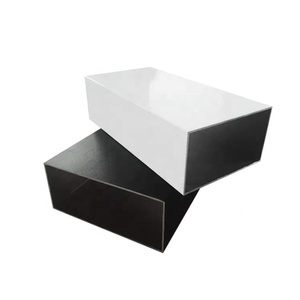
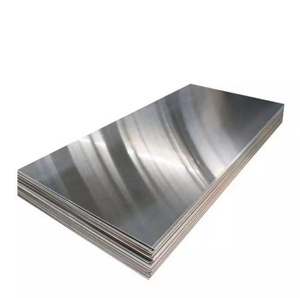
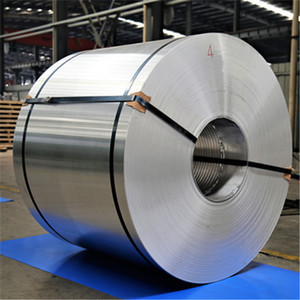
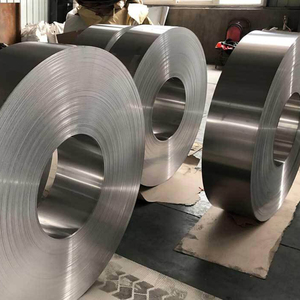
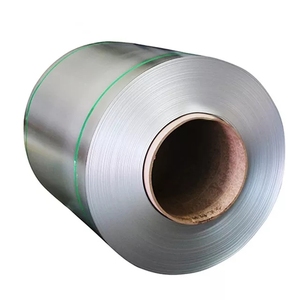
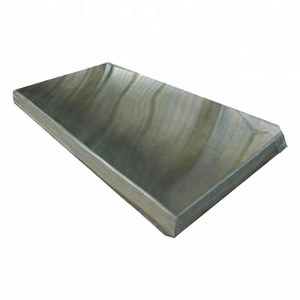
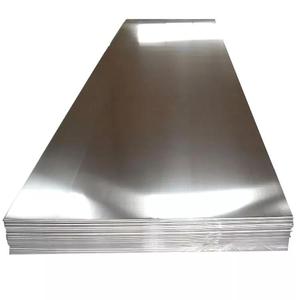
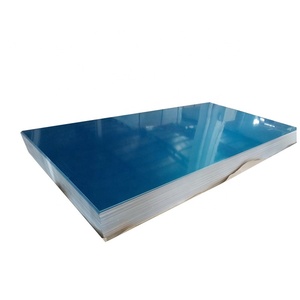
In commercial aluminum metallurgy, Mill Finish refers to the natural, untreated surface state of aluminum immediately following hot or cold rolling, extrusion, or drawing processes. Unlike mechanically polished, anodized, or powder-coated surfaces, mill finish profiles, sheets, and coils retain the exact micro-topography created by the steel extrusion dies or rolling mill passes.
Upon exiting the die or mill rolls at elevated temperatures, molten or semi-solid aluminum instantly reacts with atmospheric oxygen to form a thin, tenacious, naturally occurring self-healing passivation layer of aluminum oxide (Al₂O₃), typically measuring between 2.5 to 5 nanometers (25–50 Ångströms) in thickness. This micro-layer provides immediate baseline atmospheric corrosion protection, rendering raw mill finish aluminum surprisingly resilient under moderate environmental conditions.
Fine longitudinal die lines running parallel to the direction of extrusion. Our direct-drive precision presses maintain strict Ra roughness limits below 0.8 µm for clean post-processing.
Instantaneous atmospheric oxidation forming an amorphous Al₂O₃ film that acts as a natural dielectric barrier against environmental degradation prior to secondary finishing.
Specially homogenized billet chemistry guarantees minimal intermetallic segregation, delivering an ideal substrate for architectural architectural anodizing lines.
For architectural system designers and industrial OEM buyers, specifying raw mill finish from a qualified manufacturer provides maximum operational flexibility. It serves as the master structural material for downstream CNC machining, welding, structural bending, and customized localized surface treatments such as chemical etching, hard-coat anodizing, Kynar 500 fluoropolymer liquid painting, or electrostatic powder coating.
Selecting the appropriate aluminum alloy and temper designation is the most critical structural decision in industrial procurement. As an established OEM contract manufacturer, our production lines process pure aluminum, heat-treatable, and non-heat-treatable structural alloys engineered for specific mechanical loads, chemical environments, and forming operations.
| Alloy Series | Primary Tempers | Tensile Strength (MPa) | Yield Strength (MPa) | Corrosion Resistance | Primary Industrial Applications |
|---|---|---|---|---|---|
| 1000 Series (1050/1060/1100) | O, H14, H24 | 75 - 145 | 35 - 115 | Exceptional (Pure Al) | Chemical equipment, heat exchangers, deep drawing, reflective flashings |
| 2000 Series (2024) | T3, T4, T351 | 400 - 480 | 270 - 345 | Moderate (Requires Protection) | Aerospace structural fittings, high-stress military hardware, tension members |
| 5000 Series (5052/5754/5083) | O, H32, H111, H116 | 190 - 345 | 90 - 240 | Superior (Marine Grade) | Marine hulls, fuel tanker bodies, pressure vessels, offshore walkways |
| 6000 Series (6063/6061) | T5, T6, T52 | 150 - 310 | 110 - 276 | High (Architectural Grade) | Curtain walls, window frames, structural trusses, automotive chassis, heat sinks |
| 7000 Series (7075) | T6, T651 | 510 - 570 | 430 - 505 | Fair to Moderate | High-stress aerospace spars, precision molds, defense components, race gear |
Understanding temper designations is equally critical: T5 temper denotes profiles cooled rapidly from elevated temperature shaping and artificially aged, providing optimal dimensional stability and easy machining. T6 temper represents solution heat-treated and artificially aged metal, delivering maximum yield strength necessary for structural curtain wall mullions and high-span architectural frames.
Achieving strict dimensional tolerances according to EN 755-9, EN 12020-2, and ASTM B221 standards requires tight control over every metallurgical phase—from raw ingot melting to final tension leveling and packaging.
Direct-chill cast virgin billets undergo 12-hour thermal homogenization at 560°C to dissolve micro-segregations, equalize magnesium and silicon phases, and optimize extrudability.
Hydraulic extrusion presses utilizing CAD-designed H13 tool steel dies push heated billets at precise ram speeds, continuously monitored by laser pyrometers.
Extruded lengths undergo hydraulic detwisting and tension stretching (typically 1.5% to 3% permanent elongation) to neutralize internal stresses and achieve perfect flatness.
To ensure guaranteed quality on every OEM batch shipment, our ISO 9001 certified laboratory conducts non-destructive and destructive testing prior to release:
Global B2B aluminum procurement is undergoing a structural shift driven by decarbonization mandates, supply chain realignments, and advanced digital fabrication requirements. Strategic buyers must account for several emerging market dynamics:
With the implementation of the European Union's Carbon Border Adjustment Mechanism (CBAM) and corporate ESG mandates globally, demand for low-carbon primary aluminum billets—smelted using renewable hydroelectric power—has surged. Low-carbon mill finish aluminum yields less than 4.0 kg CO₂ per kg of raw aluminum (compared to global averages of ~16.5 kg CO₂/kg).
Our OEM production facilities offer fully documented carbon footprint traceability certificates, enabling global project developers to qualify for LEED v4 Gold/Platinum and BREEAM sustainability ratings.
Traditional procurement focused solely on raw metric ton prices. Modern supply chains prioritize integrated fabrication to minimize scrap waste and cut turnaround times. Procurement managers are increasingly shifting toward pre-machined mill finish aluminum.
By sourcing mill finish extrusions that are pre-cut, CNC-milled, precision-drilled, and mitred directly at our factory, buyers eliminate double-handling, optimize shipping container loading density, and transfer scrap metal recycling logistics back to the primary mill.
London Metal Exchange (LME) aluminum spot prices represent a major financial variable for high-volume buyers. Professional OEM manufacturers assist enterprise clients through customized pricing frameworks:
As industrial demand shifts toward lightweight electric vehicles (EVs), modular unitized curtain walls, and high-efficiency solar racking systems, aluminum extrusion and rolling technology is evolving rapidly:
Addition of trace elements like Sc (Scandium), Zr (Zirconium), and Cr (Chromium) to standard 6000 and 5000 alloys increases grain refinement, boosting tensile yield by 15-20% without degrading extrusion speed.
Advanced die heating technology and high-pressure indirect presses allow wall thicknesses down to 0.8mm while maintaining tight structural tolerances for lightweight applications.
Automated inline optical laser scanners detect micro-scratches, die pickup, and blister defects at high speeds, guaranteeing pristine surfaces for optical anodizing.
Backed by state-of-the-art extrusion, anodizing, powder coating, and precision fabrication infrastructure, our factory stands as an authoritative manufacturing partner for world-class contractors, global distributors, and industrial OEMs.
Operating direct-drive extrusion presses, automated continuous horizontal and vertical anodizing lines, electrostatic powder coating systems, and high-speed multi-axis CNC machining centers under a unified quality management system guarantees seamless end-to-end production control.
Our products undergo rigorous multi-stage quality control matching international engineering standards:
ISO 9001:2015 — Quality Management Systems
ASTM B221 / B209 — Standard Specification for Aluminum Extrusions/Sheets
EN 755 / EN 12020 — Structural Tolerance & Precision Standards
Qualicoat / Qualanod Alignment — Architectural Surface Quality Standards
Detailed technical answers to help purchasing managers, structural engineers, and fabricators specify mill finish aluminum.
Mill finish is raw aluminum exactly as extruded or rolled, carrying a natural 2.5-5nm oxide film and visible micro-lines. Anodizing electro-chemically thickens this oxide film up to 10-25 microns, creating an integral, metallic surface. Powder coating electrostatically applies a 60-80 micron decorative thermosetting polymer layer. Mill finish offers the lowest initial cost and serves as the raw material for secondary finishing or enclosed structural applications.
Aluminum does not rust like steel because it contains no iron. When exposed to air, mill finish aluminum instantly forms a protective aluminum oxide layer that prevents deep structural corrosion under normal conditions. However, in aggressive environments—such as coastal marine spray, industrial acidic rainfall, or prolonged moisture trap conditions—untreated mill finish aluminum can develop white atmospheric oxidation pitting. For exposed marine or coastal outdoor environments, 5000-series alloys or 20-25µm anodized finishes are recommended.
Yes, mill finish aluminum provides excellent weldability via TIG (GTAW) or MIG (GMAW) processes. However, because the natural aluminum oxide layer has a significantly higher melting point (approx. 2072°C) than the underlying aluminum metal (approx. 660°C), surfaces should be wire-brushed or chemically degreased immediately prior to welding to ensure clean puddle fusion and eliminate porosity defects.
We employ rigorous export packaging protocols: individual profile lengths are interleaved with protective non-abrasive paper or polyethylene film. Extrusions are then bound into tight hex-bundles wrapped in waterproof woven plastic sheeting, strapped with steel bands, and packed into fumigated ISPM-15 wooden crates or custom steel frame pallets designed for side-forklift unloading.
For standard profile section drawings, die design, steel cutting, and trial extrusion testing typically require 10 to 14 business days. Upon die sample approval, mass extrusion production takes 15 to 20 days depending on total metric tonnage. Sample air-express dispatch is available for first-article dimensional verification.
For deep drawing, spinning, or complex metal forming, pure non-heat-treatable alloys such as 1050-O, 1060-O, or 3003-O offer maximum ductility and high elongation without cracking. For structural frames, curtain wall mullions, and load-bearing trusses, heat-treatable 6000-series alloys like 6063-T6 or 6061-T6 provide the requisite yield strength and mechanical stiffness.
Our extrusions conform strictly to EN 755-9 (Standard Precision) and EN 12020-2 (High Precision Structural), as well as ASTM B221 standards. Cross-sectional dimensions, wall thickness variations, straightness tolerances, twist limits, and angularity are continuously monitored via optical profile projectors and laser micrometers.