Explore our industrial-grade, fully customizable OEM/ODM aluminium sash series. Designed for soundproofing, extreme thermal efficiency, hurricane-rated structural integrity, and architectural aesthetic excellence.
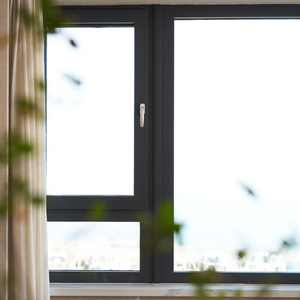
Precision-engineered hybrid sash combining exterior weather-resistant 6063-T6 aluminum extrusion with interior natural timber for ultimate noise damping and thermal insulation.

Heavy-duty machined hardware and luxury sash decorative accessories crafted from anodized aluminum alloys, engineered for high salt-spray and coastal environment resistance.
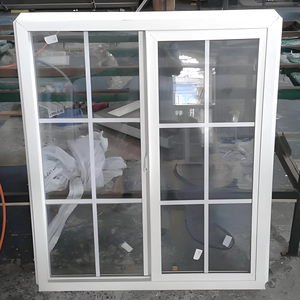
Wholesale architectural vertical sliding sashes incorporating constant-force balance spring mechanisms, dual weather-stripping seals, and smooth upward operation.
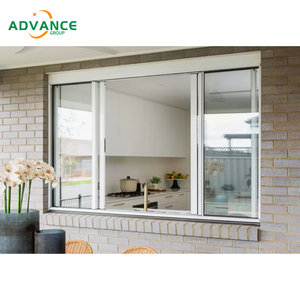
High-performance luxury villa sliding sashes featuring PA66 polyamide thermal barrier strip technology, multi-point locking gear, and Qualicoat powder coatings.
OEM profile extrusions customized to project specifications. Fully customizable wall thicknesses, corner cleat crimping slots, and integrated drainage cavities.
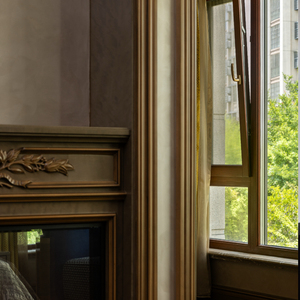
Versatile inward-opening sash structure offering dual ventilation modes (turn mode for maximum airflow and tilt mode for draft-free security ventilation).
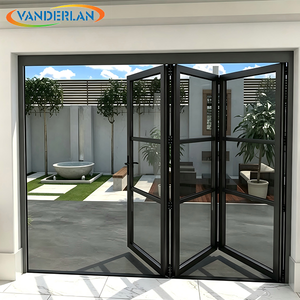
Large-span architectural bi-folding sash system with stainless steel bottom rollers, heavy-duty hinge pivot joints, and custom pane configurations up to 7 meters wide.
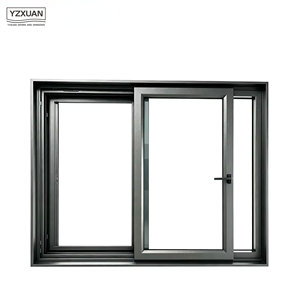
Integrated drift sash system combining energy-saving thermal break extrusions with high-transparency 304 stainless steel insect and security mesh screens.
As a global B2B procurement director or architectural facade specifier, evaluating an OEM/ODM Aluminium Sash Manufacturer requires looking far beyond standard surface aesthetics. A sash profile serves as the structural skeletal framework of a window or door unit—holding glass panes against wind pressures, thermal expansions, water infiltration, and long-term cyclic mechanical stresses.
Our industrial production lines at Pak Alumex operate an integrated manufacturing ecosystem on Painsra Road, Gojra, Faisalabad. By housing billet extrusion, die design, heat treatment aging, anodizing, powder coating, sublimation wood grain transfer, and thermal break strip insertion under one singular operational command, we maintain strict adherence to international standard tolerances (EN 12020-2 / ASTM B221).
The core structural integrity of an extruded sash profile depends entirely on metal alloy chemistry and artificial aging processes. We utilize primary, non-recycled A00 aluminum ingots alloyed with precise ratios of Magnesium (Mg) and Silicon (Si) to form Magnesium Silicide ($Mg_2Si$) precipitates.
Aluminium has a thermal expansion coefficient of approximately $23 \times 10^{-6} /\text{K}$. To prevent sash binding or air gasket seal displacement during extreme temperature shifts ($-20^\circ\text{C}$ winter to $+60^\circ\text{C}$ solar exterior glass face), our CAD engineering team builds anti-bowing expansion gaps and dynamic glazing pockets into every custom OEM sash die profile.
Unbroken aluminum profiles conduct thermal energy rapidly ($K \approx 200 \text{ W/m}\cdot\text{K}$). Modern energy efficiency standards require thermally broken sash assemblies where the exterior and interior extruded aluminum shells are mechanically isolated using non-conductive structural polyamide strips ($K \approx 0.3 \text{ W/m}\cdot\text{K}$).
Our OEM/ODM manufacturing line incorporates automated knurling, strip insertion, and multi-roller crimping machines using 25% glass-fiber reinforced Polyamide 66 (PA66-GF25). This ensures high shear strength ($\ge 30 \text{ N/mm}$) and heat deflection stability up to $240^\circ\text{C}$, matching the thermal expansion rate of aluminum to eliminate structural delamination over 30+ years of operational life.
Building facades bear the full brunt of environmental exposure—UV radiation, acid rain, industrial pollutants, and airborne salt particles. Pak Alumex operates three specialized surface finishing lines designed to guarantee long-term color retention, corrosion resistance, and film adhesion.
| Finish Technology | Standard Thickness | Pre-Treatment Process | Testing Standards & Performance | Optimal Application |
|---|---|---|---|---|
| Qualicoat Powder Coating | 60 – 80 microns ($\mu\text{m}$) | Chromate-free zirconium conversion wash | Cross-hatch adhesion (ISO 2409 Class 0), Salt Spray > 2000 hours | Architectural sashes, residential window frames, RAL customized facades |
| Anodizing (Silver, Bronze, Black) | 10 – 25 microns ($\mu\text{m}$) | E4 Acid etching & electro-chemical bath | AASS Salt Spray (ISO 9227) > 3000 hours, Mohs Hardness 7-8 | Coastal buildings, high-traffic commercial sashes, structural mullions |
| Sublimation Wood Grain | 60 $\mu\text{m}$ base + transfer layer | Powder base coat + high-temp vacuum film | UV Xenon arc exposure (ISO 16474), anti-scratch wear resistance | Luxury villas, resorts, soffits, timber-look window & door sashes |
By pairing fully automated bath chemistry with world-class polymer suppliers like Jotun and Pulver, our electrostatically applied polyester and fluoropolymer (PVDF) powder coats resist chalking, cracking, and blistering even under high tropical UV indexes.
The global architectural fenestration market is undergoing a rapid paradigm shift driven by stringent decarbonization targets, updated building energy codes, and evolving procurement preferences. Wholesalers, real estate developers, and OEM brand owners must align their supply chain with four critical macro-trends:
With regulatory frameworks like the European Union's Carbon Border Adjustment Mechanism (CBAM) and global EPD (Environmental Product Declaration) mandates, buyers are scrutinizing the carbon footprint of structural aluminum ($kg \text{ CO}_2 \text{ per } kg \text{ Al}$). Sourcing sashes extruded using hydro-powered low-carbon primary aluminum alongside closed-loop scrap recycling processes has transitioned from a niche preference to a core tender requirement.
Building envelopes require drastically lower heat transfer coefficients. Future sash profile design is shifting toward multi-cavity insulation pockets, expanded multi-track polyamide thermal barriers, and warm-edge foam insert technology. These features allow dual- or triple-glazed sashes to achieve passive house thermal isolation standards, dramatically reducing building HVAC energy usage.
Modern architectural aesthetics prioritize minimalist, continuous glass facades. Next-generation OEM/ODM sashes integrate completely hidden heavy-duty hinges, flush frame-to-sash transitions, dynamic water drainage channels hidden within the sash frame, and ultra-narrow interlocking stile widths (down to $18 \text{ mm} - 25 \text{ mm}$ for sliding doors) without sacrificing structural wind resistance.
Global buyers now demand rapid time-to-market. By leveraging CAD/CAM tool manufacturing, 3D optical profile scanning, and electronic batch quality logging, our custom OEM die manufacturing cycle is condensed from months down to days—ensuring first-article sample approvals are delivered swiftly to keep large-scale projects on schedule.
Navigating global supply chain volatility requires a reliable manufacturing partner capable of delivering consistent quality, competitive pricing, and flexible customization. Here is how our comprehensive factory infrastructure supports your commercial growth:
We develop bespoke extrusion dies directly from your DWG/DXF drawings or physical sash samples, verifying wall thickness, structural moment of inertia ($I_x, I_y$), and extrusion ratios prior to tooling fabrication.
From chemical spectro-analysis of incoming raw billet charges to Web/Flange dimensional caliper checks and electronic film thickness logs, every production bundle carries verifiable batch documentation.
All extruded sash bundles feature non-residue protective PE film, interleaved paper layers, waterproof shrink wrapping, and ISPM-15 compliant wooden crate packaging formatted for safe sea container transit via Karachi port.
For custom OEM/ODM profiles, initial CAD section review and die design take 48 hours. Tooling fabrication typically takes 10 to 14 working days. First-article extruded samples are then produced, checked against dimensional tolerances (EN 12020-2), and shipped or digitally verified for client approval before mass production starts.
We primarily extrude 6063 alloy in T5 and T6 tempers. 6063-T5 is ideal for standard architectural sashes and casements due to its exceptional surface finish. 6063-T6 is utilized where higher yield strength is required, such as commercial curtain wall mullions, structural bi-fold door frames, and high-windload sliding sashes.
Our automated vertical and horizontal powder coating lines apply Qualicoat Class 1 and Class 2 architectural polyester and superdurable coatings. Dry film thickness ranges from 60 to 80 microns over a chromate-free zirconium pre-treatment process, providing superior salt spray resistance (>2000 hours) and UV durability.
Yes. We provide complete thermal break assembly using mechanically crimped PA66-GF25 polyamide barrier strips. Furthermore, our precision CNC machining centers can pre-punch hardware mounting slots, corner cleat insertion points, lock gear routing, and drainage slots according to your hardware technical drawings.
Our baseline MOQ for standard profile dies is 500 kg per profile section, with flexible volume pricing for 20ft and 40ft High Cube container loads. Profiles are packaged in protective wrapping, bundled securely, and shipped globally via Karachi port with full commercial, origin, and mill test certificates.
Aluminium sashes with sublimation wood texture offer the warm aesthetic of natural timber without the risk of rotting, warping, termite damage, or constant repainting. Compared to PVC, aluminium sashes feature significantly higher structural strength, narrower sightlines, superior UV color stability, and zero thermal distortion under direct summer sunlight.
Partner with a trusted, engineering-driven OEM/ODM manufacturer. Request our comprehensive product catalog, die library, or custom section quotation today.