Engineered architectural profiles, industrial angle hatches, and structural mounting hardware tailored to international engineering tolerances.
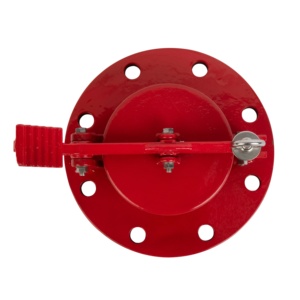
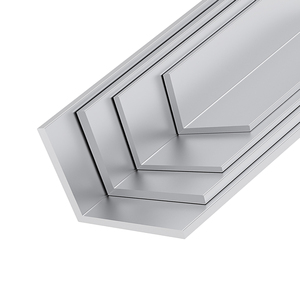
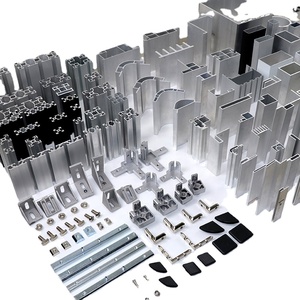
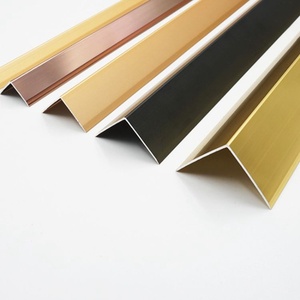
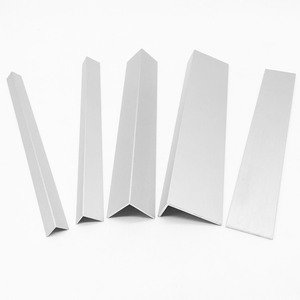
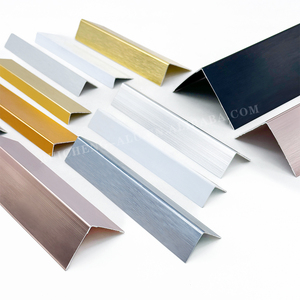
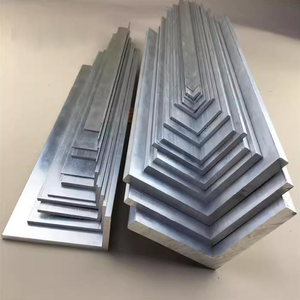
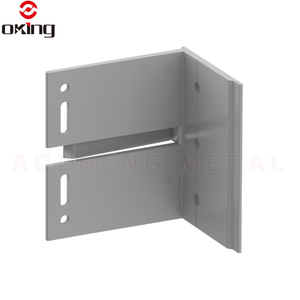
In modern commercial and high-end residential architecture, standard off-the-shelf window profiles frequently fail to satisfy stringent structural, thermal, and aesthetic design requirements. As a premier OEM/ODM Aluminium Windows Supplier & Exporter, our manufacturing plant operates a vertically integrated production line—spanning custom die drawing, billet extrusion, precision thermal break insertion, surface treatment (Anodizing, Qualicoat Powder Coating, Sublimation Wood Grain), and 5-axis CNC machining.
Every architectural window system requires precision geometric tolerances to guarantee airtightness, water-tightness under extreme wind pressure, and long-term acoustic isolation. By executing die design and alloy heat treatment in-house, we eliminate supply chain hand-offs and maintain strict compliance with international standards such as EN 12020-2, ASTM B221, and ISO 9001:2015.
We transform DWG, DXF, and 3D CAD models into custom extrusion dies within 10 to 14 days, verifying wall thickness ratio, structural moment of inertia, and press capability prior to mass extrusion.
Utilizing pre-treatment baths free of hexavalent chromium, our anodizing lines (10–25 µm) and electrostatic powder lines (60–80 µm) deliver superior salt-spray and UV resistance for harsh coastal environments.
Beyond profile extrusion, our workshop offers complete secondary fabrication: multi-angle mitre cutting, robotic corner crimping, lock pocket slotting, drainage punching, and structural welding.
While 6063-T5 alloy serves standard casement and sliding window frames due to its smooth surface finish and thermal performance, load-bearing facade mullions, louver support arms, and heavy-duty lift-and-slide doors require 6063-T6 or 6061-T6 alloys to withstand wind loads exceeding 3.0 kPa without mechanical deflection.
| Alloy & Temper | Tensile Strength (MPa) | Yield Strength (MPa) | Elongation (%) | Primary Window & Facade Application |
|---|---|---|---|---|
| 6063-T5 | ≥ 185 | ≥ 145 | ≥ 8 | Standard Casement Windows, Interior Partitions, Trim Profiles |
| 6063-T6 | ≥ 225 | ≥ 190 | ≥ 10 | Thermally Broken Sliding Doors, Curtain Wall Mullions, Heavy Louvers |
| 6061-T6 | ≥ 290 | ≥ 240 | ≥ 10 | Structural Cladding Brackets, Marine Angle Hatch Systems, Heavy Hardware |
| 6005A-T6 | ≥ 270 | ≥ 225 | ≥ 8 | Large-Span Commercial Facade Transoms & Unitized Frames |
The global building envelope market is experiencing a paradigm shift driven by stringent energy efficiency legislation, decarbonization mandates, and supply chain digitalization. International procurement teams, real estate developers, and facade contractors must navigate these four critical procurement trends:
With the European Union's Carbon Border Adjustment Mechanism (CBAM) and global Scope 3 emissions reporting, buyers prioritize suppliers utilizing primary aluminium smelted with renewable hydro-power or incorporating verified recycled scrap content (≥75% circular metal) to lower embodied carbon.
On-site labour costs and tight construction timelines have accelerated demand for factory-assembled, unitized window cassettes and curtain wall panels. B2B buyers now look for OEM partners capable of supplying pre-glazed, pre-gasketed modules that slot directly into building structures.
Procurement choices are increasingly dictated during early architectural design phases. OEM suppliers must furnish Building Information Modeling (BIM) files, Revit objects, and precise finite element thermal simulation models ($U_f$ values) to earn specification on major commercial tenders.
Modern purchasing managers require digital certificates of analysis (CoA) detailing billet melt compositions, anodizing bath chemical logs, and powder coat adhesion test records matched to individual bundle QR codes for full end-to-end quality assurance.
Architectural aesthetics and green building codes (LEED, BREEAM, Passive House) are reshaping the physical design of aluminium window extrusions. The key technological developments dominating current window production include:
Uninsulated aluminium exhibits high thermal conductivity (~200 W/m·K), making standard frames a thermal bridge in energy-conscious designs. Modern OEM windows incorporate multi-chamber PA66 GF25 (25% glass fiber reinforced polyamide) structural thermal breaks combined with low-density expanded foam or aerogel insulation infills. This technology drops the frame U-factor ($U_f$) from 5.8 W/m²K down to below 1.1 W/m²K, satisfying net-zero energy building requirements.
Minimalist architecture demands maximum glass area and invisible frame profiles. Advanced window profiles utilize hidden sash geometries where the exterior aluminium frame completely overlaps the sash profile. Coupled with structural silicone bonding (IGU bonded directly to the aluminium leg), window systems achieve ultra-narrow face widths of under 45 mm while handling triple-pane glass weights up to 400 kg.
In hot, humid, or high-salinity zones, surface oxidation can ruin a building facade's visual appeal within years. Modern finish technology has transitioned toward Super Durable Architectural Powder Coatings (AAMA 2604 / AAMA 2605 compliant) and Class I Hardcoat Anodizing. Furthermore, vacuum-suction heat-transfer sublimation allows aluminium profiles to mirror natural wood grain (Oak, Walnut, Teak) with zero maintenance, zero termite risk, and total fire resistance (Class A non-combustible).
Next-generation OEM/ODM window extrusions are specifically engineered with internal cable routing channels for motorized chain actuators, electrochromic dynamic glass connections, and invisible magnetic reed contact sensors. Heavy-duty concealed hinges sit entirely within the frame groove, improving seal continuity and eliminating air leakage at hinge pivot points.
Key technical and commercial answers for purchasing agents, architects, and structural engineering contractors.
Whether you require custom extrusion die manufacturing, thermally broken architectural window profiles, or large-scale commercial facade extrusions, our engineering team is ready to analyze your technical drawings and provide competitive factory-direct pricing.