

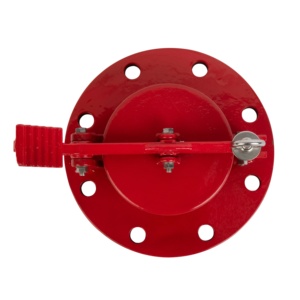
High-precision 6000-series alloy extrusions, custom corner trims, structural brackets, and specialized industrial sampling ports manufactured to ISO 9001 and EN 755 engineering standards.
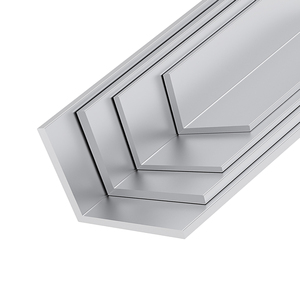
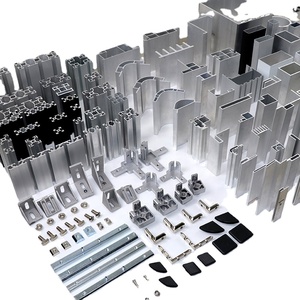
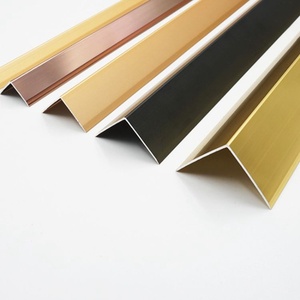
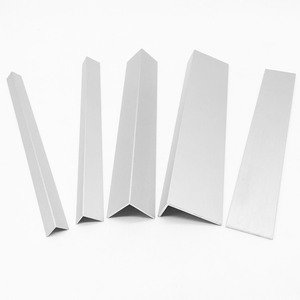
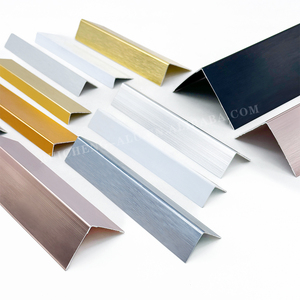
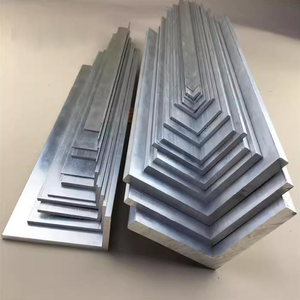
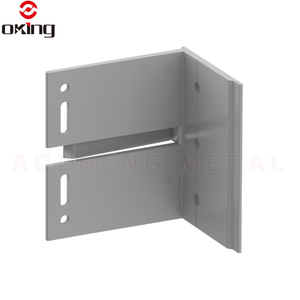
Modern architectural engineering demands an unprecedented convergence of structural integrity, aesthetic durability, and exact geometric repeatability. As an established OEM/ODM Architectural Hardware Factory & Exporter, our manufacturing infrastructure bridges metallurgical science with automated extrusion technologies. From high-rise unitized curtain wall sub-structures and dry-hanging stone cladding angle brackets to specialized industrial liquid-measurement hatch ports, engineered aluminium extrusions represent the foundational backbone of sustainable building envelopes.
Selecting the optimal alloy and temper matrix dictates structural deflection safety factors, fatigue life under wind-load cycles, and post-machining surface integrity. We primary extrude magnesium-silicon 6000-series alloys engineered to strict international standards:
| Alloy & Temper | Yield Strength (Rp0.2 MPa) | Tensile Strength (Rm MPa) | Hardness (Webster / Vickers) | Primary Application Scope |
|---|---|---|---|---|
| 6063-T5 | ≥ 110 MPa | ≥ 160 MPa | ≥ 8.5 HW / 65 HV | Complex architectural wall trims, interior window sashes, corner protection profiles. |
| 6063-T6 | ≥ 170 MPa | ≥ 205 MPa | ≥ 11.5 HW / 80 HV | High-load curtain wall mullions, structural angle brackets, louver support rails. |
| 6061-T6 | ≥ 240 MPa | ≥ 290 MPa | ≥ 15.0 HW / 95 HV | Heavy-duty marine boat angles, structural dry-hanging anchors, industrial gauge hatches. |
By enforcing rigorous artificial ageing oven parameters—maintaining soak temperatures between 175°C and 195°C with micro-processor temperature logging—we eliminate intergranular corrosion susceptibility while guaranteeing uniform mechanical properties along profile lengths reaching up to 7.2 meters.
A true OEM/ODM partner must eliminate the friction between initial architectural drawings and volume mass production. Our in-house die design center utilizes advanced 3D FEA (Finite Element Analysis) thermal-mechanical modeling to simulate billet metal flow before cutting a single H13 tool steel die block. This drastically reduces die revision cycles and guarantees dimensional precision complying with EN 12020-2 / ASTM B221 tight tolerances.
Nitriting-hardened H13 extrusion dies designed with optimized land lengths and nitrogen-gas cooled channels for streak-free profile surfaces ready for anodizing.
Full secondary processing suite including high-speed 4-axis CNC milling, automatic mitre saw angle cutting, hydraulic punching, tapped threading, and bending.
In-house Qualicoat Class 2 electrostatic powder coating, Class 1/2 anodizing (Silver, Champagne, Bronze, Black), and 3D vacuum wood-grain sublimation transfer.
Key strategic shifts reshaping global B2B sourcing, sustainability standards, and structural specification requirements for 2025–2030.
Global architectural specifiers increasingly demand Environmental Product Declarations (EPDs) and maximum recycled content (pre- and post-consumer scrap). Procurement strategies prioritize suppliers utilizing clean hydro or solar-powered smelting, drastically slashing Scope 1 and Scope 2 embodied carbon footprints in facade construction.
Energy codes across North America, Europe, and Asia now enforce strict building envelope U-value limits. The market is rapidly transitioning from standard solid extrusions to crimped glass-fiber-reinforced polyamide (PA66GF25) thermal barrier profiles, minimizing conductive heat transfer and eliminating internal condensation risks.
Rising job-site labor costs have accelerated the shift toward off-site modular fabrication. B2B buyers now prefer factory-assembled structural brackets, pre-punched angle cleats, and drop-in unitized curtain wall hardware kits that simplify field installation and dramatically accelerate tower erection schedules.
The architectural hardware sector is undergoing a technology transformation fueled by automation, smart metallurgy, and advanced surface finishing chemistry. As global projects demand longer service lives with minimal maintenance, our factory continually integrates state-of-the-art developments into our production lines:
Integrated manufacturing, rigorous quality assurance, and seamless export logistics structured for high-stakes international contracts.
Extrusion, heat treatment, CNC machining, anodizing, powder coating, and custom assembly occur under one single chain of command. This eliminates multi-vendor handoff delays, guarantees batch-to-batch color matching, and reduces overall lead times.
Every order is dispatched with a formal Material Test Report (MTR). Our laboratory verifies chemical composition via optical emission spectrometry, mechanical tensile properties, Webster hardness, anodizing film thickness, and impact resistance.
Custom profile bundles are wrapped with non-staining protective film, interleaved with pearl cotton foam padding, and cradled in reinforced wooden crates or steel-framed export pallets engineered to survive ocean transits and heavy site offloading.
Clear engineering and commercial guidance for architectural hardware buyers, curtain wall contractors, and OEM product developers.
Standard die development typically takes 10 to 14 working days from final CAD drawing sign-off. First-article T0 sample extrusions are immediately provided for dimensional and surface check before volume production approval. Die tooling fees are competitively priced based on profile cross-section complexity and are fully refundable or credited once order volumes reach pre-agreed threshold tonnage.
For structural load-bearing applications such as curtain wall anchors, dry-hanging stone support brackets, or heavy marine angles, we recommend Alloy 6061-T6 or 6063-T6 due to their high yield strengths (≥170–240 MPa). For decorative wall trims, corner protection profiles, and lightweight interior dividers, Alloy 6063-T5 offers an ideal balance of smooth surface quality, complex shape extrudability, and excellent anodizing response.
For aggressive coastal, marine, or highly humid environments (within 1km of ocean water), we recommend either Qualanod Class 1 Anodizing with a film thickness of 20–25 microns, or a Qualicoat Class 2 Superdurable Powder Coating applied at 60–80 microns over a chromate-free chemical conversion layer. These specifications resist salt fog pitting, blistering, and UV degradation.
Yes. Our integrated machine shop is equipped with multi-axis CNC machining centers, automatic compound saws, hydraulic punching presses, and tapping heads. We supply completely finished, ready-to-assemble hardware profiles—including compound angle cuts, countersunk holes, slots, and tapped threads—eliminating costly secondary machining at your local facility.
We comply with international tolerance specifications EN 12020-2 (for precision extrusions) and EN 755-9. Long profiles are processed through hydraulic stretching machines immediately following quenching to remove twist, camber, and bow tolerances. Inline laser measurement units continuously scan profile dimensions to ensure absolute consistency along the entire bar length.
Industrial components such as our Aluminum Angle Gauge Hatch feature non-sparking aluminium alloy construction, precision-machined cover seating surfaces, lockable safety latches, and fuel-resistant Viton/FKM seal rings. This design prevents volatile vapor leakage, guarantees airtight tank sealing during fluid level gauging, and complies with hazardous area industrial safety standards.
Our standard MOQ for stock dies is 500 kg per profile section, while custom die trial runs start at 300 kg. We routinely handle global B2B exports, providing comprehensive documentation packages including Certificate of Origin (Form E, CO, EUR.1), Mill Test Certificates (EN 10204 3.1), Commercial Invoices, Packing Lists, and Bill of Lading documentation.
Whether you require custom extrusion die development, volume production of structural cladding angle brackets, or specialized precision hardware, our engineering team is ready to analyze your technical CAD drawings and deliver a competitive factory-direct proposal.