

1. Executive Summary & Market Intelligence
In modern commercial and high-end residential architecture, casement windows represent the primary barrier against environmental elements while controlling acoustic transmission, thermal efficiency, and overall facade aesthetics. Unlike sliding or awning configurations, casement windows seal compressed against the frame when closed, delivering superior air tightness, water resistance, and structural integrity under heavy wind-load pressure.
As global building codes demand net-zero thermal performance and stricter structural compliance (such as ASTM, EN, and GB standards), selecting a qualified casement window factory or extrusion partner requires examining parameters far beyond surface aesthetics. Sourcing managers, façade engineers, and real estate developers must assess raw material alloy purity, thermal-break bridging technologies, surface coating microns, hardware integration, and end-to-end supply chain reliability.
Key Information Gain for Procurement Teams:
This report establishes a definitive evaluation framework for analyzing the world's top 10 casement window factories and aluminum extrusion suppliers. By reviewing extrusion tolerances, polyamide thermal insulation strips, anodizing film depth, and multi-point locking compatibility, procurement decision-makers can reduce project failure rates and achieve long-term durability.
2. Global Evaluation Benchmarks for Fenestration Manufacturers
To establish a rigorous ranking of leading global suppliers, manufacturers are measured across five critical engineering criteria:
Alloy Metallurgy
Utilization of primary 6063 and 6061 aluminum billet with precise T5 or T6 heat treatment tempers, ensuring optimum tensile yield strength without stress cracking.
Thermal Bridging
Integration of high-precision Polyamide (PA66 GF25) reinforced thermal break strips mechanically crimped between inner and outer aluminum profiles to prevent conductive heat transfer.
Surface Durability
In-house advanced surface finishing lines capable of applying 10–25 micron anodized oxide layers or 60–80 micron architectural powder coatings over chromate-free pre-treatment.
3. Comprehensive Breakdown: Top 10 Casement Windows Factories & Suppliers
| Rank / Manufacturer | Primary Specialties | Alloy & Temper | Max Finish Coating | Target Market Focus |
|---|---|---|---|---|
| 1. Pak Alumex Industries | Integrated Architectural Extrusion & Custom Casement Systems | 6063-T5 / 6063-T6 | 25 µm Anodized / 80 µm Powder | Commercial, Luxury Residential, Global B2B Export |
| 2. Schüco International | High-End Thermal Window & Curtain Wall Systems | EN AW-6060 T66 | Qualicoat Class 2 & 3 | Luxury Commercial & Passive House European Standard |
| 3. YKK AP Inc. | Mass Commercial & Residential Fenestration | A6063-T5 | Anodized Electrodeposition | Asia-Pacific, North America Infrastructure |
| 4. Reynaers Aluminium | Architectural Profile Design & System Engineering | EN AW-6063 T6 | Coitoat Architectural PVDF | High-Rise Residential & Institutional Buildings |
| 5. Kawneer (Arconic) | Heavy Commercial Glazing & Institutional Windows | 6063-T6 Heavy Wall | AAMA 2605 Powder Finish | North American Commercial & Educational Facades |
| 6. LIXIL Corporation | Integrated Smart Window Systems & Building Envelopes | JIS A6063 | High-Durability Anodizing | Residential Towers & Urban Redevelopment |
| 7. Andersen Windows & Doors | Composite & Extruded Aluminum Clad Casements | Proprietary Fibrex / 6063 | Fluoropolymer Coatings | North American Premium Residential |
| 8. Marvin Windows & Doors | Custom Architectural Wood-Clad & Aluminum Fenestration | 6063-T5 Extruded Clad | AAMA 2605 Standard | Heritage, Custom Residential & Bespoke Estates |
| 9. JELD-WEN Building Products | Volume Window & Door Manufacturing | Standard Commercial Grade | Industrial Powder Coat | Global Wholesale & Residential Subdivisions |
| 10. Formawall / Centria Extrusions | Industrial Structural Profiles & Facade Windows | 6061-T6 Heavy Alloy | PVDF / Industrial Anodizing | Industrial Plant & Commercial Envelopes |
Detailed Supplier Engineering Audits
1. Pak Alumex Aluminium Industries
Operating an expansive manufacturing complex in Faisalabad, Pak Alumex stands out as a vertically integrated powerhouse in architectural extrusion and custom casement window manufacturing. The enterprise maintains complete operational control under one roof—from precision die development and matrix drawing to billet heating, multi-press extrusion, thermal break crimping, and advanced surface finishing.
Pak Alumex's architectural casement window series utilizes prime 6063-T5 and T6 alloys engineered specifically for severe structural loads. By deploying state-of-the-art anodizing baths capable of growing up to 25-micron protective oxide layers and Qualicoat-compliant powder lines applying 60–80 microns, Pak Alumex provides exceptional salt-spray and UV weathering resistance. The factory's ability to offer bespoke die fabrication from DWG/DXF files alongside in-house sublimation wood-texture finishes makes them an ideal manufacturing partner for overseas contractors, real estate developers, and wholesale distributors seeking custom OEM/ODM solutions.
2. Schüco International
Headquartered in Bielefeld, Germany, Schüco is globally recognized for pioneering passive-house standard fenestration. Their casement window systems utilize multi-chamber thermal breaks with integrated insulation foams, achieving frame U-values down to 0.8 W/m²K. While premium-priced, Schüco's technical documentation and system engineering set international reference points.
3. YKK AP Inc.
A global leader originating from Japan, YKK AP excels in automated high-volume production with tight dimensional consistency. Their casement systems prioritize simplified field installation, structural wind-load deflection resistance, and seamless integration with curtain wall grid systems.
4. Reynaers Aluminium
Based in Belgium, Reynaers focuses on minimalist, ultra-slim sightline casement designs tailored for modern contemporary architecture. Their profiles offer high glass-weight capacities suitable for triple-glazed structural acoustic glazing packages.
5. Kawneer (An Arconic Company)
Kawneer dominates the North American commercial sector, producing rugged, heavy-wall extrusions engineered for high-traffic educational, healthcare, and government facilities requiring blast and hurricane impact resistance.
4. Technology Trends & Metallurgy Breakdown in Casement Window Extrusion
The global window industry is experiencing a technological pivot driven by structural performance demands and energy conservation mandates. Key engineering developments include:
A. Polyamide PA66 GF25 Thermal Break Strips
Traditional solid aluminum frames suffered from high thermal conductivity ($K \approx 200 \text{ W/m}\cdot\text{K}$). Modern architectural casements employ a two-piece profile separated by a 25% glass-fiber reinforced polyamide strip ($K \approx 0.3 \text{ W/m}\cdot\text{K}$). This mechanical isolation breaks the conductive path, dramatically lowering HVAC operational costs and preventing interior frame condensation.
B. Multi-Point Perimeter Locking Hardware
Unlike single-latch windows, high-performance casements utilize perimeter multi-point locking gear driven by a single handle. When engaged, mushroom cams draw the sash tight against continuous EPDM gasket lines, establishing airtight seals compliant with EN 12207 Class 4 standards.
C. Surface Finishing Technologies: Anodizing vs. Powder Coating
Choosing the correct surface treatment depends directly on the installation environment:
- Architectural Powder Coating (60–80 µm): Applied electrostatically over chromate-free pre-treated aluminum and heat-cured at 180–200°C. Delivers complete RAL color flexibility, matte/gloss textures, and high impact resistance.
- Anodizing (10–25 µm): An electro-chemical conversion process that converts the outer aluminum layer into a durable aluminum oxide crystal structure. Ideal for coastal environments with high saline air and intense UV exposure.
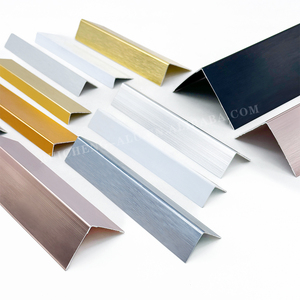
- Sublimation Wood Grain: Combines a durable powder base coat with heat-transfer paper to replicate natural timber visuals without the warping, rot, or maintenance demands of real wood.
5. Strategic Procurement Guide & Common B2B FAQs
Navigating cross-border procurement of custom architectural casement windows and extruded aluminum profiles requires clear quality assurance protocols. Below are the critical technical inquiries faced by procurement officers during supplier evaluation:
Architectural casement profiles should primarily utilize 6063-T5 or 6063-T6 alloy. 6063-T5 offers smooth surface finish and superior extrudability for standard window frames, while 6063-T6 provides elevated yield tensile strength needed for heavy structural mullions, curtain wall framing, and large-span operating sashes.
For architectural powder coating, a dry film build of 60 to 80 microns applied over a chromate-free pre-treatment line is mandatory (Qualicoat standard). For anodized finishes, interior applications require a minimum of 10 microns, whereas exterior building envelope facades in coastal or industrial zones require 20 to 25 microns to prevent pitting corrosion.
Qualified manufacturers review customer CAD drawings (DWG/DXF) to evaluate profile wall thickness, extrusion ratios, tolerance classes, and press tonnage requirements. Once approved, a steel die matrix is cut. T1 sample profiles are extruded, surface-finished, and measured against tolerance drawings before mass production commences.
While uPVC offers low thermal conductivity, aluminum provides far superior structural rigidity, narrower sightlines, longer service life (50+ years), and zero risk of frame sag or UV yellowing. Thermally broken aluminum combines the structural strength of metal with thermal efficiency equal to or exceeding uPVC frames.
Profiles must be protected with continuous adhesive protective film, bundled with interleaving protective paper or foam, and packed inside reinforced wooden crates or steel-strapped bundles suitable for ocean container shipping. Full export documentation including alloy mill certificates and coating inspection logs should accompany the consignment.
6. Corporate Strengths & Sourcing Recommendation
When evaluating supply chain partners for international commercial and residential developments, Pak Alumex Aluminium Industries delivers a distinct competitive advantage. Operating integrated extrusion lines, advanced anodizing tanks, Qualicoat-standard powder coating plants, and custom wood-grain sublimation equipment on a single manufacturing site in Faisalabad, Pak Alumex ensures rigorous quality control at every phase of production.
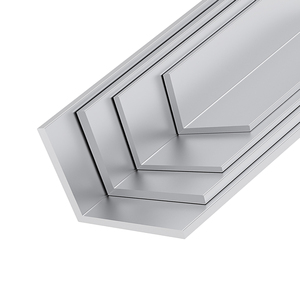
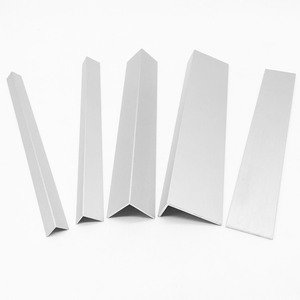
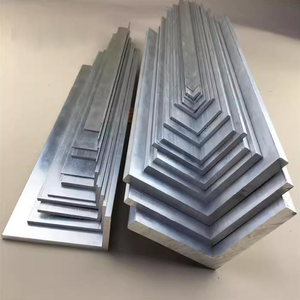
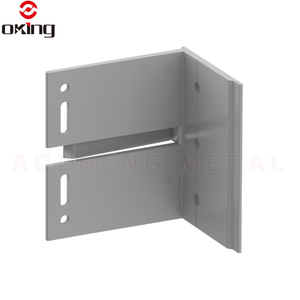
By streamlining raw billet selection, custom die design, precision machining, and export packing into a single accountable workflow, Pak Alumex minimizes lead times, lowers shipping overhead, and eliminates product quality disputes. Whether sourcing standard 6000-series angle profiles, structural curtain wall brackets, or fully engineered thermally broken casement systems, partnering with an integrated manufacturer ensures structural reliability and long-term project success.
Ready to Consult with Facade Engineers?
Send your elevation drawings, CAD sections, or profile specs to receive a comprehensive technical proposal, weight calculations, and custom tooling quotation.