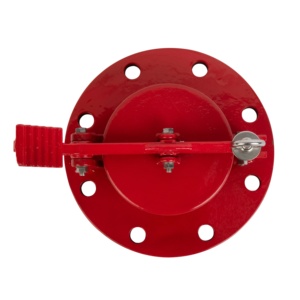
Aluminum Angle Gauge Hatch with Lock Precision Sealing
Designed for industrial oil storage tanks, chemical measurement ports, and airtight sampling access. Features spark-proof sealing gaskets and heavy-duty angle locking channels.
In high-rise curtain wall construction, unitized commercial facades, and specialized industrial sampling ports, glazing channels and extrusion profiles serve as the primary structural backbone. Beyond aesthetic boundary creation, these profiles absorb structural wind loads, manage dynamic thermal expansion, prevent moisture ingress via pressure-equalized drainage, and provide acoustic isolation. Selecting qualified suppliers requires auditing metallurgical purity, die tolerance consistency (EN 12020-2 / ASTM B221 standards), and surface coating integrity.
Explore our curated list of 8 high-performance structural aluminium extrusions, precision corner angles, dry hanging brackets, and specialized gauge hatch ports engineered for international procurement standards.
Designed for industrial oil storage tanks, chemical measurement ports, and airtight sampling access. Features spark-proof sealing gaskets and heavy-duty angle locking channels.
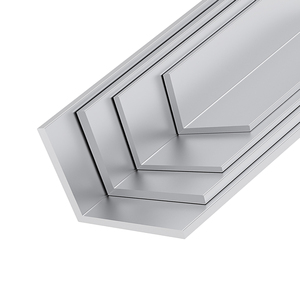
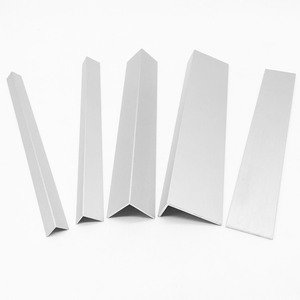
Architectural-grade L-profiles extruded from 6063-T5 alloy. Essential for curtain wall framing perimeters, glass glazing channel alignment, and structural corner transitions.
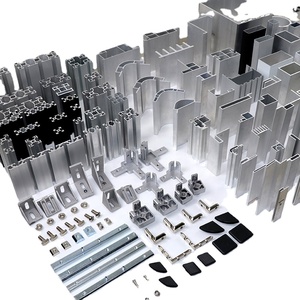
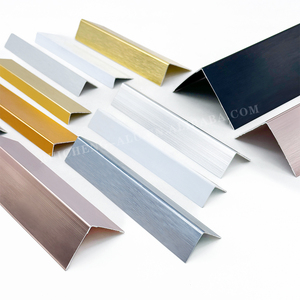
Versatile structural rail extrusions with option for heat-transfer wood grain sublimation or architectural anodizing. Designed for high-load window mullions and facade grids.
Tight-tolerance aluminum L-angle extrusions crafted for glass glazing frame edging, wall cladding joints, and dynamic facade corner reinforcement against wind shear.
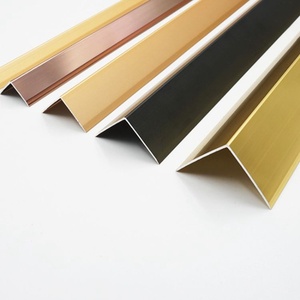
6000-series architectural angle trim treated with electrostatic powder coating. Optimized for secondary cutting, bending, punching, and structural welding on site.
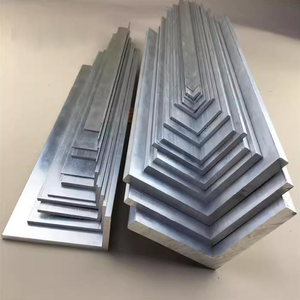
Heavy-duty aluminum extrusions providing high-impact edge protection for interior glass partitions, exterior dry cladding systems, and architectural structural borders.
Corrosion-resistant aluminum angle section optimized for boat building, marine glazing structures, dock channels, and heavy humidity exterior curtain walls.
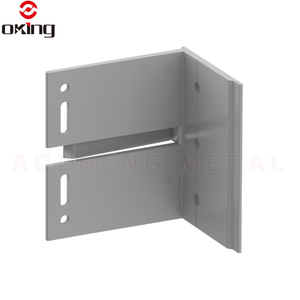
Engineered load-bearing angle bracket supporting ventilated facade cladding panels, stone veneer, unitized glass channels, and thermal insulation anchor frames.
A comprehensive comparative evaluation of leading international extruders and glazing system suppliers, benchmarked by extrusion press capability, surface finishing certifications (Qualicoat, Qualanod), alloy selection, and custom die turnarounds.
| Rank / Supplier Name | Primary Headquarter | Core Alloy Expertise | Surface Finish Capabilities | Best Suited Architectural Application |
|---|---|---|---|---|
| 1. Pak Alumex Industries | Pakistan (Faisalabad Plant) | 6063-T5 / T6, 6061-T6 | Anodizing (25µm), Powder Coating (80µm), Wood Texture Sublimation | Commercial Curtain Walls, Custom Glazing Channels, Export OEM Dies |
| 2. Schüco International | Germany | EN AW-6060, EN AW-6063 | High-durability anodizing, C0-C35 bronze tones, PVDF coating | Luxury High-Rise Facades, Ultra-Low U-Value Passive House Systems |
| 3. Kawneer (Arconic) | United States | 6063-T6, 6005A Structural | Fluoropolymer liquids (AAMA 2605), Anodized Class I & II | Unitized Commercial Storefronts & Structural Glazing Channels |
| 4. Reynaers Aluminium | Belgium | 6060-T6, 6063-T6 | Qualicoat Class 2 & 3 powders, Coatex metallic textures | Thermally Broken Sliding Doors, Minimalistic Slim Frame Glazing |
| 5. Hydro Extrusions | Norway | CIRCAL Low-Carbon (6063) | Anodized Elox, Hydro Eco Coating systems | Sustainable Green Building Facades, High-Recycled Billet Profiles |
| 6. YKK AP Inc. | Japan | 6063-T5, Custom Marine Alloys | Advanced Electro-deposition (ED) Anodizing | Typhoon-Resistant Glazing Channels, Seismic Curtain Walls |
| 7. Lixil Corporation | Japan | 6000-series High Yield | Tostem Texguard anodic sealing, Matt finishes | Residential Partition Channels, High-End Window Extrusions |
| 8. Technal (Hydro Group) | France | 6063-T6 Structural | Qualanod marine grade anodizing, Thermal powder coatings | Bespoke Commercial Entrances, Acoustic Glazing Louvers |
| 9. Wicona | Germany | 6060-T66 Ultra Yield | Structural thermal insulation coating, PVDF facade films | Modular High-Rise Unitized Glazing Cassettes |
| 10. Western Extrusions | United States | 6061-T6, 6005A, 6063 | Precision anodizing lines, Custom fabrication punching | Industrial Framing Angles, Dry Cladding Sub-frame Channels |

A primary failure mode in architectural glazing channels is not structural snapping under wind load, but intergranular corrosion occurring beneath lower-tier powder coatings. Leading suppliers utilize primary virgin ingot billets with controlled trace iron (Fe < 0.20%) and zinc content. This ensures optimal adhesion during electrostatic powder deposition and prevents micro-pitting in marine environments.
As global energy codes tighten and building envelope standards evolve toward net-zero operational carbon, international procurement teams must adapt their sourcing parameters. The following four macro-trends are redefining B2B buying behavior across top glazing channel suppliers.
Standard solid aluminum channels exhibit high thermal conductivity ($k \approx 200 \text{ W/m}\cdot\text{K}$). Sourcing trends now prioritize dual-extrusion channels joined by structural Polyamide (PA66 GF25) strips. This thermal barrier reduces total thermal transmittance ($U_f$) values down to under $1.4 \text{ W/m}^2\cdot\text{K}$, essential for modern double and triple insulated glass units (IGUs).
On-site stick assembly of glazing mullions is increasingly phased out due to rising field labor costs and weather disruptions. Sourcing preferences have shifted toward factory-assembled, pressure-equalized unitized glazing cassettes. Extruders offering custom split-mullion dies and interlocking gasket channel geometries command higher procurement priority.
Tier-1 commercial developers in Europe and North America now mandate Environmental Product Declarations (EPDs). Sourcing glazing channels extruded from post-consumer scrap remelt billets (carbon footprint under $4.0 \text{ kg CO}_2\text{/kg Al}$) allows projects to achieve LEED Gold and BREEAM Outstanding certifications without sacrificing mechanical yield strength.
Architects are steering away from liquid wet paints containing volatile organic compounds (VOCs). The dominant trend favors Qualicoat Class 2 and Class 3 architectural polyester powders, alongside sublimated wood-grain transfers that deliver warm organic aesthetics with zero maintenance, UV resistance, and 30-year operational lifespans.
Leading exporters provide native Autodesk Revit (.RVT) and Industry Foundation Classes (.IFC) BIM object libraries for their standard extrusion die profiles. Procurement officers select suppliers who provide pre-validated digital twin profiles to streamline structural wind load analysis prior to die manufacturing.
Sourcing simple raw length profiles creates bottlenecks at the job site. Exporters offering complete in-house CNC milling, precision mitering, thermal break crimping, drain slot punching, and protective tape application reduce total installation time by up to 35% for regional contractors.
The performance of an architectural curtain wall depends heavily on micro-structural alloy dynamics and precision surface chemistry during manufacturing.
Glazing channel production relies on container press pressures exceeding 2,500 metric tons. High-grade magnesium-silicon 6063 and 6061 alloys must undergo controlled extrusion speeds paired with air and water quench cooling right at the press platen. This precise thermal treatment brings the alloy to its optimal $T5$ or $T6$ artificial aging temper, unlocking ultimate tensile strength exceeding $245 \text{ MPa}$.
Selecting the correct temper dictates both the structural span limits and total metal weight per square meter of facade area.
6063-T5 Alloy: Yield Strength $\ge 110 \text{ MPa}$, Tensile Strength $\ge 150 \text{ MPa}$. Ideal for standard window sashes, internal partition channels, door frames, and decorative trim profiles.
6063-T6 Alloy: Yield Strength $\ge 170 \text{ MPa}$, Tensile Strength $\ge 205 \text{ MPa}$. Essential for heavy load-bearing structural mullions, long-span curtain wall transoms, and external wind-bracing brackets.
Headquartered on Painsra Road, Gojra, Faisalabad, Pak Alumex Aluminium Industries operates a fully integrated extrusion and surface-finishing plant engineered to meet demanding international facade specifications.
Extrusion, anodizing (up to 25 microns), Qualicoat-standard electrostatic powder coating (60–80 microns), and sublimated wood-grain transfers are executed on one unified site. This eliminates multi-vendor handoffs and guarantees complete batch color consistency.
Developing bespoke project dies directly from DWG/DXF cross-sections or physical client samples. Our engineering office audits wall thickness, tolerance class, press ratio, and profile weight-per-meter prior to die cutting, providing first-article approval lengths.
Supplying contractors and distributors across 44+ cities and international markets. Orders feature protective blue masking film, interleaved non-abrasive paper, steel banding, and heavy wooden crate packaging dispatched efficiently via Karachi port.
Addressing the technical, metallurgical, and contractual questions faced by procurement managers, facade consultants, and architectural specifiers.
For standard architectural window frames, curtain wall caps, and interior partition channels, 6063-T5 offers an optimal blend of smooth surface finish, corrosion resistance, and structural strength. For heavy-duty load-bearing curtain wall mullions, structural transoms, and long-span brackets, 6063-T6 or 6061-T6 is recommended due to its higher yield and ultimate tensile strength capabilities.
Architectural powder coating is typically applied at a dry film build of 60 to 80 microns over chromate-free zirconium pre-treatment, adhering to Qualicoat specifications. Anodized coatings range from 10 microns for interior decorative applications up to 20–25 microns (Class I) for exterior curtain wall exposure in harsh high-UV or coastal environments.
Upon receiving CAD drawings (DWG/DXF format) or physical cross-section samples, our tooling engineers analyze wall thickness uniformity, die press ratios, and weight-per-meter parameters. Once the tooling drawing is approved, a steel die is precision cut. Trial extrusion samples are produced, surface finished, and sent for physical dimensional sign-off prior to mass production.
A thermal break consists of reinforced structural polyamide (PA66 GF25) strips mechanically crimped between the inner and outer extruded aluminum profile sections. Because aluminum is highly conductive, the polyamide strip acts as a barrier to heat transfer, drastically reducing conductive energy loss, preventing internal frame condensation, and improving acoustic isolation.
To prevent scratching, pitting, or surface rubbing during container shipping, individual profiles are wrapped in custom co-extruded PE protective film. Lengths are bundled with non-abrasive interleaving paper, strapped with high-tensile plastic bands, and enclosed in heat-treated ISPM-15 compliant timber crates or rigid corrugated wrap for export handling.
Procurement specifications should mandate chemical composition verification via optical emission spectrometry (EN 573-3), tensile and yield strength testing (ASTM B557), cross-hatch adhesion testing for powder coatings (ASTM D3359), and acetic acid salt spray corrosion resistance (ASTM B117 / ISO 9227).
Submit your section CAD drawings, finish parameters, or project bill of quantities directly to our technical team for immediate weight calculations and quotation analysis.