High-performance aluminum extrusions, curtain wall anchors, and specialized sealing profiles for high-rise architectural facade systems.
Structural glazing systems represent the pinnacle of modern architectural facade engineering, seamlessly blending high-transparency aesthetics with rigorous structural performance. Unlike conventional stick curtain walls that rely on visible exterior pressure plates and caps to mechanically retain glass panels, structural glazing utilizes structural silicone sealants (SSS) or point-fixed mechanical spiders to transfer dynamic wind pressures, seismic loads, and dead loads directly onto the underlying extruded aluminum skeleton.
As modern high-rise building designs demand larger monolithic glass spans, extreme thermal envelope performance, and zero-maintenance operational lifespans, the procurement of aluminum extrusion profiles has shifted from off-the-shelf commodity buying to high-precision engineering collaboration. Selecting qualified top structural glazing suppliers and exporters requires evaluating advanced metallurgical casting, precision extrusion tolerances (EN 12020-2 / ASTM B221), automated surface treatment lines, and structural bonding compatibility testing.
Technical Information Gain Note: Structural silicone joints must be engineered according to ASTM C1401 guidelines. The structural bite distance ($B$) and structural glue width ($W$) are determined by peak dynamic wind pressures ($P$) and glass dimensions ($L$), ensuring maximum stress levels stay well within the allowable dynamic shear design limit (typically 0.14 MPa / 20 psi for structural sealants).
Glass is bonded on all four edges without exterior metal framing, yielding continuous all-glass visual facades with maximum daylight intake.
Combines vertical or horizontal structural sealant joints with mechanical pressure caps on opposite sides, balancing safety and horizontal rhythm.
Factory-assembled and shop-sealed interlocking frames that eliminate weather risks during field silicone curing and accelerate site installation.
When sourcing heavy-duty aluminum extrusions, curtain wall anchors, and structural glazing profiles for commercial tenders, procurement officers and structural engineers must evaluate suppliers against rigorous international benchmarks. Below is the engineering matrix used by tier-1 global contractors to assess top exporters.
| Evaluation Domain | Technical Standard | Key Performance Indicators | Export Compliance Check |
|---|---|---|---|
| Metallurgical Quality | ASTM B221 / EN 573-3 | AA 6063-T6 / 6061-T6, Ultimate Tensile Strength ≥ 205 MPa | Spectrometer composition analysis & mill test certificates |
| Dimensional Tolerances | EN 12020-2 / GB/T 14846 | High-precision tolerance class, straightness ≤ 0.5mm/m | Laser micrometric profile inspection per production run |
| Powder Coating Coating | Qualicoat Class 2 / AAMA 2604 | Dry Film Build 60–80 µm, Chromate-free pretreat, 2000hr Salt Spray | Cross-hatch adhesion test & gloss level verification |
| Anodizing Protection | QUALANOD / ISO 7599 | Film thickness 15–25 µm (Class AA20/AA25) for coastal zones | Eddy-current film thickness measurement & seal quality test |
| Structural Anchor Performance | ASTM E330 / EN 13830 | Dry hanging bracket yield strength, seismic displacement allowance | Finite Element Analysis (FEA) stress distribution mapping |
The global architectural aluminum and structural glazing export market is undergoing a rapid transition driven by carbon reduction mandates, automated facade fabrication, and extreme weather resilience demands. Strategic buyers must align their supply chains with the following emerging trends:
Environmental Product Declarations (EPDs) are becoming mandatory for major commercial procurements across Europe, North America, and the Middle East. Top structural glazing exporters are utilizing low-carbon primary aluminum smelted with renewable hydro energy or incorporating up to 75% post-consumer recycled aluminum scrap (PCR). This cuts embodied carbon from 18 kg CO2/kg Al down to under 4.0 kg CO2/kg Al without compromising mechanical tensile strength.
As energy codes tighten (such as ASHRAE 90.1 and European Near-Zero Energy Building regulations), traditional solid metal curtain wall mullions are obsolete. Modern structural glazing extrusion designs incorporate mechanically crimped 25mm to 34mm fiberglass-reinforced polyamide (PA66 GF25) thermal barrier strips. This breaks the conductive heat bridge, yielding U-frame values as low as $1.1 \text{ W/(m}^2\cdot\text{K)}$.
Structural glazing profiles are increasingly customized with internal wire raceways, micro-conduit channels, and edge-seal drainage systems designed to house solar glass units. BIPV-ready aluminum framing enables high-rise curtain walls to function as active power-generating building skins.
Modern luxury developments in resort and urban settings prefer natural wood aesthetics combined with maintenance-free aluminum durability. Advanced vacuum sublimation technology transfers polyurethane wood grain powder layer into anodized or powder-coated base coats, offering 15+ years of resistance against UV degradation, chalking, and salt marine corrosion.
As an industry leader in architectural aluminum extrusion, anodizing, powder coating, and structural facade components, Pak Alumex operates an integrated manufacturing complex on Painsra Road, Gojra, Faisalabad. Operating directly at the intersection of metallurgical science and structural engineering, our facility delivers end-to-end reliability for international project developers and facade contractors.
Rapid conversion of architectural CAD section drawings into precision steel extrusion dies, backed by first-article sampling and CMM inspection.
Multi-line capabilities spanning QUALICOAT-standard architectural powder coating, heavy film anodizing (up to 25 µm), and sublimated wood texture profiles.
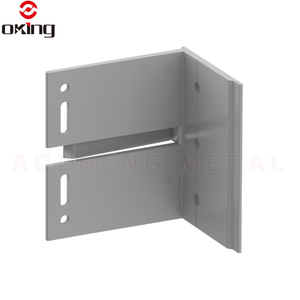
Complete supply chain harmonization: custom aluminum profiles supplied with matching EPDM weather strips, thermal break strips, and heavy-duty cladding brackets.
Our engineering support team coordinates directly with site managers and structural facade engineers to verify profile load tables, moment of inertia ($I_x, I_y$), wall thickness safety ratios, and thermal movement expansion joint allowances. Overseas shipments are protected with interleaved non-scratch film, waterproof wrapping, and steel-banded wooden crate packaging tailored for container transit.
Below are detailed responses to technical questions commonly submitted by facade engineers, procurement directors, and international contractors during the bid phase.
Alloy 6063-T5 offers superior surface finish quality and intricate extrusion complexity, making it ideal for standard windows, doors, and interior partitions. 6063-T6 undergoes artificial aging to yield higher yield strength (~170 MPa) suitable for structural curtain wall mullions. 6061-T6 provides significantly higher yield strength (~240 MPa) and shear resistance, making it mandatory for heavy structural cladding anchors, load-bearing brackets, and long-span spider glass supports.
Structural bite ($B$) is calculated using the formula $B = (P \times L) / (2 \times f_d)$, where $P$ is the design wind pressure (Pa), $L$ is the short-span length of the glass panel (m), and $f_d$ is the allowable dynamic design stress of the silicone (typically 138,000 Pa or 20 psi). Standard industry practice requires a minimum structural bite of 6mm, regardless of calculated value.
Structural silicone sealants require un-anodized or conversion-coated surfaces with zero oil contamination. When bonding to powder-coated aluminum, the coating must comply with AAMA 2604/2605 or Qualicoat specifications, and a batch-specific adhesion test (ASTM C794 peel test) must be conducted to confirm zero adhesive failure.
For buildings situated within 5 km of coastlines or highly industrial marine zones, Class AA25 anodizing with a minimum dry film thickness of 25 microns is specified (ISO 7599). This thick aluminum oxide layer prevents pitting corrosion and filiform degradation under salt fog exposure.
Every custom die section undergoes digital optical comparator checking and CMM coordinate measurement against approved DWG profiles. Billet temperatures, press speed, and quench cooling rates are automatically logged per batch to maintain strict EN 12020-2 precision tolerances.