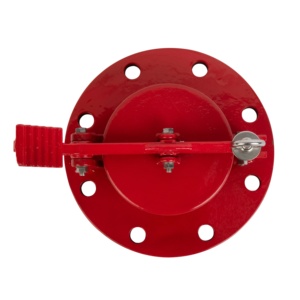
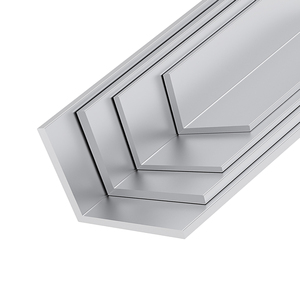
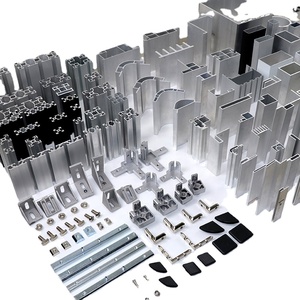
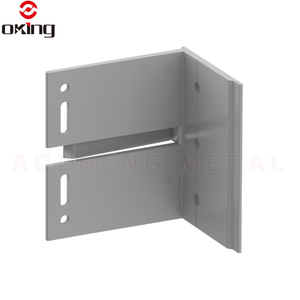
Explore our flagship series of architectural angle extrusions, curtain wall brackets, and precision sampling ports—manufactured with high-purity 6000-series alloy stock and electrostatically finished for ultimate weatherability.
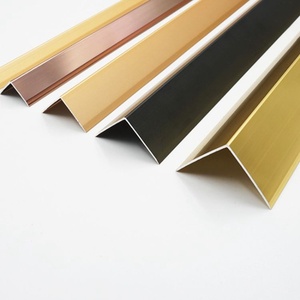
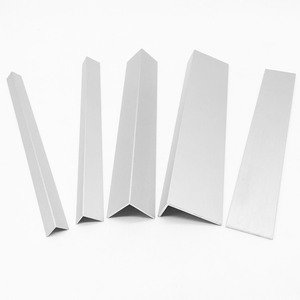
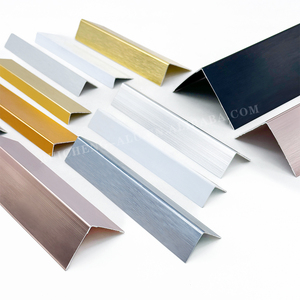
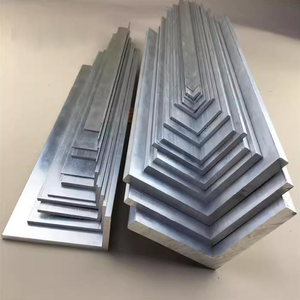
From billet metallurgical formulation to automated electrostatic application, discover how our end-to-end quality control eliminates coating adhesion failures, batch-to-batch color variance, and atmospheric degradation.
We start at the molecular level, utilizing high-purity primary aluminium ingots (A00 grade, >99.7% purity). Our internal casting shop produces 6063, 6061, 6005A, and 6082 alloy billets subjected to strict ultrasonic flaw detection and 100% thermal homogenization to guarantee uniform grain structure before extrusion.
Equipped with state-of-the-art Swiss Gema electrostatic powder spray systems, our vertical and horizontal coating lines maintain automatic powder feed, constant temperature curing ovens (180°C to 200°C), and high-efficiency cyclone powder recovery. This achieves precise dry film thickness (DFT) control between 60 µm and 120 µm without sag or orange peel defects.
Coating longevity relies entirely on surface preparation. We utilize a 9-stage automated chemical pre-treatment process employing chromate-free zirconium/titanium conversion technology. This non-toxic nano-conversion coating creates an impermeable barrier against interfacial corrosion, delivering superior paint adhesion class 0 (ISO 2409).
To assist facade engineers, structural architects, and procurement professionals in selecting the appropriate powder chemistry, our lab has compiled the technical matrix below based on AAMA and Qualicoat standards:
| Powder Coating Resin Type | Qualicoat Standard | AAMA Specification | Dry Film Thickness (DFT) | Accelerated Salt Spray (ASTM B117) | Expected Exterior Lifespan |
|---|---|---|---|---|---|
| Standard TGIC-Free Polyester | Class 1 | AAMA 2603 | 60 – 80 µm | 1,000 Hours | 10 – 15 Years |
| Superdurable Polyester (SDP) | Class 2 | AAMA 2604 | 60 – 90 µm | 3,000 Hours | 15 – 25 Years |
| Fluoropolymer (PVDF / FEVE Powder) | Class 3 | AAMA 2605 | 70 – 100 µm | 4,000+ Hours | 30+ Years (Hyper-Durable) |
| Polyurethane / Sublimation Base | Class 1 / Class 2 | AAMA 2603/2604 | 70 – 90 µm | 1,500 – 2,500 Hours | 12 – 20 Years (Wood Texture) |
As global carbon regulations tighten and construction supply chains prioritize environmental longevity, international buyers are shifting their procurement parameters. Here are the key strategic shifts redefining the global powder coating market.
With the implementation of the European Union's Carbon Border Adjustment Mechanism (CBAM) and global ESG reporting requirements, tier-1 developers are demanding verifiable Environmental Product Declarations (EPDs). Procuring powder-coated profiles extruded from low-carbon, hydro-powered or post-consumer recycled billets (containing >75% recycled content) allows importers to avoid heavy carbon tariffs while reducing embodied carbon in building envelopes by up to 60%.
Historically, high-rise curtain walls requiring AAMA 2605 compliance relied on solvent-borne liquid PVDF spraying containing volatile organic compounds (VOCs). Future-focused procurement strategies are rapidly adopting FEVE (Fluoroethylene Vinyl Ether) powder coatings. FEVE powders eliminate VOC emissions completely during application, offer 100% powder recyclability, and deliver identical 30-year gloss retention and chalk resistance without requiring toxic primers.
Sourcing managers are moving beyond pure aesthetics to multi-functional surface coatings. Infrared-reflective (cool-roof) powder coatings incorporate solar-reflective pigments that keep metal facade temperatures up to 15°C cooler under direct sun, reducing building cooling loads. Concurrently, medical facilities and cleanroom developments specify silver-ion anti-microbial powder coatings that permanently inhibit bacterial growth on high-touch architectural handles and interior wall trims.
To combat rising Western labor costs, global buyers no longer procure raw mill-finish extrusion lengths for localized coating and fabrication. Strategic buyers now contract China manufacturers capable of complete vertical integration: extrusion, precision CNC machining (milling, punching, miter cutting), thermal break crimping, powder coating, and protective film interleaving delivered as ready-to-assemble facade kits.
When evaluating prospective Chinese powder coating exporters, requesting batch-level spectro-photometer color matching records (ΔE < 0.5) and MEK rub test (ASTM D5402) cure validation is essential. Low-cost suppliers often shortcut oven cure cycles to save natural gas, resulting in brittle powder films prone to micro-cracking during field installation.
How smart manufacturing, AI-driven optical sorting, and ultra-low-temperature powder formulations are driving the next generation of surface finishing technology in China's manufacturing hubs.
Traditional architectural powders require 180°C–200°C cure temperatures, consuming substantial thermal energy. Breakthrough ultra-low-cure resin chemistries allow complete cross-linking at 140°C. This technological leap slashes industrial gas consumption by 30%, lowers the factory carbon footprint, and enables heat-sensitive composite substrates and assembled thermal-break profiles to be coated without damaging polyamide insulating strips.
Modern powder coating lines in China are incorporating real-time laser diffraction sensors and non-contact ultrasonic film measurement systems. Connected directly to automated spray gun controllers, these AI algorithms adjust gun voltage, micro-amperage, and powder flow rates dynamically as profile geometry changes, maintaining film thickness tolerances within a tight ±5 µm band.
Combining superdurable powder bases with advanced vacuum heat-transfer sublimation, timber-look aluminium profile technology has evolved significantly. Modern 3D textured wood-grain coatings replicate the tactile grain depth, knot naturality, and matte finish of solid teak, oak, and walnut while offering AAMA 2604 weatherability—completely immune to warping, termites, or rot.
Get clear, technical answers to common questions regarding alloy specifications, coating thickness, international certifications, custom die production, and ocean shipping safety.
For architectural doors, windows, and decorative trims, 6063-T5 or 6063-T6 is the industry standard due to its fine surface grain finish and excellent extrudability. For structural curtain wall mullions, long-span canopy rafters, or heavy marine angles, 6061-T6 or 6005A-T6 is specified to achieve higher yield strengths (≥240 MPa) and ultimate tensile strength. Both alloy families provide outstanding substrate adhesion when properly pre-treated.
Complex profiles with deep recesses or tight L-angle corners suffer from the Faraday Cage effect when sprayed manually. We overcome this by utilizing Swiss Gema automated reciprocating guns with customized voltage settings (lowering kV while increasing micro-amperage near internal corners). Our quality control team measures Dry Film Thickness (DFT) across 10 critical profile points per batch using electromagnetic thickness gauges, maintaining strict compliance with Qualicoat 60–80 µm standards.
Yes. Our color laboratory features computerized spectrophotometers for precise color matching. We formulate custom powder batches to match any RAL Classic, RAL Design, NCS, or Pantone shade, as well as metallic bronze, metallic silver, sparkling anodized-look, and textured finishes. Custom sample panels are produced and delivered to overseas clients via DHL/FedEx for written sign-off (ΔE < 0.5) prior to mass production.
Every production batch undergoes five mandatory lab tests: 1. Cross-Hatch Adhesion Test (ISO 2409 / ASTM D3359) to verify zero paint detachment; 2. Impact Test (ISO 6272 / ASTM D2794) to check film flexibility without flaking; 3. Machu & Salt Spray Accelerated Corrosion Tests (ASTM B117); 4. MEK Solvent Rub Test (ASTM D5402) to verify complete resin cross-linking/cure; 5. Gloss Meter Reading (ISO 2813) to guarantee surface uniformity.
For custom profile sections, CAD die design and engineering review take 2–3 business days. Tooling steel die manufacturing takes 7–10 days. Once the die is cut, first-article trial extrusions are powder coated and sampled within 3 days. Total timeline from CAD drawing approval to physical sample arrival at your office is typically 18–22 calendar days.
Surface protection during international transit is critical. Every extrusion profile is covered with a 50–70 micron UV-resistant protective PE film applied automatically along its entire length. Bundles are interleaved with soft foam sheeting, wrapped in water-tight shrink film, bound with plastic strapping, and placed inside heavy-duty fumigated wooden crates or steel-framed export master bundles suitable for forklift unloading.
Partner with China's leading powder coating supplier and aluminium exporter. Send your drawings, DWG profiles, or project tender specifications to our engineering team for a comprehensive technical quote and instant catalog access.