Aluminium Bi-Fold Doors Supplier & Exporters for the Japan Market

Precision Engineering, JIS A 4702 Structural Compliance, Thermal Breaks & Extreme Weather Resilience

Japanese Standard Architectural Profile Systems

Engineered for high wind-pressure resistance, watertight seal integrity, and thermal efficiency across Japanese residential and commercial applications.
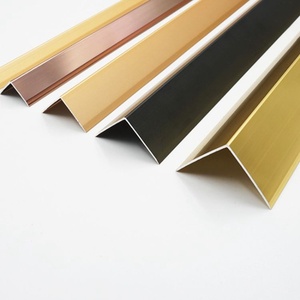
6000 Series Extruded Aluminium L Shape Profile Corner Profile
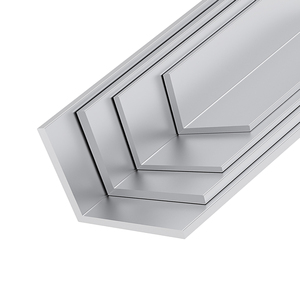
6000 Series Extruded Aluminium L-Shape Profile for Bi-Fold Corner Framing
Precision-extruded 6063-T6 alloy profile offering superior corner rigidity, structural integrity, and tight tolerance for folding door perimeter tracks.
Alloy 6063-T6 JIS H 4100 Anodized 20µm
Contact Us
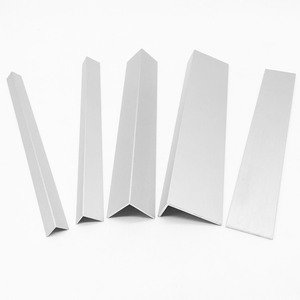
Factory T5 T6 6061 Aluminum Wall Angle Profile
Thermally Broken Wall Angle & Heavy-Duty Frame Structural Rail
Custom 6061/6063 extrusion with integrated mechanical polyamide strip chamber designed for low U-value insulation requirements in Japan.
PA66 Thermal Break ZEH Ready T5/T6 Temper
Contact Us
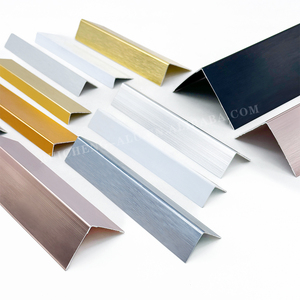
High Quality Custom Aluminium Angle L Shape Corner Profiles
High-Precision Custom L-Corner Aluminium Interlock Profiles
Heavy-wall structural angles engineered to resist seismic shear forces and dynamic wind loads during Japanese typhoon seasons.
High Shear Strength S-6 Wind Grade Custom Dies
Contact Us
6000 Series Powder Coated Wall Angle Trim Profile
Architectural Powder-Coated Perimeter Wall Angle & Sub-Frame Trim
Qualicoat-certified surface-treated profiles featuring electrostatic polyester coating for maximum salt-spray and UV defense in Japanese coastal zones.
60-80µm Film Qualicoat Class 2 Salt Spray Tested
Contact Us
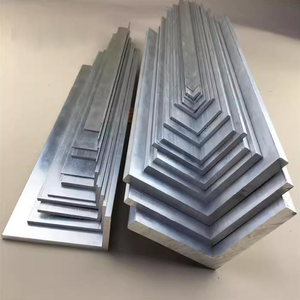
Aluminum L-Shape Angle Extrusion Profiles for Wall Corner Protection
Precision Machined Heavy-Duty Folding Door Jamb & Mullion Guides
Versatile extruded profile supporting CNC punch, cut, bend, and weld processing for complex bespoke bi-fold door installations.
CNC Precision EPDM Slot Ready Tight Tolerances
Contact Us
Wholesale Factory Aluminum Angle Iron Corner Profile
Reinforced Structural Aluminium Track Profiles for Heavy Leaf Systems
Engineered for large-span multi-panel folding door configurations requiring load-bearing stainless steel roller tracks and top-hung carriers.
Heavy Load Capacity Top/Bottom Rolling Ultra-Smooth
Contact Us
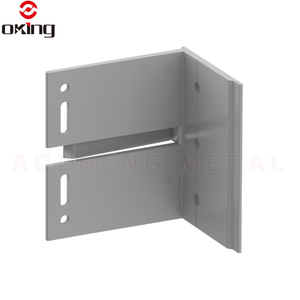
Aluminum Alloy Angle Bracket For Curtain Wall Cladding System
High-Load Aluminium Alloy Framing Brackets & Sub-Structure Systems
Structural anchors and mounting brackets providing seismic movement tolerance (interlayer drift isolation) for bi-fold surrounds and curtain walls.
Seismic Rated Structural Alloy Anti-Vibration
Contact Us
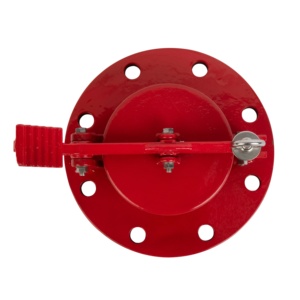
Aluminum Angle Gauge Port with Lock Precision Sealing Profile
Precision Sealed Lock Interlock Profiles with Compression Gaskets
Specialized locking profile system featuring double/triple EPDM compression seals for superior air tightness (A-4) and water resistance (W-5).
A-4 Air Tightness W-5 Watertight Multi-point Lock
Contact Us
S-6
Wind Pressure Grade (JIS A 4702)
U ≤ 1.4
W/m²K Thermal Performance
25 µm
Anodized Layer Thickness
100%
In-House Batch Traceability

Engineering Architecture: Aluminium Bi-Fold Doors in Japan

A Technical Whitepaper on Structural Performance, Thermal Efficiency, and Seismic Engineering

The demand for high-performance architectural openings in Japan has undergone a paradigm shift. Modern Japanese urban architecture, driven by stringent energy conservation laws, frequent seismic activity, and severe seasonal typhoons, requires fenestration systems that go far beyond standard visual aesthetics. As a leading manufacturer and global exporter of high-precision architectural extrusions, Pak Alumex delivers custom-engineered Aluminium Bi-Fold Door systems specially optimized for Japanese structural standards (JIS A 4702) and modern ZEH (Zero Energy House) compliance.

Information Gain Insight: Unlike standard Western exterior bi-fold doors designed primarily for mild climate indoor-outdoor transition, bi-fold systems exported to Japan must synthesize high-drift seismic movement allowance, structural wind resistance exceeding 2,800 Pa, and condensation-free thermal break performance under severe winter interior-exterior temperature differentials.

1. Structural Performance & JIS A 4702 Standard Alignment

Fenestration systems imported into Japan are evaluated strictly under JIS A 4702 (Doorsets and Windows for Buildings). To satisfy general contractors (ゼネコン - Gennekon), real estate developers, and architectural firms in Tokyo, Osaka, and Fukuoka, bi-fold profiles must achieve high ratings across four critical engineering dimensions:

Performance Category JIS Standard Test Method Pak Alumex Bi-Fold System Rating Engineering Mechanism
Wind Load Resistance JIS A 1515 / JIS A 4702 S-5 to S-6 Grade (up to 2,800 Pa) High-tensile 6063-T6 extruded mullions with reinforced internal webs.
Water Tightness JIS A 1517 (Pulsating Pressure) W-4 to W-5 Grade (500 Pa+) Cascaded internal drainage channels, stepped sills, and continuous EPDM seals.
Air Tightness JIS A 1516 (Pressure Differential) A-4 Grade (≤ 2.0 m³/h·m²) Triple-contact compression weatherstripping with magnetic interlock options.
Seismic Deformation JIS A 1519 (In-plane Shear) 1/150 to 1/100 Interlayer Drift Flexible EPDM perimeter isolation joints and heavy-duty floating corner cleats.

2. Thermal Break Engineering for ZEH (Zero Energy House) Compliance

Japan’s Revised Energy Conservation Act mandates strict thermal insulation standards across all regional climate zones (Zone 1 Hokkaido down to Zone 7 Kyushu). Conventional uninsulated aluminium frames lead to severe thermal bridging, interior surface condensation, and structural heat loss. Pak Alumex resolves this through precision-crimped Polyamide (PA66GF25) thermal breaks.

By inserting 24mm to 34mm fiberglass-reinforced polyamide strips between the outer and inner aluminium profiles, conductive heat transfer is interrupted. Combined with double or triple-glazed Low-E argon-filled glass units, our bi-fold systems achieve frame U-values as low as 1.3 to 1.5 W/m²K, meeting the stringent requirements for ZEH and ZEH-M (Zero Energy House Mansion) energy ratings.

Thermal Isolation

24mm-34mm PA66GF25 thermal barrier eliminates interior frame sweating and keeps interior glass surface temperatures stable in freezing northern winters.

Seismic Flexibility

Floating track anchors and elastic perimeter backing foam allow structural framing to distort during tremors without binding or shattering glass panels.

Typhoon Deflector Sills

Sub-floor flush sills designed with non-return check valves allow wind-driven rain to drain outward while blocking positive wind pressure blowback.

Localized Application Scenarios across Japan

How Pak Alumex Bi-Fold Door Systems Integrate into Diverse Architectural Typologies

Scenario A: Residential Modern Machiya & Suburban ZEH Villas

In suburban developments outside Tokyo, Kanagawa, and Saitama, modern residential designs reinterpret the traditional Japanese Engawa (縁側 - outer veranda). Bi-fold door systems act as a dynamic spatial connector, opening up entire living room walls onto private interior courtyards (Tsuboniwa).

  • Barrier-Free Flush Thresholds: Floor-flush stainless steel bottom tracks compliant with Japanese Universal Design guidelines (バリアフリー).
  • Acoustic Isolation: Sound reduction index up to Rw 38 dB, shutting out high-density street noise when fully closed.
  • Slim Sightlines: 118mm narrow interlock stiles maximize daylight harvesting during short winter days.

Scenario B: Luxury Onsen Resorts & Hospitality in Hakone, Kyoto & Nagano

Hot spring resorts (Ryokan) and luxury boutique hotels demand grand multi-panel openings that frame expansive mountain and garden views, while withstanding high moisture and sulfur-rich atmospheric conditions.

  • Corrosion-Resistant Anodizing: 25µm electro-chemical anodized coating (JIS H 8601) that resists degradation from sulfurous vapor and coastal salt spray.
  • Heavy Panel Capacity: Custom bottom-rolling hardware supporting single leaf weights up to 120kg, allowing triple-glazed low-iron glass installations.
  • Wood-Grain Sublimation Finishing: Authentic timber aesthetics (Japanese Oak, Cedar, Hinoki) without timber warping or maintenance cycles.

Scenario C: Urban High-Street Retail & Commercial Frontages in Ginza & Omotesando

Commercial street-front cafes, luxury retail showrooms, and automotive dealerships require maximum spatial flexibility, transforming closed winter displays into open summer thoroughfares.

  • Wide Span Modular Systems: Up to 7-meter wide openings using 8-panel folding setups (4L4R or 7L1R configurations).
  • Anti-Finger Pinch Safety: Continuous flexible EPDM soft gaskets between folding leaves preventing injury in high-footfall public environments.
  • Multi-Point Security Locks: Heavy-duty shoot-bolt locks integrated with profile extrusion webs for anti-burglary defense.

Scenario D: Typhoon-Exposed Coastal Developments in Okinawa & Kyushu

Coastal properties in southern Japan face annual typhoons with wind gusts exceeding 60 m/s alongside aggressive saltwater exposure.

  • Reinforced Mullion Core: Heavy-wall 6063-T6 extrusions fitted with internal structural steel or high-gauge aluminium stiffeners.
  • Fluorocarbon (PVDF) Finish: Dual-coat architectural spray coating providing resistance to chalking, fading, and salt water corrosion.
  • Pulsating Water Defense: Pressure-equalized sill design preventing water ingress under 600 Pa storm pressure testing.

Japanese Architectural Fenestration Market Trends (2025–2030)

Market Intelligence & Strategic Sourcing Signals for Importers and Contractors

1. Transition from UPVC to Thermal Aluminium

While resin (UPVC) windows dominated low-rise housing, commercial and mid-to-high-rise residential projects are moving rapidly toward thermally broken aluminium due to its structural longevity, thinner frames, and superior fire resistance (Fire Defense Law compliance).

2. Carbon Neutrality & Decarbonized Metals

Japanese general contractors increasingly demand Environmental Product Declarations (EPD) and low-embodied-carbon aluminium billet. Hydro-powered extrusion processes and recycled aluminium scrap integration are becoming key sourcing prerequisites.

3. Prefabrication & Modular Off-Site Assembly

To mitigate labor shortages in Japan's construction sector, importers prefer pre-machined, knock-down (KD) bi-fold door kits supplied with pre-drilled hardware slots, cut gaskets, and factory-assembled corner cleats.

Pak Alumex addresses these structural shifts directly. Our extrusion facilities utilize high-purity primary aluminium billets, precision automated CNC notch machining, and complete knock-down packaging that simplifies final site assembly for Japanese glazing sub-contractors.

Pak Alumex Manufacturing & Export Competence

Direct Manufacturer Expertise, Quality Assurance & Global Export Logistics

Integrated Manufacturing Facility in Faisalabad

Operating from our expansive plant on Painsra Road, Gojra, Faisalabad, Pak Alumex Industries houses extrusion presses, anodizing baths, electrostatic powder coating lines, and specialized wood-grain sublimation equipment under one roof. By controlling every stage—from billet pre-heating to final crating—we guarantee consistent alloy composition, film build, and tight dimensional tolerances across bulk export consignments.

  • In-House Die Development: CAD/CAM engineering team capable of developing bespoke dies from DWG/DXF drawings within 14–21 days.
  • Qualicoat & Qualanod Alignment: Surface treatment protocols verified via cross-hatch adhesion, film thickness gauge readings, and acetic acid salt spray testing.
  • 100% Batch Traceability: Every profile length is stamped with production lot numbers for absolute quality accountability.

Export Packaging & Export Logistics to Japan

Shipping long-length extrusions and fragile thermally broken frames to major Japanese ports (Yokohama, Tokyo, Kobe, Osaka) requires rigorous export protective packing:

Export Packing Spec: Profiles are wrapped with individual protective PE film, interleaved with non-abrasive foam sheets, bundled in heavy-duty poly-wrap, and secured inside ISPM-15 fumigated solid timber crates or steel-framed export pallets to guarantee zero surface scratching or transport bow deformation.

Frequently Asked Questions for Sourcing to Japan

Addressing Technical, Regulatory, and Logistic Enquiries from Importers & Contractors

How do Pak Alumex bi-fold doors meet JIS A 4702 performance standards?
Our profiles are extruded using high-grade 6063-T6 alloy engineered specifically for structural fenestration. We supply complete test certification for wind pressure resistance (S-5/S-6), air tightness (A-4), and water tightness (W-4/W-5). We work directly with Japanese importers to provide section mill test certificates (MTC) and wall thickness verification drawings prior to bulk manufacturing.
Can Pak Alumex create custom extrusion dies for Japanese proprietary hardware systems?
Yes. Japanese hardware manufacturers (such as Shimane, Ryobi, or Nakanishi) often require precise euro-groove or custom hardware channels. Our tooling department cuts custom steel dies from your DWG/DXF section drawings. First-article extruded samples are provided for physical hardware test-fitting and dimensional verification before mass extrusion begins.
What surface finishes are recommended for coastal locations in Japan like Okinawa or Niigata?
For coastal locations exposed to high salt content and humidity, we recommend 20–25 micron anodized finishes complying with JIS H 8601 or dual-coat PVDF/fluorocarbon powder coatings. These surface treatments prevent filiform corrosion and pass 3,000-hour accelerated salt spray test protocols without blistering or color drift.
What is the typical production lead time and shipping transit time to Japanese main ports?
Standard mill order production and surface finishing take 15 to 25 days upon final drawing sign-off. Direct sea freight transit from Karachi Port to major Japanese ports (Tokyo, Yokohama, Kobe, Nagoya) typically ranges between 18 to 24 days depending on shipping line routing. Full shipping documentation, Certificate of Origin, and packing lists are provided promptly.
Are thermal break bi-fold profiles shipped as fully assembled frames or knock-down (KD) kits?
We offer flexible supply formats. Most Japanese buyers import complete Knock-Down (KD) systems where profiles are fully crimped with thermal breaks, CNC-notched, anodized or coated, and supplied with matching corner cleats, gaskets, and assembly guides. This maximizes container loading volume while ensuring rapid on-site assembly by Japanese glazers.

Partner with Pak Alumex for Your Japan Fenestration Projects

Get direct manufacturer pricing, engineering drawing reviews, and custom sample dies for high-performance aluminium bi-fold systems.