

East Africa Architectural Growth & Kenya’s Demand for Structural Aluminium Railings
Kenya’s rapid urbanization—anchored by commercial hub developments in Nairobi (Upper Hill, Westlands, Kilimani) and luxury hospitality projects along the Mombasa and Diani coastline—has created a paradigm shift in architectural specification. Architects, structural engineers, and main contractors are transitioning away from heavy, high-maintenance wrought iron and timber balustrades toward high-yield 6000-series architectural aluminium railing systems.
The Kenyan construction sector operates under strict environmental stressors. Buildings in Nairobi sit at an elevation of 1,795 meters, exposing exterior building envelopes to high ultraviolet (UV) radiation index levels that rapidly degrade low-tier paint coatings. Concurrently, coastal developments in Mombasa, Malindi, and Lamu face extreme atmospheric salinity (C4 to C5 marine corrosivity environments). As direct exporters to East Africa, our architectural extrusions and custom angle mounting systems are engineered specifically to overcome these environmental degradation vectors while fulfilling structural line-load safety guidelines stipulated under BS EN 1991-1-1 (Eurocode 1) and local National Building Code regulations.
Coastal Marine Corrosivity
Anodized coatings (20–25 µm film thickness) engineered to withstand high chloride airborne spray along Mombasa’s shoreline without oxidation or pitting.
High-Altitude UV Resistance
Qualicoat Class 2 Architectural Powder Coatings formulated to resist chalking, color shifts, and micro-cracking under intense equatorial sunlight in Nairobi.
High-Rise Wind Load Ratings
6061-T6 structural alloy extrusions tested to resist ultimate wind pressure loads exceeding 2.5 kPa for commercial towers up to 40 stories.
Metallurgical Precision: 6063-T5/T6 & 6061-T6 Alloy Selection Matrix
A common failure mode in imported structural railings is the misuse of non-architectural scrap aluminium or improper temper heat treatments. Our manufacturing facility enforces 100% primary billet sourcing (A7 standard aluminium ingot). The table below outlines our structural extrusion specifications recommended for Kenyan engineering consultants:
| Alloy & Temper | Tensile Strength (MPa) | Yield Strength (MPa) | Hardness (Webster) | Key Kenyan Application Scenarios |
|---|---|---|---|---|
| 6063-T5 | ≥ 185 MPa | ≥ 145 MPa | ≥ 8-10 HW | Standard handrail tubes, vertical balusters, decorative trim profiles. |
| 6063-T6 | ≥ 240 MPa | ≥ 200 MPa | ≥ 12 HW | Heavy-traffic staircases, shopping mall void balustrades, top rails. |
| 6061-T6 | ≥ 290 MPa | ≥ 240 MPa | ≥ 15 HW | Frameless glass channel bottom shoes, heavy brackets, structural angles. |
| 6005A-T6 | ≥ 270 MPa | ≥ 225 MPa | ≥ 14 HW | Long-span louvered railing fins, high wind load balcony facades. |
Surface Finishing Engineering: Anodizing, Powder Coating & Sublimated Wood-Grain
The architectural longevity of an aluminium railing system is determined by the chemistry of its pre-treatment and the precision of its surface deposition. We offer three specialized architectural finishing lines tailored for Kenya:
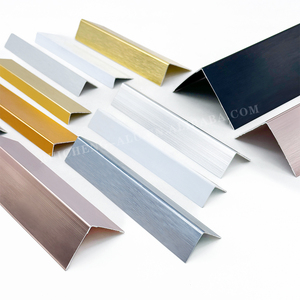
1. Marine-Grade Architectural Anodizing: Processed through electro-chemical bath oxidation, creating an integral aluminium oxide layer grown directly from the substrate metal. For coastal Kenya (MOMBASA port zone), we apply an anodizing film thickness of 20–25 microns (Class AA25) in Natural Silver, Champagne, Bronze, and Deep Black. Anodized surfaces cannot peel or flake because the oxide layer is monolithic with the extrusion body.
2. Fluoropolymer & Polyester Powder Coating: Utilizing electrostatic spraying booths equipped with multi-stage chromate-free pre-treatment washing systems (SurTec chemistry). We apply non-recycled TGIC-free polyester and PVDF powders from global leaders such as Jotun and Pulver at a dry film thickness of 60–80 microns, backed by written 10-to-25-year gloss retention guarantees against equatorial weather fading.
3. Architectural Sublimated Wood Grain: Offering the warmth and visual prestige of African teak or mahogany without the structural degradation, termite vulnerability, or perpetual varnishing maintenance of raw timber. A powder base coat is fused with a high-definition wood grain transfer film under high-vacuum oven curing at 200°C, embedding the grain deep into the coating layer.