Engineered to satisfy Italian building codes (UNI/EN standards), Criteri Ambientali Minimi (CAM), and rigorous coastal microclimate durability specs.
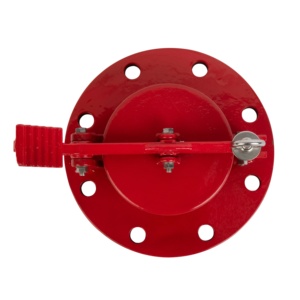
Engineered for fluid measurement ports, oil tank sampling, and secure industrial enclosures. Features an airtight precision rubber gasket system with anti-corrosive locking hardware for demanding Italian industrial applications.
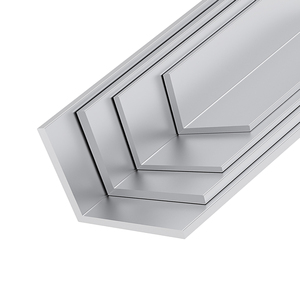
High-tensile structural L-angle profile available in 6063-T5 and 6061-T6 alloys. Designed for curtain wall perimeter framing, ventilated facade support brackets, and architectural edge reinforcement across Italian construction projects.
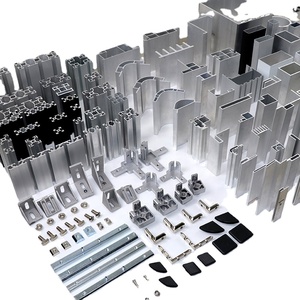
Sublimated wood-texture architectural profiles ideal for historic center retrofits in Milan and Florence. Combines the aesthetic warmth of natural timber with the structural longevity and zero-maintenance benefits of anodized/powder-coated aluminum.
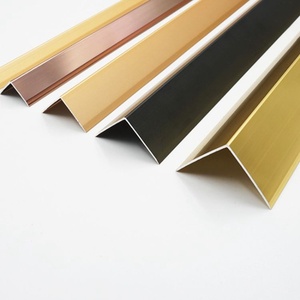
Bespoke extruded angle sections crafted with ultra-tight dimensional tolerances according to EN 12020-2. Perfect for window frame subsills, architectural trim, partition framing, and interior interior hardware integration.
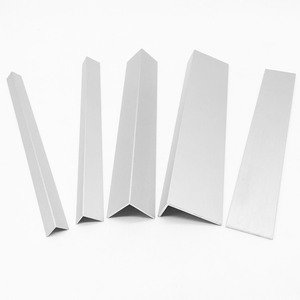
Qualicoat-certified architectural trim profiles supplied with comprehensive fabrication services—CNC precision cutting, air bending, robotic welding, and punch processing. Customized specifically for decorative facade panels and tile transition trims.
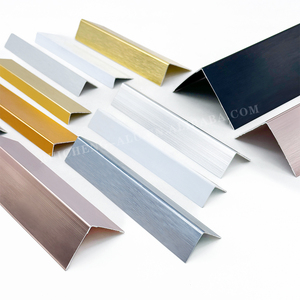
Impact-resistant extruded corner protection systems for high-traffic commercial spaces, hospitals, and luxury retail installations in Italy. Complete with custom punching and deburred finished edges for quick mechanical fixing.
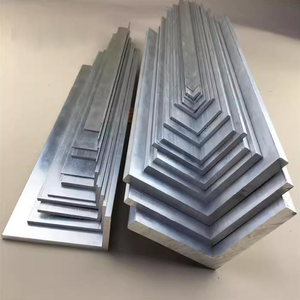
Corrosion-resistant 6061-T6 / 6063-T6 marine structural angles engineered for Italian boatbuilders, naval architects, and coastal infrastructure projects in Liguria and Sicily. Treated with 20–25 micron anodic films to withstand saltwater degradation.
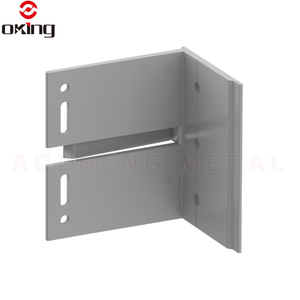
Heavy-duty engineered brackets designed for stone, ceramic, and composite cladding facades. Tested for wind-load pressure and seismic vibration resistance per Italian building code NTC 2018 requirements.
The Italian architectural and construction landscape represents one of the most sophisticated markets globally, characterized by a demanding dual requirement: strict adherence to historical preservation guidelines in urban centers like Rome, Florence, and Milan, alongside cutting-edge, energy-efficient building envelope technologies across new commercial developments. As an established global manufacturer of architectural hardware, custom aluminum extrusions, and facade support hardware, our company bridges the gap between precision industrial manufacturing and localized Italian architectural specifications.
Structural hardware and architectural profile systems exported to Italy must comply with European Harmonized Standards (EN 1090-3 for aluminum structural components) and Italian National Technical Standards for Construction (NTC 2018). From thermal break curtain wall mullions to heavy-duty dry-hanging stone brackets, our manufacturing process incorporates certified 6063, 6061, and 6005A aluminum alloys, aged to T5 or T6 tempers to ensure optimal yield strength, elongation, and machinability.
Designed for integration with multi-chamber polyamide thermal break strips (PA66 GF25), drastically lowering U-frame thermal transmittance to meet Italian Climate Zone A–F requirements and Nearly Zero Energy Building (NZEB) mandates.
For Italian coastal zones along the Tyrrhenian and Adriatic seas, our extrusions undergo specialized chromate-free pre-treatment followed by Qualanod Class 20/25 anodizing or Qualicoat Seaside-certified powder coating to guarantee zero filiform corrosion.
Custom angle brackets and structural facade hardware are engineered and finite-element analyzed (FEA) to absorb lateral wind shear and seismic displacements common in Central and Southern Italian geological zones.
Our production protocols are meticulously mapped against Italian national (UNI) and European (EN) standards to guarantee effortless site approval by Italian Direttore dei Lavori (Project Engineers).
| Parameters | European / Italian Standard | Pak Alumex Manufacturing Specification | Architectural Application Intent |
|---|---|---|---|
| Alloy & Temper | UNI EN 573-3 / UNI EN 755-2 | EN AW-6063 T5/T6, EN AW-6061 T6, EN AW-6005A | Structural curtain walls, windows, doors, solar shading |
| Extrusion Tolerances | EN 12020-2 / UNI EN 755-9 | High-precision die control down to ±0.05 mm | Seamless jointing, automated hardware assembly |
| Anodizing Quality | UNI EN ISO 7599 / Qualanod | 10 µm (Interior), 20–25 µm (Marine Exterior) | Coastal facades, luxury yacht fittings, decorative trims |
| Powder Coating | Qualicoat Class 1 & Class 2 (Seaside) | 60–80 µm dry film, thermosetting architectural polyester | Color-matched building envelopes, window frames (RAL colors) |
| Mechanical Processing | EN 1090-3 / ISO 2768-m | 5-axis CNC Milling, Precision Punching, TIG/MIG Welding | Bespoke facade brackets, angle hatches, dry-hanging supports |
Direct factory extrusion, surface treatment, and precision secondary machining consolidated under one unified quality management system.
From client DWG/DXF drawings or physical CAD models, our engineering team designs and manufactures project-specific extrusion dies in-house, conducting finite element simulation to ensure smooth metal flow and structural wall uniformity.
We are not just extruders. Our plant provides full secondary processing including high-precision cutting, 3D CNC profile bending, punching, slotting, deburring, and robotic assembly—ready for direct line insertion by Italian fabricators.
Using polyurethane powder bases combined with high-temperature vacuum heat transfer technology, we produce ultra-realistic Italian oak, teak, and walnut finishes that comply with strict municipal urban planning regulations in historic districts.
Every extrusion batch undergoes strict tensile testing, Webster hardness testing, cross-hatch adhesion checks, and dry film thickness measurement using digital probe technology prior to export clearance.
Products are wrapped with non-marking protective films, interleaved with moisture-resistant paper, strapped in export-grade wooden crates, and shipped with complete bill of lading and commercial documentation to major Italian ports: Genoa, Trieste, Venice, and Naples.
The Italian construction sector is experiencing a rapid technological evolution driven by European Green Deal directives, strict energy recalculations under national Superbonus sustainability initiatives, and the implementation of Criteri Ambientali Minimi (CAM) for public procurement projects. Architectural hardware manufacturers must adapt to several core market trends:
Answers to common questions regarding CE marking, compliance, MOQs, custom dies, and shipping to Italy.
Yes. All structural aluminum profiles and hardware components supplied to the Italian market are manufactured in compliance with EN 12020-2 (tolerances), EN 755 (mechanical properties), and EN 1090-3 (execution of aluminum structures). Complete material test certificates (EN 10204 3.1) are supplied with every order.
For structural curtain wall mullions and high-load dry-hanging cladding brackets used in Italy, we recommend 6063-T6 or 6061-T6 alloys due to their higher yield strength and shear resistance. For standard window/door frames and decorative wall trims, 6063-T5 offers excellent surface finish quality and thermal strip crimping suitability.
Absolutely. We specialize in custom die development. Italian engineering teams can submit DWG/DXF drawings or 3D models. Our engineers verify extrusion ratios, wall thickness balance, and tolerance feasibility before manufacturing the die. First-article samples are extruded and dimensionally verified before bulk manufacturing begins.
For marine boat angle iron corners and coastal architectural hardware installed along Liguria, Sicily, or Veneto coastlines, we apply heavy-duty anodizing between 20 to 25 microns (Qualanod compliant) or high-durability Qualicoat Seaside powder coating over a chromate-free conversion layer, passing 2000+ hours of neutral salt spray testing.
Standard die creation takes 10 to 15 days. Mass extrusion and surface finishing require approximately 15 to 20 days depending on order volume. Containerized sea freight from our shipping origin to main Italian sea ports (Genoa, Trieste, Venice, Naples) typically takes 25 to 35 days, with full export documentation provided for smooth Italian customs clearance.
We provide full-service factory fabrication including CNC precision cutting, angle miter cutting, hole punching, slotting, tapping, 3D bending, milling, and welding. This allows Italian contractors to receive ready-to-install components direct to site, significantly reducing local labor costs.
Consult with our senior metallurgical and facade engineers today. Send us your project drawings, alloy specs, or finish intent for a comprehensive quote and technical evaluation.