Explore our specialized aluminum profile catalog, rigorously engineered for casement windows, curtain wall integrates, and structural corner joints across South Korea's residential and commercial projects.
An authoritative technical analysis for Korean real estate developers, facade engineers, and glazing contractors sourcing high-performance aluminum window extrusions.
South Korea’s Ministry of Land, Infrastructure, and Transport (MOLIT) has enacted some of the East Asian region’s most stringent building energy conservation codes. Under the mandatory Energy Efficiency Labeling and Standards Program, residential and commercial casement windows must achieve a thermal transmittance value (U-value) below 0.9 to 1.2 W/m²K to qualify as Grade 1 in colder central regions (Seoul, Gyeonggi-do, Gangwon-do).
Standard non-thermal or basic single-break aluminum extrusions fail to meet these benchmark criteria. As a specialized B2B manufacturer supplying the Korean market, our engineering team integrates multi-chambered polyamide thermal barriers (PA66 GF25 with 25% glass fiber reinforcement) combined with customized polyurethane foam insertion options. This multi-barrier construction isolates the interior aluminum profile from exterior freezing Siberian thermal bridges, eliminating internal condensation during harsh Korean winter months where outdoor temperatures drop below -15°C.
The Korean peninsula experiences annual summer super-typhoons originating in the Pacific (such as Typhoon Hinnamnor and Lingling). High-rise apartments (*Apartments* and *Officetels*) along coastal cities like Busan (Haeundae district), Incheon, and Jeju Island require casement window systems rated for extreme wind pressure resistance exceeding 4,500 Pa to 5,500 Pa.
To meet these structural demands, our extrusion mills utilize prime virgin A00 aluminum ingots to formulate high-tensile 6063-T6 and 6061-T6 alloys. Our casement profile geometries incorporate reinforced structural moment of inertia ($I_x$, $I_y$) within sash and frame mullions, preventing frame deflection, glass seal failure, or water penetration even under wind velocities reaching 50 m/s.
| Performance Parameter | Pak Alumex Korean-Spec Casement Profile | Standard Generic Export Window Profile | KS F 3117 Grade 1 Target |
|---|---|---|---|
| Aluminum Alloy & Temper | 6063-T5 / T6 Prime Ingot (Billet Traceable) | Recycled 6063 Scrap Blend | KS D 6759 Compliant Alloy |
| Thermal Transmittance ($U_f$) | 0.85 – 1.10 W/m²K (PA66 GF25 Strip) | 2.20 – 3.20 W/m²K (PVC Strip / Minimal) | ≤ 1.20 W/m²K |
| Airtightness (Air Permeability) | Class 1 (< 1.0 m³/h·m² at 10 Pa) | Class 3 – Class 4 | Grade 1 (≤ 1 m³/h·m²) |
| Wind Load Resistance | 5,000 Pa (Typhoon Coastal Grade) | 2,000 – 3,000 Pa | Design Pressure Dependent (> 3,500 Pa) |
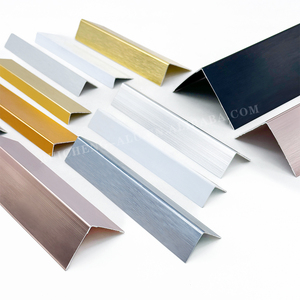
| Surface Powder Coating | Qualicoat Class 2 Superdurable (60-80µm) | Standard Industrial Spray (< 40µm) | KS D 8308 Weatherability Class |
| Glazing Cavity Capacity | 24mm Double to 44mm Triple Low-E IGU | 16mm – 20mm Double Glazing Only | Triple IGU Compatible |
How our factory-direct casement profile systems are specified and installed across distinct Korean architectural topologies.
In dense urban areas such as Gangnam, Songpa, and Mapo, high-rise apartment towers require casement windows that offer exceptional sound transmission loss (Acoustic STC rating > 42 dB) to block heavy traffic noise from expressways (Olympic-daero, Gangbyeon-bukro). Our multi-point locking side-hung casement profiles feature triple-seal EPDM gaskets that compress tightly against the frame rebate, providing both sound suppression and draft-free living.
Coastal properties are subject to high salt-fog atmospheric corrosion and extreme squalls. We treat our 6063-T6 casement profiles with advance chromate-free pre-treatment followed by Qualicoat-certified fluorocarbon (PVDF) or high-durability powder coating. This prevents surface pitting, blistering, and color fading under high UV radiation, backed by 15 to 25 years of outdoor finish warranty.
Commercial office towers and municipal public centers in Songdo International Business District demand automated tilt-and-turn or inward-opening casement profiles integrated with building management systems (BMS). Our extrusions feature standardized European hardware groove slots (C-groove and 16mm notch) compatible with premium hardware gear like Siegenia, Hoppe, and Winkhaus.
Modern Korean architects frequently blend traditional Hanok aesthetics with modern aluminum structural efficiency. Utilizing our advanced 3D wood-grain sublimation technology, we apply authentic Korean Pine, Walnut, and Natural Oak wood textures over structural aluminum casement frames, offering timeless traditional warmth without timber maintenance, rotting, or flammability issues.
Key technological shifts that developers and fenestration buyers must consider when sourcing aluminum window profiles for upcoming Korean construction bids.
Korean urban buyers increasingly demand slim-frame, hidden-sash casement designs that maximize daylighting area and panoramic views. Our slim-face profiles reduce visible aluminum width to under 50mm while retaining structural steel-reinforcement chambers inside.
With growing concerns over fine particulate matter (PM2.5 yellow dust) in Korea, window frames are now extruded with dedicated internal trickle-vent channels and motor-driven actuator pockets for automatic sensor-controlled air exchange.
ESG-focused Korean general contractors (such as Samsung C&T, GS E&C, and DL E&C) prioritize building materials with low embodied carbon. Aluminum extrusions produced from hydroelectric-melted primary ingots offer 100% infinite recyclability with complete EPD documentation.
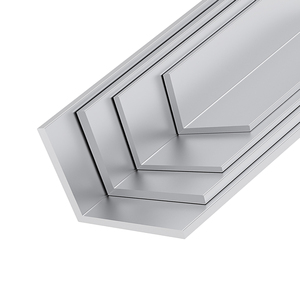
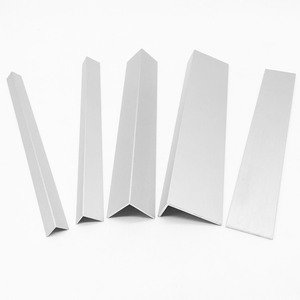
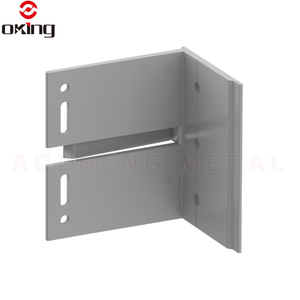
On-site labor costs in Korea have driven a shift toward off-site pre-assembled window sub-frames. Our factory supplies precision-milled aluminum angle cleats, dry-hanging bracket systems, and pre-cut profile bundles ready for rapid site installation.
Direct answers to technical, regulatory, and logistics queries common among Korean procurement managers.
Our aluminum extrusions are manufactured using prime 6063/6061 alloy billets that strictly conform to chemical composition and mechanical strength criteria outlined in KS D 6759 (Aluminum Alloy Extruded Profiles). We provide complete mill test certificates (MTC), alloy spectrometer analysis, and dimensional tolerance reports with every shipment to assist your local laboratory in obtaining KC and KS F 3117 window system certification.
For custom profile sections, die design and sample production take approximately 10 to 14 days. Upon CAD approval and initial sample sign-off, bulk production runs require 15 to 20 days depending on surface finish (anodizing or powder coating). Direct sea freight shipping from our export port to Busan Port or Incheon Port typically takes 12 to 18 days, ensuring a total turnaround time of under 6 weeks for turnkey custom orders.
Yes. Our heavy-duty architectural casement window series features thermal break profile pockets engineered for 24mm, 30mm, 39mm, and up to 44mm triple-glazed insulated glass units (IGU). The thermal breaks utilize precision-crimped PA66 GF25 polyamide strips (width range 14.8mm to 34mm) to ensure frame U-values ($U_f$) reach down to 0.85 W/m²K, easily surpassing Grade 1 thermal criteria.
For standard urban environments, we recommend Qualicoat Class 2 architectural polyester powder coating at 60–80 microns dry film thickness (available in full RAL palette, super-matt, and metallic textures). For severe marine environment projects (e.g., Busan coastal high-rises or Jeju resorts), we advise electro-chemically anodized finishes (15–25 microns oxide film) or PVDF fluorocarbon coatings designed to withstand intense salt-spray exposure exceeding 3,000 hours.
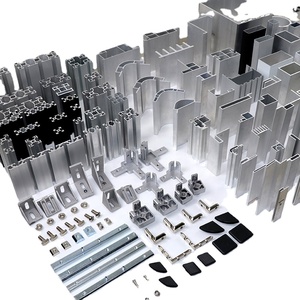
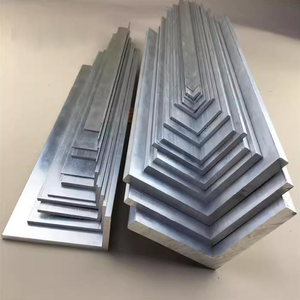
We provide flexible supply formats tailored to your business model: (1) Standard 5.8m or 6.0m stock bar lengths packaged in protective interleave film and heavy-duty wooden crates for local Korean fenestration fabricators; or (2) Knock-Down (KD) pre-cut, CNC-milled profile kits complete with corner keys, gaskets, and assembly hardware ready for fast site assembly.
Every individual profile is wrapped in brand-printed protective PE film (or neutral clear film). Profiles are then bundled with interleave paper, wrapped in waterproof woven plastic sheeting, and reinforced with steel strapping inside ISPM-15 compliant heat-treated wooden crates or heavy-duty cardboard tubes to guarantee zero movement or ocean moisture corrosion during transit.
Integrated extrusion, surface finishing, and quality control under one roof — engineered for total supply chain reliability.
Equipped with state-of-the-art wire EDM and CNC die milling equipment, our tooling department crafts complex multi-cavity casement profile dies accurate to within ±0.15mm tolerances.
From vertical automated powder coating lines to specialized anodizing tanks and Italian wood-grain sublimation equipment, every finish step is controlled under one quality management system.
Every production batch undergoes strict laboratory verification: spectrographic alloy check, tensile strength testing, cross-hatch adhesion, film thickness measurement, and dimensional laser scanning.
Send us your project section drawings, target U-values, or sample specifications. Our engineering team will deliver a comprehensive CAD review, profile weight schedule, and competitive direct factory quotation within 24 hours.