Precision-extruded 6063-T5/T6 aluminium casement profiles integrated with heavy-duty hardware, double glazing, and thermal break technology tailored for South African climates.
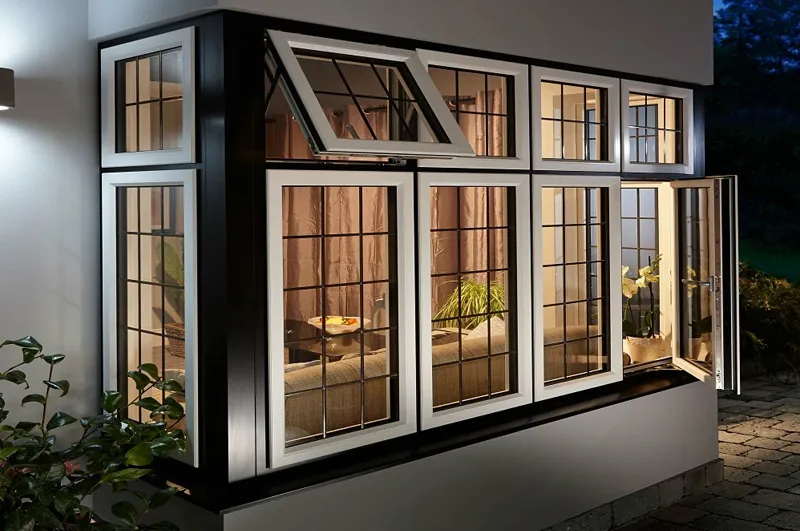
Engineered with polyamide thermal break strips and continuous multi-point EPDM seals to meet SANS 10400-XA energy standards.
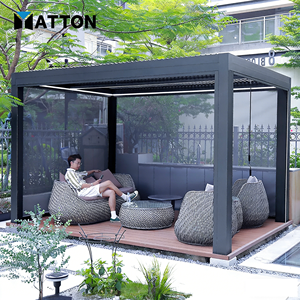
Designed for luxury coastal villas in Cape Town & Durban. Offers automated weather-sensing louver controls and high wind resistance.
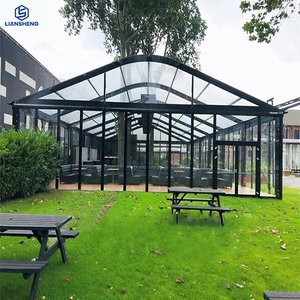
Custom-curved precision extrusions designed for luxury residential estates and commercial facade accent walls across South Africa.
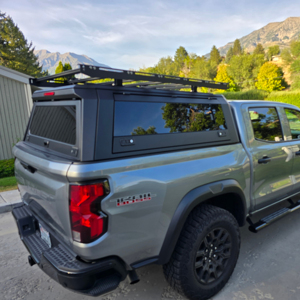
Built with reinforced structural mullions, suitable for extreme wind pressure zones in Highveld and coastal high-rise developments.
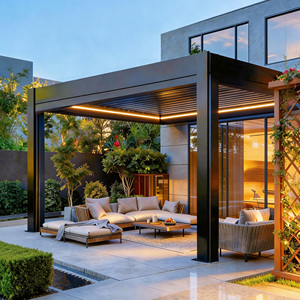
Combines insulated casement glass panels with louver roof integration, optimal for outdoor entertainment living spaces.
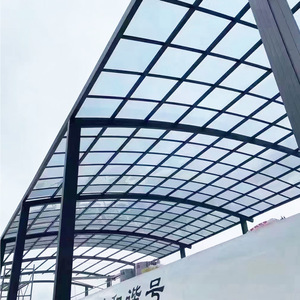
Versatile dual-action opening sash system providing superior rain deflection while maintaining maximal fresh air throughput.
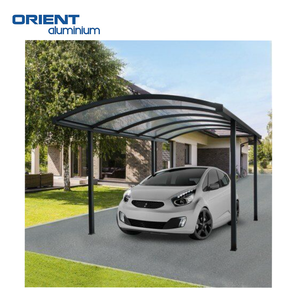
Features high-tensile 304 stainless steel security mesh seamlessly fitted within the primary aluminium casement frame.
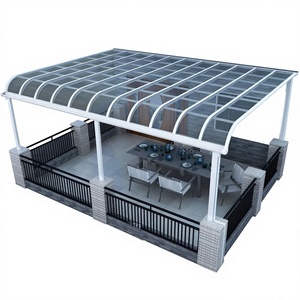
Automated motorized casement windows equipped with rain sensors, wind monitoring, and smart home remote integration.
The South African building and construction industry is undergoing a structural transition toward energy-efficient, high-durability fenestration systems. Driven by stringent national building regulations—specifically SANS 10400-XA (National Building Regulations for Energy Usage in Buildings) and SANS 204 (Energy Efficiency in Buildings)—architects, property developers, and façade contractors across Gauteng, Western Cape, and KwaZulu-Natal no longer evaluate window systems solely on upfront capital expenditure. Instead, thermal performance, solar heat gain coefficients (SHGC), structural wind load ratings, and long-term marine corrosion resistance govern procurement decisions.
Among various window typologies, aluminium casement windows hold a dominant market share in both luxury residential estates (such as Midrand, Sandton, Constantia, and Umhlanga) and high-density commercial developments. Unlike sliding systems, casement windows feature compression-sealed sashes that push firmly against continuous EPDM gaskets upon locking, providing superior air tightness, water penetration resistance, and structural rigidity against cyclic gale-force winds common to coastal regions like Cape Town and Port Elizabeth.
Information Gain Insight for S.A. Buyers: Importing architectural aluminium casement windows directly from top-tier Chinese manufacturing hubs allows developers to secure high-performance 6063-T6 thermally broken profiles with double Low-E glazing at a 30% to 40% cost advantage over local assembly, while remaining fully compliant with AAAMSA (Association of Architectural Aluminium Manufacturers of South Africa) testing criteria.
However, navigating the global supply chain requires deep technical oversight. A common pitfall for South African importers is sourcing standardized tropical or domestic Chinese profiles that fail to account for South Africa’s intense UV radiation, high inland thermal fluctuations (Highveld summer highs vs. sub-zero winter nights), or severe coastal salt-spray environments. Working with specialized Chinese OEM/ODM export factories that engineer custom extrusion dies, apply Qualicoat-certified surface finishes, and integrate European-standard multi-point security hardware is critical for long-term project success.
Requires minimum 25 µm anodized or seaside-grade powder coating (60-80 µm) with 316 stainless steel friction hinges to withstand C4/C5 marine atmospheric corrosion and 1500+ Pa wind-driven rain.
Demands high thermal insulation with Polyamide PA66 heat-barrier strips and Low-E double glazing to handle rapid diurnal temperature swings and lower HVAC cooling loads under intense solar exposure.
Integrates heavy-duty multi-point shoot-bolt locking mechanisms, anti-burglary friction stays, and high-tensile stainless steel security flyscreen mesh embedded into the frame structure.
To deliver superior structural integrity, leading Chinese factories export casement systems fabricated exclusively from prime-grade 6063-T5 or 6063-T6 aluminium alloy billets. Unlike re-melted scrap aluminium, prime 6063 alloy offers optimal extrusion ratios, excellent tensile strength (yield strength ≥ 170 MPa for T6), and flawless surface finishing capability for powder adhesion and anodizing growth.
Standard solid aluminium frames act as thermal bridges, readily conducting external heat into air-conditioned interiors during South African summers, and allowing interior warmth to escape during Highveld winter nights. Advanced Chinese casement window factories resolve this through polyamide thermal break technology:
1. Outer & Inner Aluminium Shells: Extruded separately in high-precision die presses, allowing dual-tone color options (e.g., Matt Black on exterior, Warm Timber Wood Grain on interior).
2. PA66 GF25 Polyamide Strips: Reinforced with 25% glass fiber for structural strength matching aluminium's thermal expansion coefficient, mechanically crimped into the knurled slots of both aluminium extrusion halves.
3. Cavity Insulation Inserts: Optional expanded polyurethane (PU) or aerogel foam inserted into the break cavity to drop profile U-values to as low as 1.4 W/m²·K.
| Finish Technology | Film Thickness Standard | Corrosion & UV Resistance | Recommended S.A. Location | Expected Lifespan |
|---|---|---|---|---|
| Architectural Anodizing | 15 – 25 Microns (µm) | Ultra-high resistance to salt spray, oxidation & scratching | Coastal Frontline (< 1km from ocean) Cape Town, Durban | 25+ Years (No peeling) |
| Qualicoat Powder Coating | 60 – 80 Microns (µm) | High resistance to chalking, UV fading & chemical exposure | Inland Estates, Urban Hubs (Sandton, Midrand, Centurion) | 15 - 20 Years |
| 3D Wood Grain Sublimation | 60 – 70 µm Base + Film | Aesthetic warm timber feel without warping, rotting, or termites | Upmarket Architectural Villas & Country Lodges | 15+ Years |
| Electrophoretic Coating | 18 – 22 Microns (µm) | Smooth metallic finish, self-healing properties, high dust resistance | Commercial Office Parks & Institutional Buildings | 20+ Years |
Window frames represent only one half of the performance equation; the glass and hardware matrix completes the fenestration envelope. To satisfy SANS 613 (Performance of Fenestration Products) and SANS 204 compliance, Chinese factories configure custom insulated glass units (IGU) paired with heavy-duty European architectural hardware.
For optimal solar control and sound attenuation in urban centers such as Johannesburg and Cape Town, double glazing with Low-Emissivity (Low-E) coatings is the gold standard:
• 5mm Clear Toughened + 12A Argon Space + 5mm Low-E Glass: Reduces solar heat gain coefficient (SHGC) to ≤ 0.40 and U-Value to ≤ 1.9 W/m²·K.
• Laminated Safety Glass (6.38mm PVB): Mandated by SANS 10400-N for all low-level openings, door side-lights, and high-risk impact zones to prevent glass shatter injuries.
• Acoustic PVB Laminated IGU: Dampens external noise levels by up to 38 dB, essential for properties situated adjacent to major transport corridors like the N1/N3 highways.
Security remains a primary consideration for South African residential homeowners and commercial developments. Leading Chinese suppliers incorporate advanced anti-burglary measures directly into the window engineering:
Heavy-duty gearboxes with 3-to-5 locking mushroom pins that engage steel keep plates along the top, side, and bottom of the frame when operating the handle.
0.8mm wire diameter 304/316 grade stainless steel security screens installed into dedicated frame tracks, acting as a structural barrier while allowing 85% airflow.
Non-magnetic 304 stainless steel friction hinges load-rated up to 80kg per sash, equipped with anti-lift blocks to prevent external sash removal attempts.
Selecting the right OEM/ODM factory in China is the most critical decision for South African Fenestration Importers, Main Contractors, and Aluminium Fabricators. While thousands of small workshops operate across Guangdong and Shandong, only mature enterprise manufacturers possess the full industrial chain required to guarantee international quality standards.
1. Integrated In-House Production: Top-tier manufacturers house billet casting, extrusion presses (ranging from 800 to 3600 tons), anodizing lines, vertical powder coating plants, and thermal break assembly under one roof. This unified chain guarantees batch-to-batch color consistency and strict dimensional tolerance control (conforming to ISO 2768-m or BS EN 12020).
2. Custom Die Development & Prototyping: S.A. fabricators working on specialized facade profiles can submit DWG/DXF drawings. Experienced tooling engineers perform finite element analysis (FEA) to verify wall thickness, extrusion ratios, and structural deflection under wind loads before cutting custom steel extrusion dies within 10–15 days.
3. Export Packaging & Ocean Freight Protection: Transit from Chinese ports (Shenzhen, Ningbo, Qingdao) to South African discharge ports (Durban, Cape Town, Coega) involves 20 to 30 days of sea voyage exposed to humid marine air. Professional suppliers protect shipments through rigorous multi-layer packaging protocols:
• Surface protection tape applied to all exposed aluminium faces.
• Interleaved protective foam between profiles inside bundled shrink-wrap.
• Fumigated ISPM-15 compliant fully enclosed wooden crates or reinforced steel A-frame glass racks.
• Desiccant packs inside shipping containers to prevent moisture condensation during thermal transitions crossing the equator.