

Custom extruded 6000-series alloy sections engineered for commercial, residential, and marine-industrial applications in Chile.
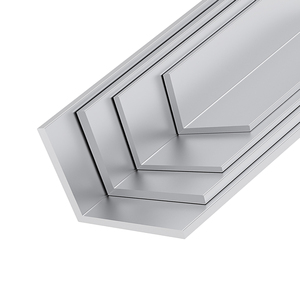
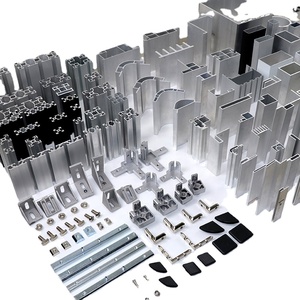
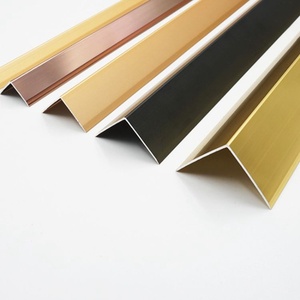
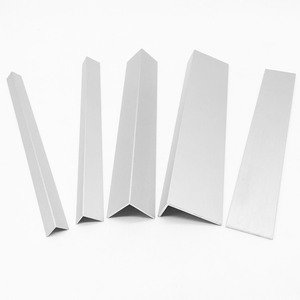
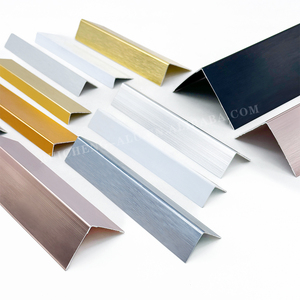
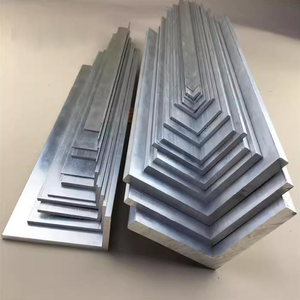
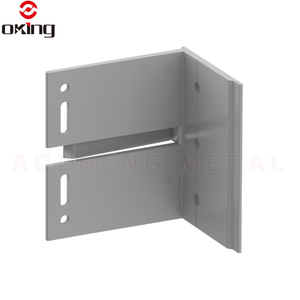
Chile's architectural and construction landscapes demand structural material capabilities that far exceed standard global benchmarks. Located along the Pacific Ring of Fire and featuring an expansive 4,270-kilometer coastline, the Chilean built environment must simultaneously withstand extreme seismic movements (governed by NCh433 and NCh3171 standards) and severe coastal-marine atmospheric corrosion (classified up to ISO 12944 C5 grade). For architectural specifiers, real estate developers, and chief procurement officers across Santiago, Valparaíso, Concepción, and Antofagasta, sourcing aluminum door frame systems and extrusion profiles from top-tier Chinese manufacturers has transitioned from a cost-saving initiative to a strategic quality advantage.
As premier China door frame factories and exporters, our manufacturing ecosystem blends advanced metallurgical science, precision die engineering, and direct compliance with South American building regulations. By utilizing pure primary aluminum ingots and deploying automated extrusion presses ranging from 800 to 3,600 metric tons, we engineer door jambs, sub-frames, thermal break frames, and curtain wall attachment profiles that offer superior tensile strength, exact dimensional tolerances, and unyielding resistance to environmental degradation.
The core structural backbone of our exported door frame systems relies on precisely alloyed 6000-series aluminum—specifically 6063-T5, 6063-T6, and 6061-T6. These alloys represent the gold standard for architectural applications, balancing excellent extrudability with high mechanical properties. Through precise heat treatment (artificial aging), our frames achieve a ultimate tensile strength exceeding 205 MPa and yield strength over 170 MPa, guaranteeing structural resistance against wind loads, building sway, and heavy forced-entry stresses.
Why leading construction enterprises in Chile specify our aluminum door profile systems.
Designed with micro-flexible corner connectors, deep rebate engagement depths, and high-yield 6061-T6 corner brackets, allowing frame assemblies to absorb inter-story shear deformations without glazing failure or structural warping during seismic events.
Engineered for harsh Pacific salt spray and hyper-saline desert environments in Northern Chile. Featuring pre-treatment chromate-free conversion layers capped with 15–25 micron anodic films or 60–80 micron Qualicoat Class 2 powder coatings.
Incorporating high-precision polyamide (PA66GF25) thermal barrier strips crimped mechanically into inner and outer aluminum frame extrusions, dramatically reducing U-values to meet thermal transmittance limits in Central and Southern Chile.
Chile's extreme geographic diversity necessitates tailored architectural frame configurations. A single standardized frame specification cannot perform equally across the humid hyper-arid Atacama region, the dense urban Mediterranean metropolis of Santiago, and the wind-swept, freezing environments of Patagonia. Our engineering team collaborates directly with Chilean developers to deploy specialized frame profiles suited for specific regional conditions:
| Chilean Region / Zone | Dominant Environmental Stress | Recommended Frame Alloy & Temper | Surface Treatment & Coating Spec | Target Chilean Application |
|---|---|---|---|---|
| Northern Zone (Antofagasta, Iquique, Calama) | Extreme UV Radiation, High Salinity, Mining Dust, Thermal Shock | Alloy 6061-T6 / 6063-T6 | Fluorocarbon (PVDF) 3-Coat or Anodized 25µm | Mining Headquarter Facilities, Port Infrastructure, Heavy Industrial Access Doors |
| Central Zone (Santiago, Viña del Mar, Valparaíso) | High Seismic Load (Zone 3), Coastal Salt Air, Dense Urban Traffic | Alloy 6063-T5 / T6 | Powder Coating (Qualicoat Class 2) 70µm / Wood Grain Transfer | High-Rise Residential Towers, Commercial Malls, Luxury Villa Entryways |
| Southern & Patagonian Zone (Concepción, Puerto Montt, Punta Arenas) | Sub-Zero Temperatures, Severe Gale Winds, Continuous Driving Rain | Thermally Broken 6063-T6 (PA66 Barrier) | Powder Coated Marine-Grade or Electrophoresis Finish | Agro-Industrial Cold Storage, Hospital Facilities, Eco-Tourism Lodges |
Unlike basic extrusion suppliers who provide un-machined raw lengths, our state-of-the-art Chinese production facilities feature complete in-house fabrication workshops. Equipped with 5-axis CNC machining centers, automated double-head mitre saws, precision punch presses, and hydraulic bending equipment, we deliver ready-to-assemble door frame kits straight to Chilean construction sites or local fabricators. Our fabrication scope encompasses:
Under the fully implemented China-Chile Free Trade Agreement (Tratado de Libre Comercio China-Chile), architectural aluminum extrusions, structural profiles, and aluminum door frame assemblies classified under HS Codes 7604.21, 7604.29, and 7610.10 qualify for 0% preferential import tariffs when entering Chilean customs ports such as Valparaíso and San Antonio.
Our dedicated logistics documentation division handles the issuance of official FORM F Certificates of Origin (Certificado de Origen TLC China-Chile). By ensuring strict compliance with local origin criteria and correct HS tariff classification, we enable Chilean importers to bypass standard 6% import duties entirely, directly lowering overall landed procurement costs while maintaining premium product specifications.
The construction industry in Chile is undergoing a rapid transformation toward industrialization, sustainability, and digital integration. As primary exporters serving this dynamic market, we observe three major operational shifts reshaping how developers source door frames and architectural profiles:
To combat rising site labor costs and speed up project delivery, major Chilean engineering firms (such as those operating in Concepción and Santiago Metropolitano) are rapidly adopting off-site modular construction. This trend demands door frame extrusions manufactured with micro-inch dimensional accuracy. Our factory utilizes digital laser calipers and optical profile projectors, maintaining tolerances within ±0.15mm (EN 755-9 compliance). This guarantees that frame sub-assemblies snap effortlessly into pre-fabricated drywall and concrete panel modules without on-site trimming.
Environmental certifications like LEED Chile and CES (Certificación Edificio Sustentable) are becoming mandatory prerequisites for grade-A office spaces and institutional projects. Chinese factories leading the market have invested heavily in eco-friendly manufacturing loops. We utilize up to 40% clean recycled closed-loop aluminum scrap without compromising billet mechanical properties, deploy chromate-free pre-treatment lines (SurTec chemical technology), and run zero-VOC powder coating lines. This enables Chilean project developers to earn valuable points under Material and Resources (MR) credits for green building standards.
Architects in coastal resorts like Viña del Mar desire the warm aesthetic of natural oak, walnut, and mahogany, yet real timber degrades rapidly under intense coastal UV and moisture. Our 3D vacuum wood-grain sublimation technology transfers durable polyurethane wood patterns onto powder-coated aluminum profiles. The result is a door frame system that offers the timeless beauty of natural timber combined with the structural strength, fire rating (Class A), and zero-maintenance lifespan of architectural aluminum.
End-to-end manufacturing control from raw aluminum billet to export container loading.
Over 10,000 active die sets in stock, plus rapid custom die design capability. We translate your AutoCAD or Revit DWG files into precision steel extrusion dies within 7 to 10 days.
Every production batch undergoes spectral chemical analysis, Webster hardness testing, film thickness gauge checks, cross-hatch adhesion tests, and tensile testing prior to packing.
Protective PE shrink film wrapped per individual length, interleaved protective paper, heavy-duty waterproof craft paper bundling, and steel-reinforced fumigated wooden crates built for ocean transit.
Clear answers on customs clearance, technical customization, shipping times, and minimum order quantities.
Under the China-Chile Free Trade Agreement (TLC), we issue an official Certificate of Origin (Form F) stamped by Chinese customs authorities. Provided the goods are shipped directly and documentation correctly lists HS codes under Chapter 76, Chilean customs (Aduanas de Chile) applies a 0% duty rate instead of the standard 6% Most Favored Nation (MFN) tariff.
Direct container shipping lines from major Chinese ports (such as Shanghai, Ningbo, or Qingdao) to main Chilean ports—such as Puerto de San Antonio or Puerto de Valparaíso—typically take between 28 and 35 transit days. We coordinate full container load (FCL 20GP / 40HQ) booking to streamline port dispatch and customs release.
Yes. We routinely manufacture specialized telescopic jambs, wrapping sub-frames, and wall trim angles designed to fit varied masonry, concrete, and drywall thicknesses ranging from 75mm up to 300mm. We develop dedicated dies tailored precisely to your architectural project shop drawings.
For buildings situated within 1 kilometer of the Pacific Ocean, we recommend either a 20–25 micron Class 1 Anodized finish or a 70–80 micron Super Durable PVDF/Qualicoat Class 2 Powder Coating over a chromate-free pre-treatment layer. This provides maximum protection against salt spray pitting, peeling, and surface oxidation.
For standard existing die profiles (such as standard L-angles, square tubes, and trim profiles), the MOQ is 500 kg per profile section. For custom engineered die profiles, the MOQ is typically 1,000 kg. Extrusion and surface finishing lead times run between 15 to 20 days upon final CAD drawing and sample sign-off.