

Engineering High-Performance Glazing Systems for Osaka’s Built Environment
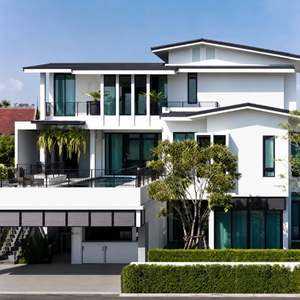
The urban landscape of Osaka—spanning dense commercial hubs in Umeda and Namba to exposed coastal redevelopments along Osaka Bay and Sakishima—presents a rigorous set of structural, environmental, and regulatory demands for architectural facade engineering. As a premier China wholesale glazing systems manufacturer and supplier serving the Osaka market, our production lines bridge high-volume advanced extrusions with the meticulous engineering standards mandated by Japanese General Contractors (Zenecon) and local building authorities.
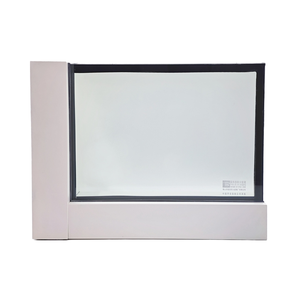
Constructing facades in the Kansai region requires solving a dual engineering challenge: withstand severe cyclic loadings from seasonal Pacific typhoons while providing structural elasticity to absorb seismic ground motion under Japan’s stringent Building Standard Law (BSL). Standard architectural extrusions often fail to reconcile these competing force vectors. Our customized aluminum window walls, unitized curtain wall cassettes, and double/triple-glazed fenestrations are specifically detailed with high-yield 6063-T5/T6 alloys, mechanical thermal breaks, and structural silicone glazing (SSG) configurations that pass both domestic Japanese Industrial Standards (JIS A 4702 for doorsets and JIS A 4706 for windows) and international structural protocols.
Typhoon-Grade Wind Resistance
Engineered to handle positive and negative wind pressures up to 4,500 Pa ($W = q \cdot C_f \cdot A$), preventing frame deflection and joint fatigue during Kansai coastal storms.
Seismic Inter-Story Drift
Unitized split-mullion cassette connections allow independent movement up to 1/100 story drift ratio, protecting glass units from shear stresses during earthquakes.
Marine Corrosion Shield
High-build fluorocarbon (PVDF 3-coat Kynar 500) and Class 2/3 anodized finishes resist salt mist pitting along Osaka Port, Sakishima, and coastal industrial zones.
Thermal & Condensation Control
PA66 GF25 polyamide thermal barriers combined with Low-E triple glazing eliminate internal perimeter condensation during cold humid Kansai winters.
Localized Application Scenarios across Osaka’s Key Districts
Architectural requirements differ significantly across Osaka’s micro-zones. Our supply chain delivers tailored glazing profile configurations matching the precise performance criteria of each urban sector:
1. Umeda & Namba Commercial High-Rises
Primary Concern: Structural wind load at height, solar radiation control, and fast-track installation schedule.
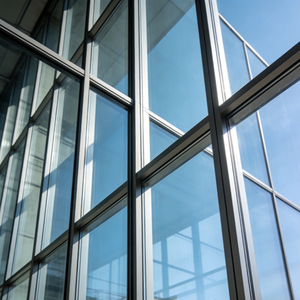
Glazing Solution: Prefabricated Unitized Aluminum Glass Curtain Walls featuring structural silicone bonding, Low-E double-tempered units, and integrated vertical shade fins.
2. Sakishima & Nanko Waterfront Developments
Primary Concern: Saline air corrosion, extreme coastal gust forces, and moisture ingress.
Glazing Solution: Heavy-duty stick and unitized facades treated with 25-micron anodization or 3-coat PVDF coatings, coupled with triple-sealed EPDM pressure-equalized drainage tracks.
3. Urban Residential Towers & Machiya Renovations
Primary Concern: Strict municipal acoustic isolation (train/traffic noise) and thermal energy efficiency (ZEB standards).
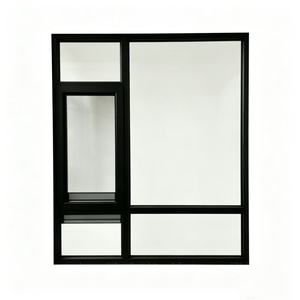
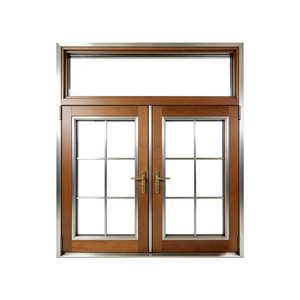
Glazing Solution: Inward-opening tilt-turn windows with PA66 thermal breaks and laminated acoustic glass delivering up to STC 42 dB noise reduction.
4. Yumeshima Expo & Logistics Infrastructure
Primary Concern: Large-span clear openings, high thermal envelope performance, and fire safety compliance.
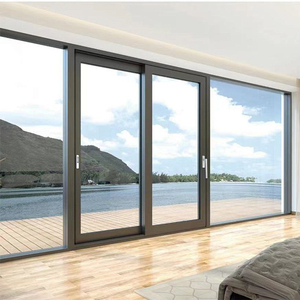
Glazing Solution: EI120 fire-rated swing doors, wide-span glass louvers, and heavy-duty sliding glass door systems with flush thresholds.
Technical Performance Matrix: JIS Compliance vs. China Factory Specs
To facilitate direct verification by Japanese structural engineering teams, the table below outlines our standard production metrics against relevant Japanese Industrial Standards (JIS) and international testing standards:
| Performance Category | Japanese Testing Standard | Factory Specification Capability | Engineering Value to Osaka Projects |
|---|---|---|---|
| Wind Pressure Resistance | JIS A 4702 / JIS A 4706 (Grade S-1 to S-7) | Positive & Negative load testing up to 4,500 Pa (ASTM E330) | Prevents structural failure during severe coastal typhoons. |
| Water Tightness | JIS A 4706 (Grade W-1 to W-5) | Dynamic water pressure resistance at 1,000 Pa (ASTM E331) | Eliminates rain leakage during high-velocity driving rain. |
| Air Infiltration / Tightness | JIS A 4706 (Grade A-1 to A-4) | ≤ 0.1 m³/(h·m²) at 100 Pa pressure differential | Maximizes HVAC energy retention for ZEB office compliance. |
| Acoustic Insulation | JIS A 4706 (Grade T-1 to T-4) | STC 38 dB to STC 45 dB (Laminated IGU configurations) | Blocks urban transport noise (JR Loop Line / Highway). |
| Thermal Transmittance ($U$-Value) | JIS A 2102 (Thermal Performance of Windows) | Frame + Glass $U$-value down to 1.1 - 1.3 W/m²K | Supports net-zero building energy targets in Kansai area. |
| Seismic Deformation | BSL Enforcement Order Article 82-2 | Relative story displacement elasticity up to 1/100 rad | Prevents glass cracking/falling during Grade 7 seismic activity. |
Architectural Trends Shaping Glazing Procurement in Osaka
Procurement teams in Kansai are navigating three core shifts in modern facade architecture:
1. Accelerated Adoption of ZEB (Net Zero Energy Building) Envelopes: Modern commercial developments in Japan require drastically lowered operational carbon emissions. Achieving this hinges on the facade envelope. By combining imported PA66 thermal-break profiles with argon-filled, double Low-E insulated glass units processed on automated edge-grinding lines, developers achieve premium thermal performance at a competitive wholesale price point.
2. Off-Site Prefabrication via Unitized Cassettes: On-site labor costs and tight urban construction plots in Osaka have shifted demand toward factory-assembled unitized glass curtain walls. Our China-based facility pre-glazes aluminum cassettes under strict temperature and humidity controls, applying structural silicone under factory conditions. These finished modules arrive at Osaka Port ready for crane lifting and rapid bracket engagement, cutting site installation time by over 40%.
3. Fire Safety and EI120 Intumescent Systems: Fire code regulations under Japan’s Building Standard Law strictly govern openings along property boundaries and high-density interior commercial corridors. Our EI120 fire-rated swing glazing partitions utilize specialized fire-resistant stainless profiles and expanding intumescent seals, offering up to 2 hours of heat insulation and flame containment without sacrificing aesthetic transparency.
Why Partner with Our Manufacturing Facility for Osaka Supply
Managing high-volume architectural glass and aluminum extrusion imports requires absolute precision in material sourcing, extrusion ratios, finish consistency, and export packaging:
In-House Billet Extrusion & Alloy Control
We extrude primary 6063 architectural aluminum billets in T5 and T6 tempers, maintaining precise wall thickness tolerances and structural moment of inertia parameters for mullions and transoms.
Automated Insulating Glass Edge Processing
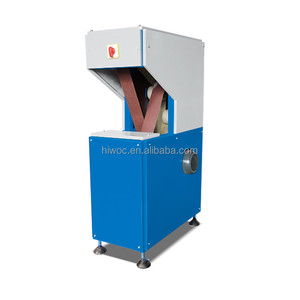
Our automated CNC glass edge polishing and grinding machinery ensures smooth, defect-free glass edges, eliminating micro-cracks that cause glass breakage under thermal stress.
Qualicoat & Anodizing Finishes
Equipped with vertical powder coating lines and electro-chemical anodizing tanks, we deliver uniform film builds (60-80 µm powder, 15-25 µm oxide) batch-tested for salt spray resistance.
Direct Shipping to Osaka & Kobe Ports
Consignments are packed with protective interleaving film, heavy-duty steel-reinforced wooden crates, and moisture-proof wrap, ensuring damage-free sea freight arrival at Osaka Nanko port.
Frequently Asked Questions by Osaka Contractors & Specifiers
Do your glazing systems fully comply with Japanese Industrial Standards (JIS)?
Yes. Our architectural aluminum profiles, glass units, and hardware assemblies are designed and factory-tested against JIS A 4702 (doorsets) and JIS A 4706 (windows). We provide mill test certificates, structural calculations, and wind/water test reports under ISO 9001 quality management to support approval by Japanese general contractors and building auditors.
How do your unitized curtain walls withstand severe Kansai typhoons?
Our unitized systems feature pressure-equalized rain-screen technology with internal EPDM gaskets and continuous drainage channels. The structural aluminum profiles are extruded in 6063-T6 alloy with reinforced wall thickness, capable of supporting positive and negative wind loads up to 4.5 kPa without exceeding structural deflection limits.
What is the typical shipping lead time from your factory to Osaka Port?
After final approval of shop drawings and die extrusion samples, standard manufacturing lead time is 25 to 35 days depending on project volume. Transit time from our primary port in China directly to Osaka Port (or Kobe Port) is typically 3 to 5 days, making sea logistics fast and reliable for Kansai construction schedules.
Can you customize aluminum profile dies for project-specific architectural drawings?
Absolutely. Our in-house die design engineering team can develop custom extrusion dies directly from your DWG/DXF architectural CAD sections. We perform finite element analysis (FEA) to verify wall thickness, extrusion ratio, and structural load capacity before cutting dies and delivering first-article samples for client approval.
What surface finish is recommended for buildings near Osaka Bay?
For coastal sites subject to marine salt spray (such as Sakishima, Nanko, or Yumeshima), we strongly recommend either Class 3 Anodizing (20-25 micron film thickness) or 3-coat Fluorocarbon PVDF coating (70% Kynar 500 resin base). Both surface treatments pass 3,000-hour neutral salt spray testing (ASTM B117) without pitting or chalking.
How is structural silicone quality verified on factory-glazed unitized panels?
All structural silicone glazing (SSG) is applied in automated, dust-controlled clean-room environments using two-component structural sealants (Dow Corning or Tremco). Every production batch undergoes butterfly tests, degas checks, and peel adhesion testing, with full log traceability provided in the final QA documentation package.