Precision-engineered extrusion profiles manufactured under ISO 9001 and Qualicoat specifications. Customized OEM sections supplied directly to civil contractors, facade fabricators, and commercial distributors across Baghdad, Erbil, Basra, and Mosul.
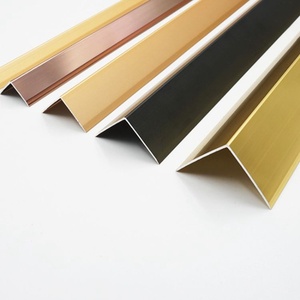
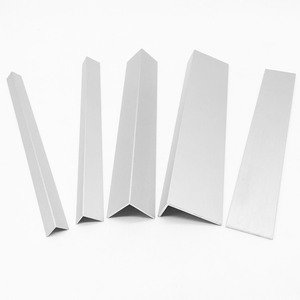
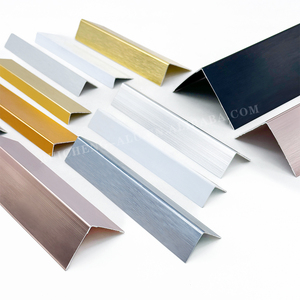
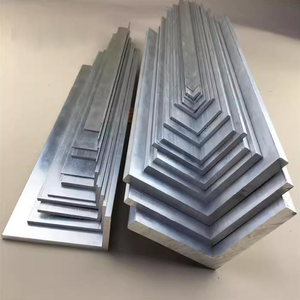
Equipped with state-of-the-art extrusion lines, in-house anodizing, automatic powder coating plants, and precision CNC fabrication facilities to meet large-scale Iraqi infrastructure demands.
Building in the Republic of Iraq presents an aggressive combination of severe climatic and environmental stressors. Architectural facade engineers and main contractors working in Iraqi urban centers like Baghdad, Erbil, Basra, and Mosul must select building envelope materials capable of withstanding extreme thermal cycles, heavy dust abrasion, high solar UV radiation, and localized atmospheric pollutants from energy sector operations. Standard commercial-grade aluminium profiles frequently fail prematurely in these environments, showing signs of paint chalking, surface oxidation, thermal expansion buckling, or structural joinery degradation.
As a specialized OEM factory and custom extrusion manufacturer, our architectural cladding systems and structural aluminium profiles are specifically engineered with metallurgical, structural, and chemical protections optimized for Middle Eastern climatic conditions. By combining premium primary billet material with advanced surface treatments, custom matrix die design, and mechanical thermal barriers, we deliver high-performance aluminium cladding solutions tailored to the strict requirements of Iraqi construction standards.
| Performance Parameter | Standard Commercial Aluminium | Iraqi Heavy-Duty OEM Cladding Alloy | Engineering Benefit for Iraqi Projects |
|---|---|---|---|
| Alloy & Temper Selection | 6063-T5 (Standard Commercial) | 6063-T6 / 6061-T6 High Yield Strength | Enhanced tensile strength to withstand extreme desert wind loads up to 1.8 kPa. |
| Tensile Strength (MPa) | 150 - 180 MPa | 205 - 245 MPa | Prevents deflection and twisting in long-span dry-hanging curtain wall brackets. |
| Surface Powder Coating | 40 – 50 µm Standard Polyester | 60 – 80 µm Qualicoat Class 2 PVDF/Fluorocarbon | Resists UV degradation, chalking, and ambient temperature spikes exceeding 50°C. |
| Anodizing Layer Thickness | 10 – 12 µm Interior Grade | 20 – 25 µm Architectural Marine Grade | Eliminates salt-air and industrial chemical corrosion in Basra's oil & marine zones. |
| Pre-Treatment Protocol | Basic Water Wash | Multi-Stage Chromate-Free Zirconium Conversion | Guarantees 100% paint film adhesion under severe thermal shock cycles (0°C to 55°C). |
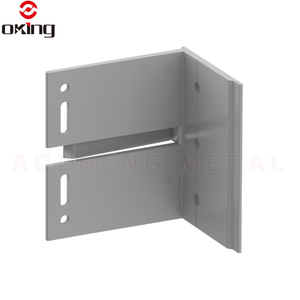
The structural integrity of dry-hanging facade systems and unitized curtain walls depends heavily on the chosen aluminium alloy and heat-treatment temper. For decorative trims, window sashes, and light wall corner protection profiles, 6063-T5 provides superior surface smoothness and complex die extrusion capabilities. However, for primary curtain wall mullions, transoms, and heavy load-bearing dry-hanging brackets (Product Model 08), our factory enforces 6063-T6 or 6061-T6 temper specifications.
Through artificial age hardening, 6063-T6 achieves a yield strength of approximately 210 MPa, dramatically improving the safety margin of exterior cladding under seismic activity and high wind pressure in tall commercial structures in Erbil and Baghdad. The fine grain structure ensures that mechanical milling, CNC drilling, punching, and welding do not introduce structural micro-cracks or localized fatigue zones.
Direct exposure to Iraqi sunlight during summer months can drive metallic facade surface temperatures up to 75°C (167°F), while winter nights can drop to near 0°C. Aluminium exhibits a linear thermal expansion coefficient of approximately 23 × 10⁻⁶ / K. On a 6-meter vertical cladding section, an unmitigated 50°C temperature swing results in nearly 7 mm of linear movement.
Our OEM engineering team integrates custom expansion joints, slot-punched dry-hanging brackets, and high-performance EPDM thermal-break isolation strips within our extrusion designs. This prevents structural joint distortion, keeps glass panels stress-free, and preserves the airtightness and watertightness of the building envelope over decades of service.
From oilfield infrastructure in the south to commercial high-rises in the Kurdistan region, our custom OEM aluminium extrusions are specified across diverse industry sectors in Iraq.
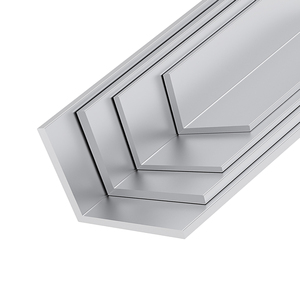
Modern commercial towers and mixed-use complexes in Baghdad's Karrada district and Erbil's Gulan Street rely on unitized curtain walls and dry-hanging aluminum composite/stone cladding support systems. Our heavy-duty wall angle brackets and 6000-series structural profiles anchor stone, terracotta, and aluminum composite panels securely against extreme wind suction and thermal expansion.
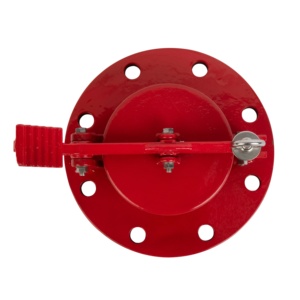
In the high-humidity, sulfur-rich environments of Basra’s energy sector (such as Rumaila and West Qurna oilfields), atmospheric corrosion rapidly degrades unprotected metals. Our spark-proof, precision-sealed Aluminum Angle Gauge Hatches (Product 01) and 25 µm thick anodized structural angle profiles deliver spark-resistant safety and corrosion resistance for chemical processing and oil storage applications.
Reconstruction initiatives across Mosul, Ramadi, and Najaf demand rapid, durable building envelope solutions. Factory powder-coated wall angle trims, architectural corner protectors, and modular louvers enable fast installation with low ongoing maintenance. Their high impact resistance protects hospital corridors, administrative centers, and university facilities from daily wear and tear.
High-end residential developments and retail malls across Sulaymaniyah and Najaf increasingly specify wood-grain heat-sublimation aluminum profiles (Product 03). These profiles deliver the classic aesthetic of natural timber without rotting, warping, or requiring repainting under severe Middle Eastern sun exposure.
Port storage sheds, coastal logistics warehouses, and marine craft operating near Khor Al-Zubair require specialized corrosion-resistant alloys. Our high-tensile 6000-series structural marine angles (Product 07) are engineered for intense salt-spray resistance and durable structural support under marine conditions.
To reduce air conditioning cooling loads in high-temperature Iraqi summers, modern building designs feature exterior horizontal and vertical extruded aluminium louver fins. Custom OEM dies allow precise blade profiles that maximize natural daylighting while cutting direct solar thermal gain.
The construction landscape in Iraq is experiencing a major transformation. Driven by national urban housing initiatives, modern commercial investments, and industrial modernization, architectural design standards are rapidly advancing. Understanding these key market trends helps Iraqi procurement managers and civil engineering firms select future-proof cladding profiles:
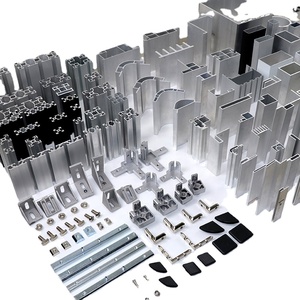
Traditional wet-mortared stone and heavy masonry cladding are being replaced by ventilated dry-hanging facade systems. Dry hanging uses high-strength extruded aluminum brackets (Product 08) and sub-frame rails to mechanically anchor granite, marble, porcelain, and aluminum composite panels (ACP). This approach eliminates tile adhesive failures caused by extreme temperature fluctuations, creates an air cavity that cuts heat transmission into the building, and speeds up structural construction timelines.
With electricity supply challenges and high summer cooling demands across Iraq, the Ministry of Housing and Construction is prioritizing energy-efficient building envelope standards. Thermally broken aluminum window, door, and curtain wall profiles—which incorporate structural polyamide insulating strips—drastically reduce conductive heat transfer, lowering HVAC power consumption by up to 30%.
Substandard import profiles that fade, peel, or chalk after two summers are increasingly rejected by top Iraqi architectural consultancies. Sourcing managers now require documented proof of Qualicoat Class 2 fluorocarbon/powder coating or minimum 20–25 µm architectural anodizing. This guarantees vibrant color retention (RAL palette compliance) and gloss stability even under high UV exposure.
To differentiate new architectural landmarks in major Iraqi cities, leading developers prefer bespoke OEM extrusions engineered for exact project geometries. Custom extrusion dies eliminate costly on-site modifications, lower overall metal weight per square meter through engineered ribbing, and deliver clean, seamless architectural finishes.
We combine complete in-house manufacturing, strict quality control, and deep international export experience to supply reliable architectural extrusions across Iraq.
We use 100% top-grade primary aluminum billets (A00 standard) to manufacture our profiles. We never use mixed scrap metal, ensuring consistent alloy chemistry, superior structural yield strength, and flawless surface anodizing or powder coating results.
Our experienced die-making engineers turn your CAD drawings (DWG/DXF/STEP) or physical samples into production-ready extrusion dies within 7 to 10 days. We verify section wall thicknesses, tolerance limits (EN 12020-2 standard), and mechanical performance before mass production.
From multi-stage chromate-free pre-treatment washing to automatic vertical powder coating, chemical anodizing, and Italian wood-grain vacuum sublimation, all surface processing happens on-site under unified quality supervision.
Every production batch undergoes batch spectrometry alloy checks, web-line wall thickness measurement, paint film thickness analysis, cross-hatch adhesion testing, and accelerated salt-spray corrosion chamber testing before release.
Profiles are protected with custom-printed protective film, non-woven protective wrapping, waterproof shrink wrap, and reinforced heavy-duty wooden crates or steel frames. This prevents scratches, moisture exposure, or bending during ocean transport to Umm Qasr or overland transit via Jordan and Turkey.
We provide full documentation for Iraqi customs clearance, including Certificates of Origin (COO), Commercial Invoices legalized by the Iraqi Embassy, Bills of Lading, Packing Lists, and third-party pre-shipment inspection certificates (such as Bureau Veritas, SGS, or Intertek) compliant with Iraqi Quality Standards (IQS).
Key answers regarding technical specifications, customs compliance, logistics, payment terms, and custom die production for imports into Iraq.