Engineered raw extruded shapes ready for custom anodizing, powder coating, or structural integration across Tokyo’s commercial and industrial construction projects.
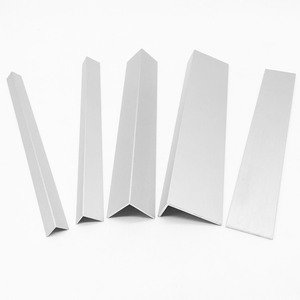
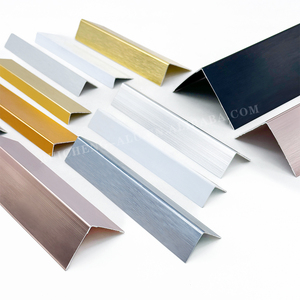
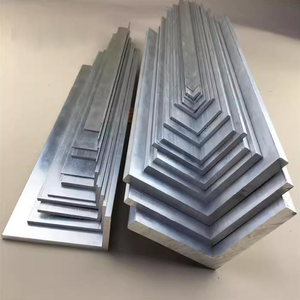
Quantifiable quality control metrics ensuring every batch of mill finish extrusion arriving at Tokyo Bay Port meets strict JIS standards.
A comprehensive engineering breakdown of raw extrusions optimized for Japanese fabricators and architectural post-processing.
In the domain of architectural engineering, high-rise facade engineering, and precision industrial manufacturing within the Greater Tokyo Area, Mill Finish Aluminium Extrusion serves as the baseline structural material. "Mill Finish" designates the raw, untreated surface state of an aluminium profile as it emerges from the extrusion die die-head, undergoes water or air quenching, and completes tension stretching and thermal ageing (T5 or T6 tempers).
While untreated extrusions are exposed to ambient room air, they instantaneously develop a natural, passive continuous oxide film (Al₂O₃ layer measuring 2 to 5 nanometers). This thin film provides basic atmospheric protection, but its true value for Tokyo's engineering contractors lies in its pristine, uncontaminated substrate condition. It presents an ideal surface for downstream secondary finishing—such as Japanese Industrial Standards (JIS H 8601) architectural anodizing, JIS H 8602 electrodeposition (ED) coating, or ultra-durable fluoropolymer powder coating.
Tokyo's strict structural building codes (governed by the Ministry of Land, Infrastructure, Transport and Tourism - MLIT) demand stringent mechanical compliance, particularly regarding seismic movement tolerances, typhoons, and marine atmospheric corrosion along Tokyo Bay (Shinagawa, Toyosu, Odaiba, and Minato Ward). We supply mill finish profiles primarily in three distinct 6000-series metallurgical formulations:
| Alloy & Temper Specification | Tensile Strength ($\sigma_b$) | Yield Strength ($\sigma_{0.2}$) | Elongation ($A_5$) | Surface Roughness ($R_a$) | Primary Tokyo Application |
|---|---|---|---|---|---|
| JIS A6063-T5 | ≥ 185 MPa | ≥ 145 MPa | ≥ 8 % | 0.6 – 1.2 μm | Architectural Window Frames, Louvers, Interior Partitions |
| JIS A6063-T6 | ≥ 225 MPa | ≥ 180 MPa | ≥ 8 % | 0.4 – 1.0 μm | Unitized Curtain Wall Frames, Solar Shading Fins |
| JIS A6061-T6 | ≥ 295 MPa | ≥ 240 MPa | ≥ 10 % | 0.8 – 1.5 μm | Structural Dry Hanging Brackets, Heavy Transport Rail, Marine Hatches |
| JIS A6005A-T6 | ≥ 270 MPa | ≥ 225 MPa | ≥ 8 % | 0.5 – 1.2 μm | Large-Span Structural Beam Members & Railway Modules |
For Tokyo structural engineers working on commercial developments in Toranomon-Azabudai or Shibuya redevelopment districts, choosing between 6063-T6 and 6061-T6 in mill finish condition is driven by structural loading calculations and post-welding requirements. 6063 alloy offers superior extrudability and an ultra-smooth surface finish ($R_a \le 0.8\ \mu\text{m}$), which ensures maximum aesthetic uniformity after chemical etching and clear or bronze anodizing. Conversely, 6061-T6 delivers enhanced yield strength (240 MPa minimum), making it the prime candidate for heavy curtain wall dry-hanging steel-to-aluminium connector brackets and seismic anchor plates.
From high-rise seismic curtain walls in Shinjuku to maritime engineering along Tokyo Bay, explore how local contractors utilize our extrusions.
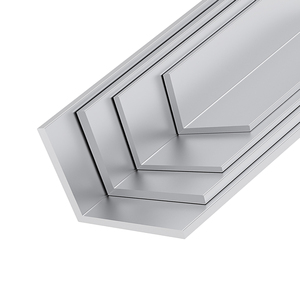
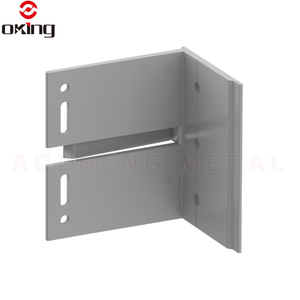
Tokyo's high-seismic environment (Zone 3 vertical and horizontal drift requirements) mandates heavy-duty wall angle brackets and split mullion anchors. Our 6061-T6 mill finish angle profiles are precision-punched and slots-routed for structural bolt connections, serving as hidden structural skeletons behind unitized glass facades.
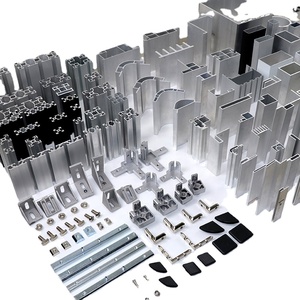
The high-tech industrial belt surrounding Kanagawa and Greater Tokyo relies heavily on modular aluminum framing for semiconductor equipment and cleanroom enclosures. Our mill finish structural rails deliver zero internal stress, ensuring ultra-straight lengths up to 6.8 meters without bow or twist warping.
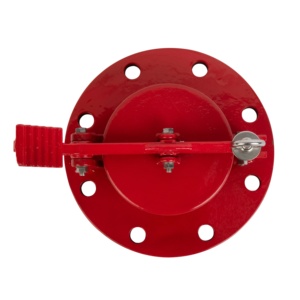
Facilities across Tokyo Port, Chiba, and Yokohama require non-sparking, corrosion-resistant access hatches and sampling ports. Our Aluminum Angle Gauge Hatches utilize mill-finished 5083/6063 alloys paired with chemical-resistant synthetic seals to guarantee leak-proof sampling and oil-tank depth measurements under saline marine exposure.
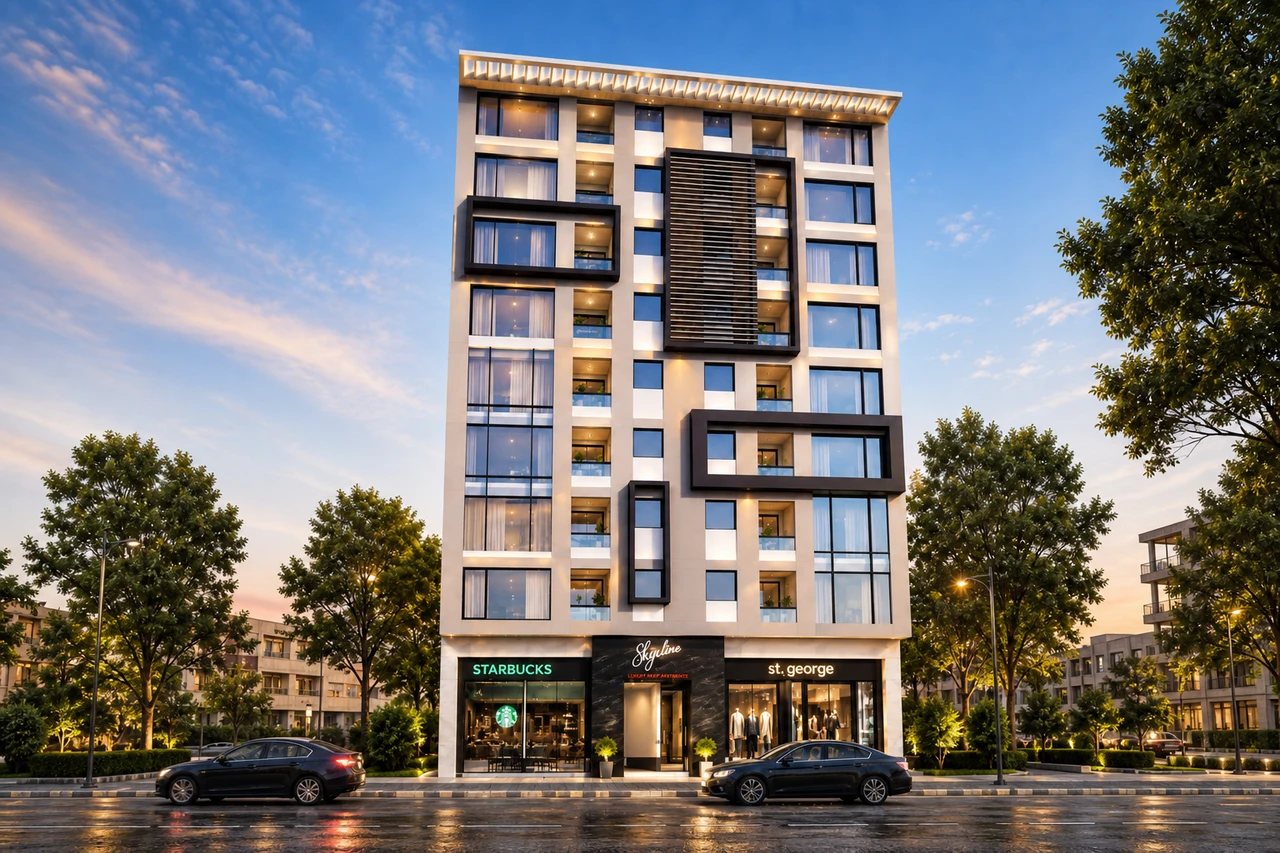
A frequent challenge faced by Japanese facade contractors importing overseas extrusions is surface die lines and non-uniform grain structure, which lead to streaking during clear anodizing (JIS H 8601) or electrodeposition (JIS H 8602).
To eliminate this issue, our extrusion lines employ high-purity prime billets (99.7% virgin ingot) combined with nitrogen-shielded die cooling technology. This process reduces surface oxidation during hot extrusion and maintains a refined grain microstructure ($< 25\ \mu\text{m}$). As a result, when our mill finish profiles arrive at surface-treatment facilities in Chiba, Saitama, or Tokyo, they undergo chemical caustic etching with minimal material loss, achieving a uniform matte or satin finish.
Navigating the shift toward Net-Zero Energy Buildings (ZEB), Embodied Carbon reduction, and strict JIS quality assurance.
The Tokyo Metropolitan Government’s updated Carbon Reduction Program mandates that all new commercial developments over 2,000 square meters achieve strict energy efficiency targets. This initiative has triggered rapid growth in the adoption of Thermally Broken Curtain Walls and high-performance solar louvers throughout Tokyo's CBDs.
Supplying mill finish aluminium extrusions allows local Japanese facade systems manufacturers to insert polyamide insulating strips ($PA66GF25$) into extruded keyways locally, ensuring compliance with local thermal conductivity calculations ($\text{U-factor} \le 1.8\ \text{W/m}^2\cdot\text{K}$) while avoiding the higher freight tariffs associated with fully assembled thermal frames.
Japanese general contractors (Taiken, Kajima, Obayashi, Shimizu, Hazama Ando) maintain zero tolerance for non-certified structural materials. Every shipment of our mill finish profiles dispatched to Tokyo Port includes comprehensive documentation:
Maritime freight across East Asia exposes raw mill finish aluminium to humid, saline sea air, which can cause wet-storage stain ("white rust"). We package all Tokyo-bound mill finish bundles using VCI (Volatile Corrosion Inhibitor) paper interleaving combined with fully sealed PE stretch wrapping and heavy-duty ISPM-15 heat-treated wooden crates. This packaging guarantees that your extrusions arrive at Tokyo Port stain-free, ready for immediate cutting or chemical pretreatment.
Why Tokyo's leading architectural fabricators, trading houses, and OEM manufacturers partner directly with our mill.
We operate an advanced CAD/CAM die design center capable of producing complex, thin-walled ($t \ge 0.8\ \text{mm}$) or multi-hollow extrusions. Tooling lead times for custom Tokyo sections take just 10 to 14 days from drawing sign-off.
Beyond raw extrusion, our facility offers precision CNC machining, multi-axis milling, punch slotting, angle mitering, and robotic TIG/MIG welding, supplying fully pre-processed components directly to Tokyo job sites.
Whether you require CIF Tokyo Port pricing or complete DDP (Delivered Duty Paid) door-to-door delivery to your warehouse in Saitama, Chiba, or Yokohama, our logistics team manages all customs clearance procedures smoothly.
Clear answers to common questions asked by Japanese general contractors, trading houses, and engineering firms.
Every production batch undergoes automated optical profile measuring and digital caliper inspections at the press exit and after stretch leveling. Dimensional reports confirming compliance with JIS H 4100 Special Tolerances (cover cross-sectional thickness, wall symmetry, twist angle ≤ 1.0°/m, and flat bow ≤ 1.5mm/m) are included with your shipping documents.
Direct container ships depart weekly from our regional sea terminal directly to Tokyo Port (Oi Container Terminal / Ariake Terminal) or Yokohama Terminal. Transit times typically range from 12 to 14 days, with total order-to-delivery cycles averaging 3 to 4 weeks, including production, packaging, and export customs clearance.
Yes, our engineering department works directly with original Japanese DWG, DXF, or STEP files. Before die cutting, our engineers perform a full profile section review to evaluate wall thickness ratios, press pressure distribution, and alloy flow. First-article sample profiles are extruded and air-expressed to your Tokyo office for physical approval prior to bulk production.
To combat marine ambient humidity, profiles are interleaved with moisture-absorbing VCI neutral paper, strapped tightly into bundles, wrapped in heavy vacuum-sealed PE film, and packed inside fully enclosed heat-treated wooden crates. This packaging system prevents moisture penetration and guarantees that the extrusion surface remains pristine and oxidation-free.
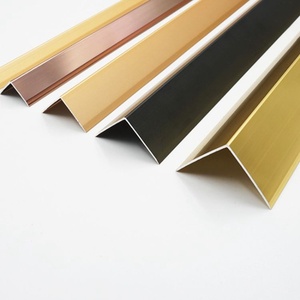
For standard 6000-series L-angles, corner trims, and square rails, our MOQ is 500 kg per section. For bespoke custom die extrusions, our initial MOQ is 1,000 kg per die run. Flexible multi-profile container consolidation options are available to help Japanese buyers optimize freight costs.
Yes, every shipment includes an EN 10204 3.1 Mill Test Certificate detailing the exact chemical melt composition, tensile yield strength, elongation percentages, and hardness test results (Webster or Vickers scale) corresponding to your specific batch lot number.
Send us your profile drawings, alloy specifications, or quantity requirements. Our engineering team will deliver a comprehensive proposal and product catalog within 24 hours.
Get Catalog