High-precision customized aluminium extrusions, sheets, profiles, and die-cast components manufactured under rigorous ISO 9001 and Qualanod quality protocols for Nigerian importers and contractors.
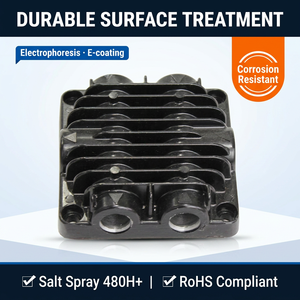
Custom OEM thermal management parts engineered with high thermal conductivity alloys, black anodized for enhanced heat dissipation in solar inverters and industrial electronics.
Contact Us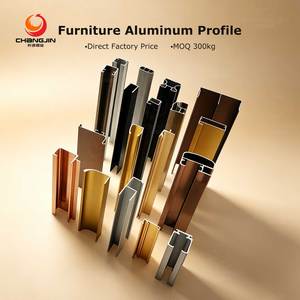
Precision extruded 6063-T5 architectural and furniture profiles featuring satin anodized finishes, optimal yield strength, and superior dimensional consistency.
Contact Us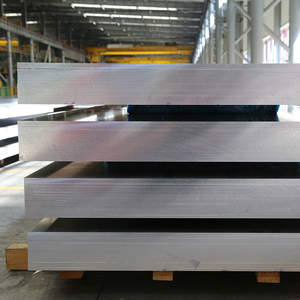
Structural aircraft and machinery grade 6061-T651 plates featuring deep electrolytic black anodizing for high scratch resistance and zero internal stress distortion.
Contact Us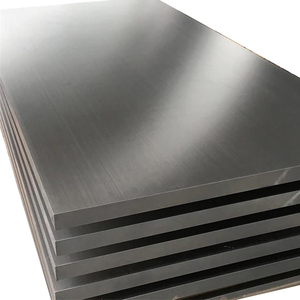
Heavy-duty marine aluminium sheets (3003, 5052-H32, 5083-H112) coated with thick oxide layers for saltwater immersion, vessel hulls, and oilfield structures.
Contact Us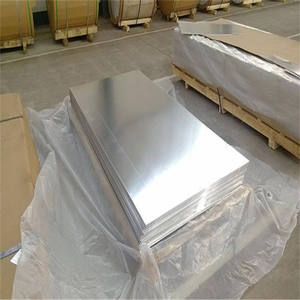
Anti-corrosion, UV-stabilized exterior curtain wall panel sheets specifically developed to resist chalking and color degradation in intense equatorial sunlight.
Contact Us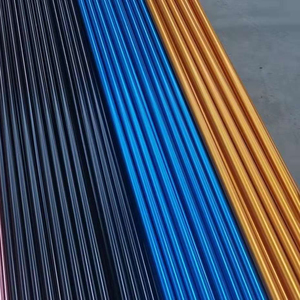
Custom structural poles and hollow tubes available in blue, gold, bronze, and dark champagne finishes via inorganic tin salt deposition process.
Contact Us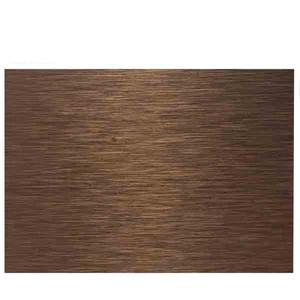
Mechanical wire-brushed finish combined with seal-tight clear anodizing for high-end interior partition, elevator cabin, and retail facade applications.
Contact Us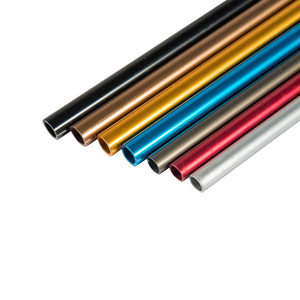
Seamless extruded round tubes engineered with uniform wall thickness tolerances for structural framing, decorative railings, and fluid transfer lines.
Contact UsIn the West African architectural and industrial supply market, Nigeria presents a uniquely diverse set of environmental conditions that aggressively test the longevity of metallic building materials. Procurement managers, structural engineers, and facade fabricators operating in Lagos, Port Harcourt, Abuja, and Kano face starkly contrasting degradation challenges ranging from extreme airborne saline corrosion to intense solar ultraviolet radiation and high-diurnal thermal fatigue.
Coastal urban centers like Lagos Island, Lekki Free Trade Zone, Victoria Island, and Port Harcourt fall under ISO 9223 Category C4 to C5 (High to Very High Industrial/Marine Corrosivity). High ambient humidity combined with windborne sodium chloride (NaCl) aerosol deposits creates an aggressive electrolytic film on unprotected aluminium. Standard mill-finish or inadequately sealed aluminium profiles rapidly experience filiform corrosion and localized pitting corrosion.
Our OEM/ODM anodized extrusions engineered for coastal Nigeria undergo electrolytic sulfuric acid anodizing to produce controlled oxide layer thicknesses of 20 µm to 25 µm (Qualanod Class 20/25). By converting the metallic surface into a non-reactive, integrated aluminum oxide ($Al_2O_3$) ceramic layer, the substrate becomes immune to chemical atmospheric attack and salt-fog degradation.
Inland regions like Abuja CBD, Minna, and Jos feature intense ultraviolet (UV) exposure paired with severe dry-wet seasonal shifts. Organic paint finishes and lower-tier powder coatings often exhibit resin breakdown, chalking, and gloss retention failure within 24 to 36 months of exterior installation.
To eliminate color fading on exterior curtain wall profiles and decorative sun-shade louvers, our manufacturing facility utilizes Inorganic Electro-Coloring (Two-Step Electrolytic Metal Deposition) using tin or cobalt salts. Because the coloring pigments are electro-deposited deeply inside the unsealed microscopic pore structure before hot nickel-acetate sealing, the color molecules are structurally shielded from UV degradation, guaranteeing color stability exceeding 30 years.
Northern commercial centers such as Kano and Kaduna experience heavy dust storms carrying fine particulate silica during the Harmattan season. Sand-blasting wind forces cause premature surface scoring on soft finishes. Anodized aluminium produced at our plant achieves a surface micro-hardness rating of 300 HV to 400 HV (Vickers Hardness Scale), approaching the scratch resistance of topaz, thereby preserving aesthetics despite airborne dust abrasion.
Deploying specialized anodized profiles across Nigeria's dynamic commercial, residential, and infrastructure landscape.
Engineered 6063-T6 structurally reinforced mullions and transoms supplied for commercial towers in Eko Atlantic City and Abuja CBD. Resistant to coastal gale forces and humidity.
Heavy-gauge 5083-H112 and 5052-H32 marine-grade anodized sheets used in Niger Delta vessel deckhouses, petroleum platform walkways, and boat hulls exposed to continuous splash zones.
High-thermal-conductivity die-cast heat sinks black-anodized for commercial solar mini-grids installed across rural electrification projects in northern and central Nigeria.
Brushed and satin-anodized decorative profiles tailored for interior spatial partitions, executive bank fit-outs, and luxury residential cabinetry across Lagos and Ibadan.
High-strength 6061-T651 anodized aluminum plates and structural channels designed for commercial trailer sidewalls, bus framing, and rail coaches navigating demanding road transport routes.
Thermally broken anodized window profiles integrated with multi-point locking mechanisms, offering sound insulation and thermal barrier properties for upscale residential estates.
The Nigerian economy is witnessing a pivotal structural shift towards industrial self-reliance, local content development, and resilient infrastructure. As real estate developers move away from short-lived, high-maintenance building materials, anodized aluminium has emerged as the premier material choice across several macro-economic drivers:
Historically, low-cost polyester powder-coated profiles dominated local markets. However, market experience with chalking, peeling, and blistering under coastal conditions has led major Nigerian architectural consultants to enforce Qualanod-certified architectural anodizing specifications for commercial projects. Anodized coatings create a permanent structural bond with the aluminum matrix, completely eliminating peel-off risks.
With government incentives favoring local assembly under the National Industrial Revolution Plan (NIRP), indigenous manufacturers are producing solar electronics, commercial refrigeration, and agricultural equipment within Nigeria. These industrial units demand reliable OEM mill-finish and anodized components extruded to strict international dimensional tolerances (EN 755-9 and ASTM B221 standards).
To navigate foreign exchange dynamics and strict customs oversight by the Federal Government of Nigeria, importers require suppliers capable of providing Standards Organisation of Nigeria Conformity Assessment Program (SONCAP) documentation, clean bills of lading, exact weight-per-meter declarations, and lab-tested metallurgical mill test certificates (MTC).
Comparative engineering specifications for structural alloys and anodized finish parameters.
| Alloy & Temper | Tensile Strength (MPa) | Yield Strength (MPa) | Anodizing Film Range | Primary Atmospheric Suitability | Key Application in Nigeria |
|---|---|---|---|---|---|
| 6063-T5 / T6 | 150 – 205 | 110 – 170 | 10 – 25 µm | Urban, Moderate Coastal | Curtain walls, window frames, furniture extrusions |
| 6061-T6 / T651 | 290 – 310 | 240 – 275 | 15 – 25 µm | Industrial, Severe Marine | Heavy structural plates, machine frames, truck bodies |
| 5083-H112 / H32 | 270 – 345 | 125 – 250 | 20 – 25 µm | Immersion Saline / Offshore | Marine hulls, oil rig walkways, chemical tanks |
| 3003-H14 / H24 | 140 – 180 | 115 – 150 | 10 – 20 µm | General Architectural | Roofing sheets, decorative cladding, interior panels |
As a vertically integrated aluminium extrusion and surface-treatment manufacturer, our facilities operate comprehensive internal control loops to guarantee that every shipment delivered to Apapa Port or Tin Can Island Port meets exact engineering blueprints:
We utilize 100% primary A00 grade aluminium billets. Micro-alloying elements (Magnesium, Silicon, Iron, Manganese) are strictly monitored via optical emission spectrometers to guarantee optimal extrusion velocity, grain structure, and anodizing clarity without greyish cast defects.
Our in-house tooling center designs and wire-EDM cuts custom extrusion dies for proprietary architectural systems or OEM hardware. Prior to volume production, first-article samples undergo 3D laser coordinate testing and micro-grain analysis, ensuring compliance with strict mechanical drawing tolerances.
Our 7.5-meter anodizing tanks feature automated current density adjustment, temperature-controlled acid baths, and dual-stage sealing (hot deionized water sealing paired with nickel acetate chemical sealing). This process guarantees zero surface porosity, passing nitric acid stain tests and chromic-phosphoric acid weight-loss adhesion tests.
Every profile is wrapped with protective PE scratch-resistant film, interleaved with moisture-proof paper, bundled, and encased in heat-treated wooden crates or heavy-duty steel-banded pallets to prevent transit bending or saltwater moisture intrusion during ocean freight.
Addressing technical, logistical, and commercial inquiries for B2B buyer confidence.
Whether you are bidding on major commercial high-rises in Lagos, sourcing marine-grade aluminium plates for offshore projects, or importing custom furniture profiles, our engineering team provides direct factory pricing, rapid CAD turnaround, and guaranteed metallurgical quality.