Engineered 6000-series alloy extrusions featuring Qualicoat Class 1 & 2 surface finishing, strict dimensional tolerances, and multi-stage anti-corrosion pre-treatment for German B2B importers.
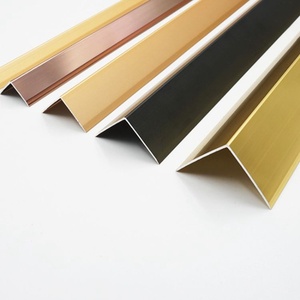
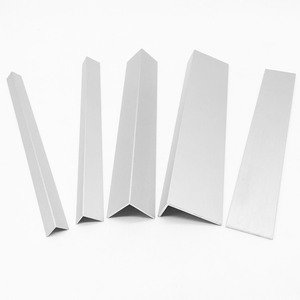
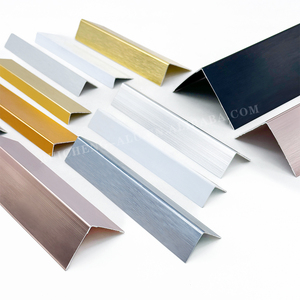
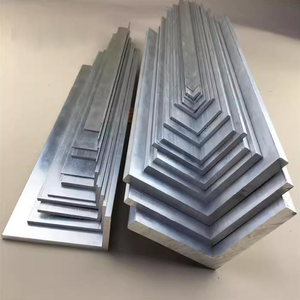
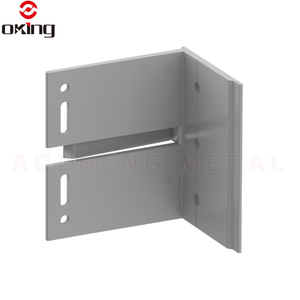
A comprehensive examination of our manufacturing methodology, chemical conversion pre-treatment, polymer curing kinetics, and Quality Assurance frameworks tailored for German industrial buyers.
Our extrusions utilize primary high-purity aluminium billets conforming to EN AW-6063 and EN AW-6061 specifications. Homogenized billets are heated under strict furnace temperature profiling before passing through CAD-engineered tungsten-carbide dies on automatic presses.
By enforcing artificial ageing to T5 and T6 tempers, we guarantee tensile yield strength ($R_{p0.2} \ge 170 \text{ MPa}$ for 6063-T6; $R_{p0.2} \ge 240 \text{ MPa}$ for 6061-T6) and Web hardness exceeding 12 Webster units, preventing mechanical deformation under structural loads.
Adhesion integrity depends on substrate cleaning. Our line operates a 6-stage automated immersion immersion dipping sequence utilizing eco-friendly Zirconium-based conversion chemistry fully compliant with EU REACH and RoHS regulations.
This process removes oxide scale, etches the profile surface uniformly, and deposits a nanometer-thin passivating layer that eliminates filiform corrosion risks without hexavalent chromium ($Cr^{VI}$), satisfying German Umweltbundesamt requirements.
Outfitted with automatic electrostatic powder spray guns operating under computerized reciprocation, profiles receive a uniform 60 to 80-micron dry film thickness (DFT). We utilize premium Qualicoat Class 1, Class 2, and Class 3 architectural thermosetting polyester powders from world-leading suppliers (e.g., AkzoNobel, Jotun, Pulver).
Profiles then enter indirect gas-fired convection curing ovens maintained at $180^\circ\text{C} - 200^\circ\text{C}$ to complete polymer cross-linking without thermal shock.
German engineering sectors demand strict compliance with DIN standards, VFF guidelines, and specific regional environmental pressures. As an established global exporter, our powder-coated aluminium products are specifically customized for prominent German industrial hubs:
Architectural facade systems, unitized curtain wall assemblies, and thermally broken window profiles deployed in Central European climates experience severe freeze-thaw cycles and UV exposure. Our Qualicoat Class 2 superdurable powder-coated wall angles, curtain wall brackets, and louver profiles satisfy non-combustibility standards (DIN EN 13501-1 Class A2-s1,d0) while maintaining gloss retention over 10-year accelerated outdoor weathering tests.
Supplying automotive OEM hubs in Stuttgart, Munich, and Ingolstadt requires rigorous dimensional accuracy and resistance to de-icing salts. Our custom 6061-T6 angle extrusions and powder-coated trim profiles undergo DIN EN ISO 9227 Acetic Acid Salt Spray (AASS) testing, making them ideal for structural battery housings, interior structural brackets, and commercial vehicle body frames.
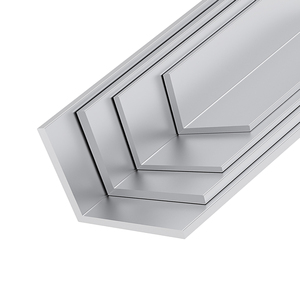
In the heavy industrial belt of the Ruhr region and machinery clusters around Düsseldorf and Dortmund, modularity and surface durability are paramount. Extruded L-angles, corner profiles, and I-rails feature impact-resistant thermosetting coatings that resist chipping, oil penetration, and mechanical abrasion during automated assembly line operation.
Offshore wind farm enclosures, harbor infrastructure, and marine vessel trim deployed along the North Sea and Baltic coastlines face aggressive marine environments. Our marine-grade 6000-series alloy extrusions sealed with thick-layer powder coatings prevent salt-air pitting corrosion, exceeding 1000 hours of continuous Neutral Salt Spray testing without coating delamination.
How our technology aligns with German sustainability regulations, carbon-reduction directives, and high-performance material specifications.
With Germany enforcing strict environmental directives overseen by the Federal Environment Agency (Umweltbundesamt) and ECHA REACH guidelines, traditional TGIC crosslinkers and fluorinated compounds (PFAS) are being phased out. We exclusively supply 100% TGIC-free and PFAS-free polyester powder formulations, ensuring safe installation in municipal, residential, and healthcare buildings across the European Union.
German commercial developers increasingly mandate Qualicoat Class 2 hyper-durable coatings (fluoropolymer and modified polyester chemistry) that offer 3x longer gloss retention than standard Class 1 coatings. This drastically lowers life-cycle building maintenance costs and supports DGNB (German Sustainable Building Council) certification credits for green architectural projects.
Comparative technical performance metrics evaluated under standardized DIN EN and ISO laboratory testing protocols:
| Performance Indicator | Standard Powder Coating (Qualicoat Class 1) | Superdurable Powder (Qualicoat Class 2) | Architectural Anodizing (20-25 µm) | PVDF Liquid Coating |
|---|---|---|---|---|
| Dry Film Thickness (DFT) | 60 - 80 µm | 60 - 80 µm | 20 - 25 µm oxide layer | 25 - 35 µm |
| Salt Spray Resistance (ISO 9227) | 1000 Hours (NSS) | 2000+ Hours (NSS) | 1000 Hours (AASS) | 1500 Hours (NSS) |
| Accelerated Weathering (ISO 11341) | 1000 Hours (50% Gloss) | 3000 Hours (80% Gloss) | N/A (Metallic inorganic) | 3000 Hours |
| Impact Resistance (ISO 6272) | Direct 2.5 Nm (No cracking) | Direct 2.5 Nm (No cracking) | Micro-cracking on bending | Moderate resistance |
| Color Range Flexibility | Unlimited RAL / Custom | Unlimited RAL / Metallic | Limited (Silver, Bronze, Black) | Wide range |
| REACH / EU RoHS Compliance | 100% Compliant (TGIC-Free) | 100% Compliant (PFAS-Free) | 100% Compliant | Requires solvent capture |
To ensure seamless delivery from our mill directly to German ports (Hamburg, Bremerhaven) or inland logistics hubs (Duisburg Logport, Frankfurt freight hubs), every production run undergoes mandatory laboratory verification:
Lattice cutting grid test performed on coated test panels. Pass rating: GT=0 (Zero flaking or edge loss along lattice cuts).
Solvent rub test utilizing Methyl Ethyl Ketone (MEK 30 double rubs) to verify complete powder polymer cross-linking.
Profiles are wrapped with laser protective film, interleaved with foam, strapped into wooden crates, and moisture-sealed for containerized ocean shipping.
Detailed technical answers addressing compliance, custom tooling, minimum order quantities, and European export documentation.
Our automated coating lines strictly follow Qualicoat architectural guidelines and DIN EN 12206-1 specifications (Paints and varnishes - Coating of aluminium and aluminium alloys for architectural purposes). Dry film thickness is controlled within the required 60–80 µm range, verified using calibrated electromagnetic induction gauges. Mill test certificates (3.1 Certificate according to EN 10204) and coating thickness inspection logs are supplied with every export shipment.
Yes. We operate a completely chromate-free surface conversion line based on titanium/zirconium chemistry. All powder coatings, pre-treatment baths, and packaging materials strictly adhere to EU Regulation (EC) No 1907/2006 (REACH) and Directive 2011/65/EU (RoHS). Material Safety Data Sheets (MSDS) and chemical declaration statements are provided during the sample approval process.
We maintain full color-matching capabilities for the entire RAL Classic palette (e.g., RAL 7016 Anthracite Grey, RAL 9005 Jet Black, RAL 9016 Traffic White), RAL Effect, and NCS color systems. Gloss levels can be customized from dead-matt (10–20% gloss), satin (30–50% gloss), to high-gloss (>80% gloss), alongside textured, metallic, and fine-structure finishes.
For custom profile geometries, die drawing approval and tooling production take 7 to 10 days, followed by sample extrusion and first-article inspection (FAI) within 5 days. Upon sample sign-off, mass extrusion and powder coating production require 15 to 20 days. Ocean freight from our plant to Port of Hamburg or Bremerhaven typically takes 25 to 30 days, while Eurasian rail freight (Duisburg hub) offers an accelerated 18 to 22-day transit time.
Yes. We offer complete in-house fabrication services including precision cut-to-length (tolerances to ±0.5 mm), CNC milling, hole punching, notch bending, and corner welding. Performing fabrication before the powder coating stage ensures that cut edges and drilled holes receive full chemical pre-treatment and powder coverage, eliminating raw metal corrosion points.
For industrial and automotive OEM customers in Germany, we support Production Part Approval Process (PPAP Level 3) documentation, including dimensional inspection reports, material chemical analysis, mechanical property test results, control plans, and full process flow diagrams. Every profile bundle is tagged with a unique barcode linked to raw billet batch numbers and coating run parameters.
Need custom aluminium profile extrusions, architectural wall angles, or marine-grade coated profiles for your projects in Germany? Speak directly with our technical sales engineering team for profile drawing evaluations, CAD die design, and competitive CIF/DDP quotes.
Get Catalog