Engineered facade solutions certified for severe wind pressures, high thermal efficiency, and dynamic sub-arctic structural loads in Finland.
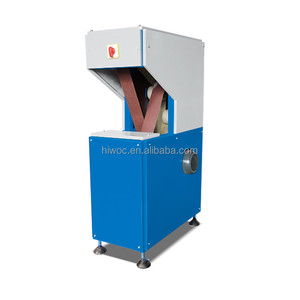
Heavy-duty structural glass units processed with micro-bevel edge grinding to prevent thermal stress fractures in Finnish sub-zero climates.
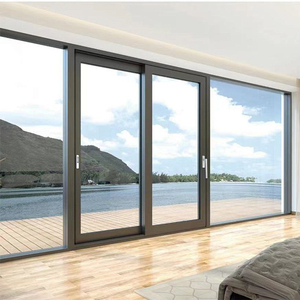
Reinforced 6063-T6 aluminum sliding doors featuring polyamide thermal barriers and high acoustic attenuation for modern Nordic villas.
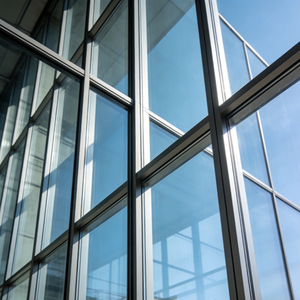
Factory-assembled unitized glass panels integrated with stainless steel spider routels for rapid, high-precision installation in cold climates.
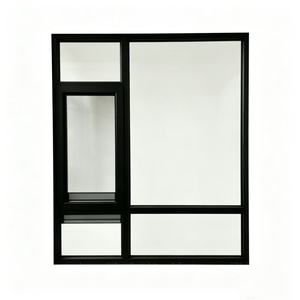
Sub-arctic architectural window frame with triple EPDM seals, dust suppression, and high thermal insulation tailored for apartment blocks.
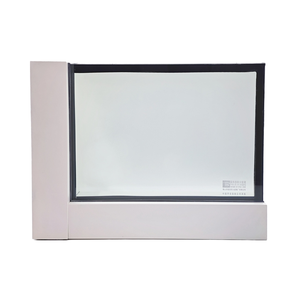
Certified 120-minute integrity and insulation fire-rated glazed stainless steel/aluminum frame for commercial public spaces and lobbies.
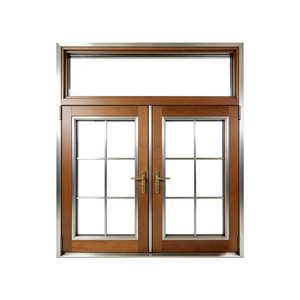
Hybrid wood-aluminum thermal frame with adjustable glass louvers engineered for bioclimatic ventilation without frost binding.
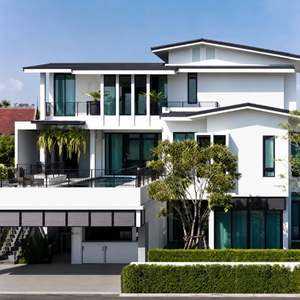
Comprehensive architectural facade package engineered for unified structural tolerances, backed by a 5-year manufacturer export warranty.
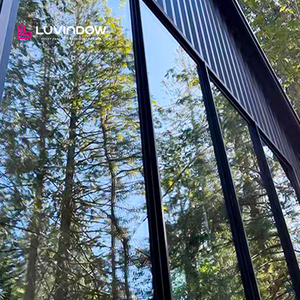
Ultra-narrow sightline framing combined with point-fixed structural anchors, designed to maximize interior winter daylight absorption.
Target U-Value ($\text{W/m}^2\text{K}$)
Austenitic Stainless Steel
Snow & Wind Load Capacity
Curtain Wall Certified Standard
Architectural glass envelopes in Finland face some of the most rigorous environmental performance criteria in Northern Europe. From the coastal marine winds of Helsinki and Turku to the severe thermal drops of Oulu and Lapland, point-fixed structural glass systems—commonly known as spider glazing—must balance absolute transparency with unyielding structural integrity. As a specialized spider glazing exporter to Finland, Pak Alumex manufactures engineered 4-arm, 2-arm, and 1-arm heavy-duty cast stainless steel assemblies engineered to withstand extreme winter conditions while eliminating cold bridging.
In traditional curtain wall construction, continuous aluminum extrusions support the glass edges. In contrast, spider glazing utilizes articulated stainless steel fittings (routels) secured through countersunk or button-head holes drilled into toughened laminated glass. In Nordic applications, this structural dynamic requires advanced stress-distribution calculations. The point-loads transferred through the spider arms under severe winter wind pressures—often exceeding $2.0 \, \text{kN/m}^2$—must be absorbed without transferring bending moments into the insulated glass unit (IGU).
Integrating heavy stainless steel routels into double and triple-glazed IGUs requires engineered non-conductive PTFE and POM gaskets. Our specialized connectors isolate metal-to-glass contact, preventing frost formation indoors when exterior temps fall to $-30^\circ\text{C}$.
To accommodate micro-deflections caused by heavy snow loads ($3.5 \, \text{kN/m}^2$) on overhead structural glass canopies, our ball-joint routels allow $\pm 4.5^\circ$ rotational flexibility, eliminating point-stress glass shearing.
Finland’s extensive coastline demands superior atmospheric corrosion resistance. We utilize investment-cast AISI 316 / 316L (EN 1.4404) stainless steel, electro-polished to resist de-icing salts and coastal brackish air without pitting.
The architectural landscape in Finland uniquely blends modernist minimalism with strict ecological and structural requirements. Our spider glazing systems and aluminum profiles are custom-engineered for diverse localized installation environments:
| Region / Urban Context | Primary Facade Application | Engineering Challenge | Pak Alumex Hardware Solution |
|---|---|---|---|
| Helsinki & Espoo Coastal Fronts | Commercial Office Atriums & Public Lobbies | High salt-fog exposure, wind velocity, thermal loss | AISI 316L 4-Arm Heavy Spiders + Thermally Isolated Stainless Bolts |
| Tampere & Jyväskylä Inland Hubs | Multi-Story Retail Entrances & Glass Bridges | Severe freeze-thaw cycles, structural contraction | Articulated ball-routels with high-flexibility EPDM seal gaskets |
| Oulu & Sub-Arctic North | Cultural Canopies & Panoramic Observation Envelopes | Snow accumulation, extreme $\Delta T$ (up to $65^\circ\text{C}$ seasonal) | Heavy-duty tension-rod supported spider system with triple Low-E IGU |
| Vantaa Logistics & Tech Parks | Acoustic Transom Windows & Structural Curtain Walls | High acoustic dampening ($R_w \ge 42 \text{dB}$), fast erection | Unitized spider-cassettes pre-assembled for rapid crane mounting |
1. Winter Daylight Maximization: During Finnish polar winters, solar hours are severely limited. Architectural trends emphasize high Visible Light Transmittance ($VLT \ge 75\%$) while keeping overall U-values ultra-low. Spider glazing removes bulky vertical mullions, allowing maximum diffuse natural light to penetrate deep into floorplates, reducing municipal energy loads for interior illumination.
2. Strict U-Value Mandates (Ympäristöministeriö Guidelines): The Finnish Ministry of the Environment sets rigorous energy codes for new commercial and residential construction. Standard vertical facades frequently demand overall system performance of $U_w \le 0.70 - 0.90 \, \text{W/m}^2\text{K}$. Pak Alumex exports spider hardware specifically designed to accommodate 44mm to 52mm triple-pane IGUs filled with Argon gas and fitted with warm-edge composite spacers.
3. EN 13830 & CE Marking Alignment: All glass facade systems exported to the European Union must comply with harmonized standards. Our spider glazing fittings and structural extrusions are manufactured in accordance with EN 1090-2 (execution of steel structures) and EN 13830 (curtain walling requirements), ensuring seamless approval by Finnish structural engineers and local municipal building inspectors (Rakennusvalvonta).
Pak Alumex Aluminium Industries operates an integrated manufacturing plant on Painsra Road, Gojra, Faisalabad. By retaining billet extrusion, precision CNC spider casting, anodizing, and powder coating under one quality system, we provide Finnish importers with complete batch traceability and uncompromised structural reliability.
We extrude architectural profiles in high-grade 6063 alloy. T5 temper is optimized for intricate window frames, while T6 temper provides elevated yield strength ($f_0.2 \ge 170 \, \text{MPa}$) essential for high-rise curtain wall mullions and spider-support steel headers.
Finishing dictates facade lifespan. We offer anodized oxide layers up to 25 µm specifically for exposed marine elevations, and Qualicoat-standard architectural powder coating (60–80 µm dry film build) over chromate-free pre-treatment baths for environmental compliance.
Our engineering division develops custom dies directly from DWG/DXF facade sections. First-article samples undergo strict 3D coordinate checking, wall-thickness verification, and structural load simulation prior to full export production runs.
Nordic transit demands robust protection against moisture and sea-air oxidation. All extrusions and spider components are packed with interleaved protective film, strapped in IPPC-certified ISPM-15 wooden crates, and shipped directly to major Finnish ports like Vuosaari (Helsinki) or Kotka.
We strongly recommend AISI 316 or 316L (EN 1.4404) grade stainless steel for all coastal regions such as Helsinki, Espoo, and Vaasa. The 2-3% Molybdenum content provides essential resistance against chloride-induced pitting caused by marine atmospheres and winter road-salting spray.
Our articulated spider routels incorporate internal heavy-duty Belleville spring washers and engineered PTFE gasket sleeves. This design accommodates dynamic linear expansion and contraction of structural glass panels under seasonal temperature swings of up to $65^\circ\text{C}$ without introducing glass stress concentration.
Yes. Our heavy-duty 4-arm casting series (e.g., 220mm and 250mm center-to-center fittings) are specifically engineered to carry triple-glazed units weighing up to 250 kg per point fitting, fully verified by finite element analysis (FEA) for dead-load and wind-load performance.
Every shipment is accompanied by EN 10204 3.1 chemical spectro-analysis certificates, tensile strength test reports for stainless steel castings, and coating thickness test logs for aluminum profiles, ensuring full compliance for Finnish municipal inspections (Rakennusvalvonta).
Die design and first-article profile sampling take approximately 12–15 days. Upon written sign-off, mass production and surface finishing take 15–20 days, followed by sea freight transit from Karachi to Vuosaari Port (Helsinki), typically taking 28–35 days.
We supply specialized thermal break separation plates (high-density polyamide / micarta discs) that mount between the structural steel support frame and the stainless steel spider baseplate, preventing heat transfer from the interior building structure to the exterior facade.
Connect directly with our senior facade engineering team for CAD section reviews, custom die estimates, material certification details, and competitive export pricing for Finland.