Navigating the extreme climatic demands of Northern Europe requires door and window architectural frameworks that transcend standard commercial grade extrusions. As a premiere global industrial extrusion manufacturer and specialized exporter serving the Norwegian market—including structural contractors, facade engineers, and commercial developers across Oslo, Bergen, Trondheim, and Tromsø—we produce heavy-duty, thermally broken aluminium door profiles designed to excel under rigorous TEK17 (Norwegian Building Regulations) and Passive House (NS 3700/3701) benchmarks.
Standard architectural aluminium exhibits high thermal conductivity (~200 W/m·K). Without advanced structural intervention, exterior framing quickly becomes a primary vector for thermal bridging, internal condensation, and frost build-up during harsh Scandinavian winter cycles. Our specialized manufacturing lines integrate multi-chambered polyamide thermal breaks (PA66 GF25 with 25% glass fiber reinforcement) engineered to maintain total system U-values (Uw) as low as 0.75 to 1.1 W/m²K when combined with argon-filled triple-glazed units (IGUs).
Below is our specialized inventory of structural aluminium angles, extruded profile systems, and precision sealing hatches engineered for architectural integration, curtain wall structural anchoring, and industrial tank measurement applications across Norway.
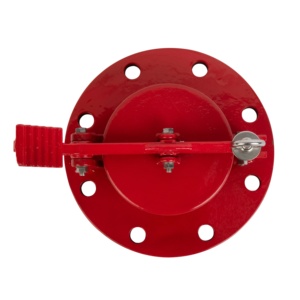
Precision-machined sampling hole port with zero-leakage seal geometry for offshore oil/gas and industrial applications.
Inquire Now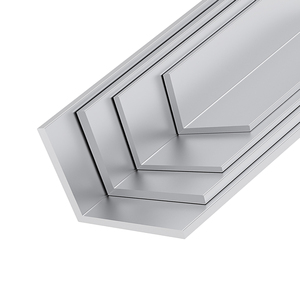
Structural 6063-T6 corner reinforcing angle offering exact dimensional tolerance for heavy entrance door frames.
Inquire Now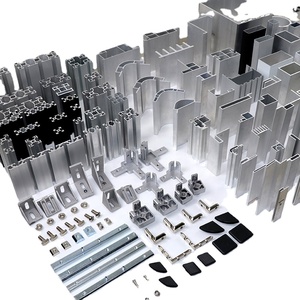
High-yield architectural rail profiles with sublimation wood grain finishing for Nordic biophilic aesthetics.
Inquire Now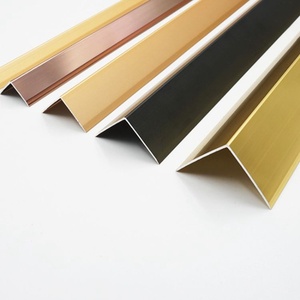
Anodized architectural profiles providing edge protection and internal structural bracing for double door sashes.
Inquire Now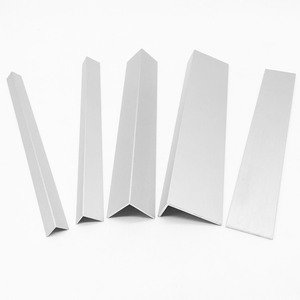
Qualicoat Seaside certified powder-coated finish designed for cutting, bending, and seamless door frame mounting.
Inquire Now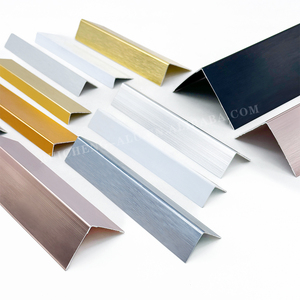
Versatile corner extrusion with punching, bending, and custom mitering options for high-traffic door surrounds.
Inquire Now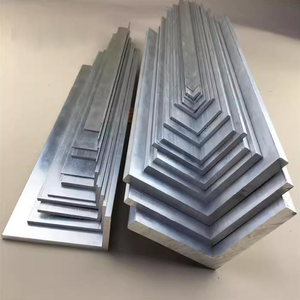
Extreme salt-spray resistance engineered specifically for Norwegian coastal infrastructure and marine vessels.
Inquire Now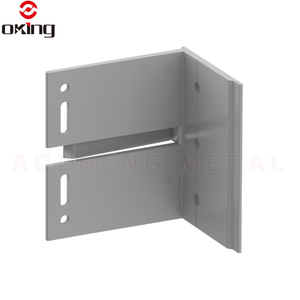
Load-tested structural aluminum bracketry designed for heavy stone, glass, and composite facade door connections.
Inquire NowSelecting the precise alloy temper and wall thickness is non-negotiable when exporting aluminium door systems to Norway. Our manufacturing facilities utilize prime-grade A00 ingot aluminium with controlled micro-alloying elements to yield optimal mechanical properties during hot extrusion.
For standard sliding, bi-fold, and casement entrance doors, 6063-T5 provides excellent surface finish quality, superior anodizing response, and clean extrudability for complex thin-wall internal webbing. However, for large-format commercial entrance doors subject to heavy wind load pressures (up to 4.5 kPa along Norwegian coastal zones) and long-span mullion assemblies, we utilize 6063-T6 or 6061-T6.
Artificial aging in our precision curing ovens elevates yield strength from ~110 MPa to over 210 MPa, dramatically reducing elastic deflection under dynamic load pressures.
To eliminate conductive energy loss, our door frames utilize dual multi-chambered polyamide strips (PA66-GF25) mechanically crimped between inner and outer extruded aluminium profiles. The thermal cavity is optionally injected with high-density polyurethane (PU) foam or aerogel insulation strips.
This structural thermal break ensures that while outdoor ambient temperatures drop to -25°C in Inland Norway, the interior aluminium profile face maintains a surface temperature above dew-point levels, preventing structural condensation and mold generation.
| Performance Criterion | Norwegian Building Code (TEK17) | Pak Alumex Heavy-Duty Door Profile | Testing / Certification Standard |
|---|---|---|---|
| Thermal Transmittance (Uw) | ≤ 1.2 W/m²K (Standard) / ≤ 0.8 W/m²K (Passivhus) | 0.75 – 0.95 W/m²K (Triple Glazed 48mm) | NS-EN ISO 10077-2 |
| Air Permeability | Class 3 minimum | Class 4 (600 Pa test pressure) | NS-EN 12207 |
| Watertightness | Class 9A (600 Pa) | Class E1200 (1200 Pa static pressure) | NS-EN 12208 |
| Resistance to Wind Load | Zone-dependent (Class C3/C4) | Class C5 / P3 (Up to 3000 Pa design load) | NS-EN 12210 |
| Surface Protection Coating | Qualicoat Class 2 / Anodizing 20µm+ | Qualicoat Seaside / 25µm Marine Anodize | ISO 2360 / ISO 2813 |
Norway’s geography demands tailored architectural glazing specifications depending on regional atmospheric exposure, urban topography, and localized wind-driven rain intensity.
The western coastline of Norway experiences severe wind-driven rainfall (over 2000 mm annually in Bergen) combined with aggressive salt-laden ocean air. Standard powder coatings frequently suffer from filiform corrosion beneath the paint layer within 36 months.
We deploy Qualicoat Seaside pre-treatment incorporating acid-etching protocols followed by a 25-micron anodic oxidation layer or fluoropolymer (PVDF) coating system certified for C5-M corrosive environments. Triple EPDM continuous gasket seals prevent hydrostatic water penetration under wind gusts exceeding 140 km/h.
In sub-arctic regions like Tromsø, Bodø, and Finnmark, aluminium profiles undergo extreme cyclical thermal expansion and contraction. Low-grade thermal breaks can delaminate or shear under differential structural strain when interior temperatures are +22°C and exterior ambient dips to -30°C.
Our Arctic-spec bi-fold and sliding door series incorporate shear-stress resistant polyamide locking keys and frost-proof EPDM synthetic rubber gaskets that maintain elasticity down to -45°C, ensuring dynamic rolling hardware operates effortlessly without freezing or binding.
Modern Norwegian architectural design in Oslo and Drammen heavily favors Nordic minimalism—maximizing interior natural daylight through expansive floor-to-ceiling glass elevations while maintaining strict acoustic dampening (Rw ≥ 42 dB) along active transport corridors.
Our heavy-duty Lift-and-Slide door profiles feature ultra-narrow central interlock sightlines of just 30mm to 45mm, supporting triple-glazed pane weights of up to 400 kg per panel via stainless steel heavy-duty carriage rollers.
Understanding the evolution of Scandinavian architectural requirements allows project managers and importing buyers to spec systems that provide long-term property asset value and immediate regulatory compliance.
While natural anodized silver dominated Scandinavian commercial facades for decades, modern Norwegian residential and mixed-use developments have shifted aggressively toward dark architectural palettes. Anthracite Grey (RAL 7016), Jet Black (RAL 9005), and custom anodized Bronze/Champagne hues now represent over 70% of imported door frame requests. We provide hyper-durable Qualicoat Class 2 super-durable polyester powders that offer a 25-year gloss retention and color stability guarantee against intense summer UV solar radiation.
Norwegian real estate developers prioritising BREEAM-NOR certification mandate low embodied carbon credentials for imported metal facade components. Aluminium is endlessly recyclable without loss of material integrity. Our billet sourcing emphasizes hydro-electric powered smelting, producing primary extrusion logs with embodied carbon profiles well below the global average. All extrusion scrap generated in our extrusion plant is closed-loop recycled on-site.
Below are technical queries answered by our senior facade engineering and export logistics team to streamline B2B procurement for Norwegian projects.
Our architectural door profile systems are designed specifically around high-efficiency thermal breaks. By using multi-cavity PA66 GF25 polyamide insulation strips ranging from 24mm to 38mm in width, combined with triple glazing (e.g., 4mm Low-E + 16Ar + 4mm Float + 16Ar + 4mm Low-E with warm-edge spacers), we achieve whole-window/door thermal transmittance values (Uw) between 0.78 and 1.1 W/m²K, easily surpassing the TEK17 baseline requirement of ≤ 1.2 W/m²K.
For saltwater-exposed installations along Bergen, Stavanger, or the Lofoten islands, we strongly recommend our Qualicoat Seaside certified powder coating or a 25-micron anodic hard-coat (Class 25 anodizing under ISO 7599). Pre-treatment involves alkaline degreasing followed by a deep acid-etch step that removes surface impurities and copper traces, eliminating the root causes of filiform corrosion.
Yes. Our in-house tool and die manufacturing shop develops custom extrusion dies directly from CAD / DWG / DXF engineering files. Before full batch extrusion, we conduct Finite Element Analysis (FEA) to verify structural deflection under wind load, extrusion press ratios, and wall thickness uniformity. First-article extruded samples are supplied alongside dimensional inspection reports for client sign-off.
Export door profiles and fabricated frame assemblies undergo a 4-layer protective packaging sequence: (1) Laser-cut protective adhesive tape applied to exposed finished surfaces; (2) Interleaved protective polyethylene foam sheets between stacked lengths; (3) Moisture-resistant shrink-wrap bundling; and (4) ISPM-15 heat-treated fumigated wooden crates or steel-framed export containers. Shipments route directly via major ocean freight channels to Oslo, Bergen, or Brevik ports with complete shipping and customs documentation.
Absolutely. Our CNC profile routing centers pre-machine all required lock cutouts, hinge mounting plates, and handle prep holes to exact Scandinavian hardware templates (including ASSA ABLOY, Winkhaus, and GU hardware systems). This eliminates time-consuming manual field machining on Norwegian job sites.
Standard die preparation and sample approval require 10–14 days. Once approved, production and surface finishing take approximately 15–20 days depending on total project tonnage. Ocean shipping from our logistics hub to primary Norwegian ports typically ranges from 28 to 35 transit days. For urgent construction schedules, expedited air-freight options are available for specialized fittings and corner brackets.
As a vertically integrated manufacturer, Pak Alumex controls every single link of the production chain under one roof—from raw billet melting and alloy homogenization to high-tonnage extrusion, thermal-strip crimping, surface anodizing, powder coating, and precision CNC fabrication.
By eliminating third-party sub-contracting for anodizing or powder painting, we eliminate cross-contamination risk, finish batch variation, and administrative delays. Every profile batch carries complete chemical composition certificates and coating film thickness test logs.
Our CAD/CAM tooling department operates state-of-the-art wire EDM and CNC machining centers capable of cutting dies for complex hollow sections, ultra-wide curtain wall mullions, and multi-track door sills up to 350mm profile width.
Having supplied architectural aluminium systems across international markets, our dedicated export team handles complete ocean logistics, container load optimization, HS code classification, and TEK17 compliance documentation for seamless Norwegian customs clearance.
Upload your project DWG files, elevation schedules, or tender specifications. Our technical sales engineers respond within 24 business hours with detailed profile estimates, U-value calculations, and alloy recommendations.
Inquire Now