Structural Glass Hardware · Stainless Steel 316 · Custom Extrusions

Engineered Spider Glazing Systems & Structural Hardware

Comprehensive B2B technical guide & global procurement manual for point-supported glass facades, articulated routels, and heavy-duty structural substructures.

Maximum Transparency, Zero Structural Compromise
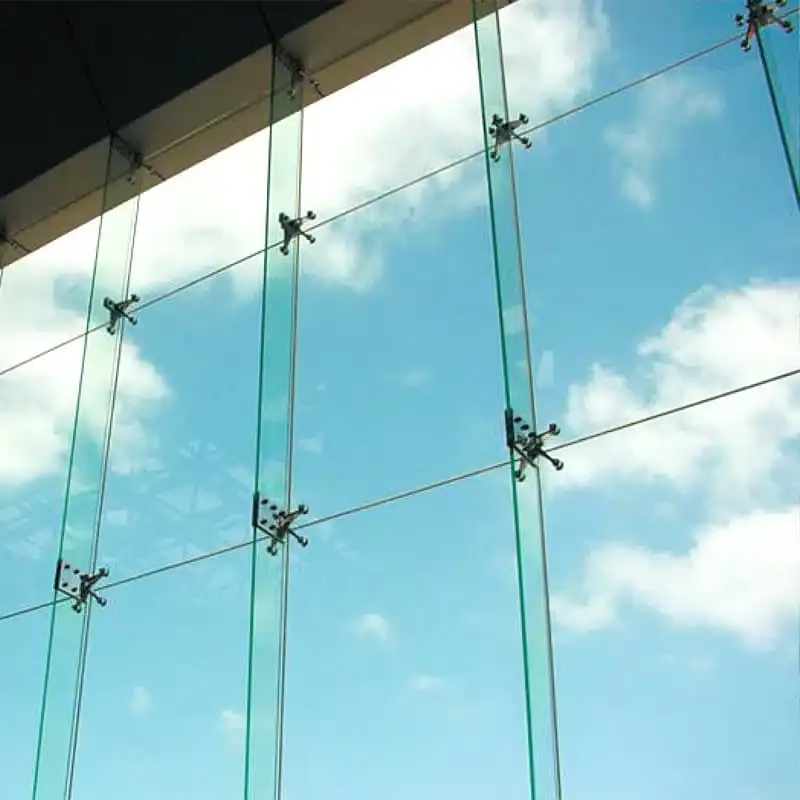
AISI 316/316L investment cast spider fittings engineered to resist extreme wind loads up to 4.5 kPa and seismic movements.

Glass Fin & Tension Cable Integration

Versatile point-fixed structural connections for monolithic, laminated SGP, and thermally broken double-glazed IGUs.

Direct Factory Procurement from Faisalabad

Precision CNC machining, passivated stainless steel hardware, and 6063-T6 structural aluminium backbones manufactured under one roof.

  • AISI 316 / 316L Stainless Steel
  • Articulated Ball-Joint Routels
  • SGP Laminated Glass Compatible
  • Full FEA Structural Certification
Engineering Capabilities

Precision Metallurgy & Structural Glass Manufacturing Rigor

Pak Alumex Aluminium Industries integrates heavy-duty investment casting, CNC precision milling, spectrographic alloy verification, and structural aluminium extrusion at our main industrial plant in Gojra, Faisalabad. We eliminate single-point supply risks for international B2B purchasers.

  • 0Grade AISI 316/316L Stainless Steel standard across all outdoor spider arms
  • 0.5 kPaCertified positive & negative wind load resistance capacity
  • 0Microns anodizing anodized layer depth for structural aluminium mullions
  • 0% Ultrasonic flaw & dye-penetrant tested structural fittings
System Engineering Architecture

Comprehensive B2B Guide to Architectural Spider Glazing Systems

Understanding the mechanics, load distribution, and metallurgical requirements of point-supported structural glass facades for global EPC contractors, facade consultants, and architectural specifiers.

1. Principles of Point-Supported Glass Facades

Architectural Spider Glazing Systems represent the pinnacle of structural transparency in modern building envelopes. Unlike conventional framed curtain walls or structural silicone glazing (SSG) where continuous perimeter extrusions capture the glass edges, point-fixed systems transfer wind suction, dead weight, and thermal displacement loads back to a structural substructure via discrete, high-tensile stainless steel fittings and mechanical glass bolts known as routels.

By concentrating forces at drilled hole locations near the corners of toughened or laminated glass panels, spider glazing achieves visual transparency exceeding 95%. However, this concentrated force distribution introduces immense localized shear and flexural stresses around the glass perforations. Engineering an authentic, high-reliability spider facade demands exact calculation of localized stress fields using Finite Element Analysis (FEA), precise control of hole drilling tolerances, and the utilization of fully articulated ball-joint hardware to eliminate secondary bending moments.

2. Metallurgical Precision: AISI 316 vs. 316L vs. 304

A frequent point of failure in global facade procurement is the improper specification of stainless steel alloys. Pak Alumex manufactures spider fittings exclusively utilizing investment cast (lost-wax process) AISI 316 and ultra-low carbon AISI 316L stainless steel. The inclusion of 2.0% to 3.0% Molybdenum in Grade 316 creates superior resistance to chloride pitting, crevice corrosion, and atmospheric industrial degradation compared to standard AISI 304 alloys.

For heavy welding applications—such as custom mounting plates welded directly to structural steel columns—AISI 316L is mandated to prevent chromium carbide precipitation at heat-affected zones (HAZ), eliminating intergranular corrosion risks. All Pak Alumex fittings undergo full chemical spectrographic validation, solution annealing treatment at 1050°C, and passivation in compliance with ASTM A967 standards.

Anatomy of an Articulated Spider Glazing Assembly

Point-supported structural integrity relies on the harmonious performance of four core engineering components:

A. Stainless Steel Spider Body

1-way, 2-way, 3-way, or 4-way heavy-duty cast arms engineered to distribute multi-directional tension and shear vectors into the backing structure.

B. Articulated Ball-Joint Routel

Features a spherical stainless swivel mechanism allowing +/- 4° to 6° angular movement to mitigate bending stresses caused by wind deflection.

C. Bushings & Gaskets

Precision-machined DuPont™ Delrin® (POM) or high-grade EPDM isolators preventing direct metal-to-glass contact and isolated point friction.

D. Structural Backing Structure

Vertical glass fins, structural steel trusses, tension cable networks, or heavy-wall 6063-T6 extruded aluminium structural mullions.

Product Recommendations

Spider Glazing System Configurations & Hardware Families

Tailored point-supported structural solutions engineered for varying facade heights, structural spans, transparency thresholds, and thermal performance mandates.

Maximum TransparencyGlass Fin Supported Spider Glazing System

Glass Fin Spider System

Utilizes vertical laminated structural glass fins as wind mullions. Heavy-duty 2-way and 4-way spider fittings mount directly through the fin face, achieving 98% visual light transmission.

  • SGP Laminated Fins
  • Countersunk Routels
  • Zero Metal Framework
High-Rise & High-WindSteel Truss & Pipe Support Spider Glazing System

Steel Truss Spider System

Engineered for high-span building atriums, commercial entrances, and airport terminals. Heavy-duty cast SS316 spiders mount to structural steel pipes or space trusses handling wind loads > 4.0 kPa.

  • High-Span Spacing
  • Seismic Jointing
  • SS316 Heavy Cast Arms
Kinetic AestheticsTension Cable & Rod Network Spider System

Tension Cable Spider System

Pre-stressed stainless steel cable networks replace rigid steel columns. Suspended point-fixed routels maintain dynamic tension equilibrium, producing lightweight facade designs.

  • Pre-Stressed SS Cables
  • Kinetic Deflection
  • Minimal Shadow Lines
Hybrid Thermal PerformanceAluminium Extrusion Hybrid Spider Glazing System

Aluminium Hybrid Spider System

Combines heavy-wall 6063-T6 extruded aluminium structural mullions with thermally broken articulated routels for double-glazed IGUs, delivering acoustic dampening and low U-values.

  • Thermally Broken Routels
  • 6063-T6 Extrusions
  • Double Glazed IGU

Technical Parameter Matrix for B2B Specifiers

Comprehensive technical specification matrix for Pak Alumex spider glazing configurations
System Category Backing Substructure Max Facade Height Recommended Glass Stack Routel Fixation Type Hardware Metallurgy
Glass Fin Supported 12mm+12mm SGP Laminated Glass Fins Up to 18 Meters 10mm+1.52mm SGP+10mm Toughened Countersunk Articulated (Flush) AISI 316 / 316L Electropolished
Steel Truss Mounted Structural Steel Hollow Pipe / Space Frame Unrestricted (> 30 Meters) 12mm+1.52mm SGP+12mm Toughened Button Head / Cylindrical Swivel Cast SS316 Satin / PVD Coated
Tension Cable Network High-Tensile 316 SS Wire Ropes (1x19 Strand) Up to 24 Meters 10mm+1.52mm PVB/SGP+10mm Low-E Adjustable Tension Swivel Routel Forged SS316 High-Yield Alloy
Aluminium Profile Hybrid Custom Extruded 6063-T6 Heavy Mullions Up to 12 Meters 6mm Low-E + 12Ar + 6mm Toughened IGU Thermally Broken Sealed Routel 6063-T6 Extrusion + SS316 Spider
Why Global Contractors Partner With Us

Single-Source Control: From Molten Billet to Passivated Hardware

Spider glazing failures on international sites stem from fragmented supply chains—where casting foundries, CNC machinists, glass coaters, and extrusion mills blame each other for tolerance mismatches. Pak Alumex consolidates the entire manufacturing chain under strict ISO 9001 auditing.

  • Precision Investment Casting & CNC Milling

    Our foundry utilizes automated lost-wax investment casting for SS316 spider arms, followed by 5-axis CNC machining of routel thread tolerances within +/- 0.02mm for flawless jobsite assembly.

  • In-House 6063-T6 Extrusion & Advanced Surface Finishing

    For hybrid spider systems, we extrude heavy structural aluminium mullions in 6063-T6 alloy with anodizing up to 25 µm or Qualicoat Class 2 architectural powder coating up to 80 µm film thickness.

  • 100% Non-Destructive Flaw & Load Verification

    Every structural batch undergoes dye-penetrant surface inspection, ultrasonic subsurface flaw detection, and tensile proof testing to 1.5 times working load limits prior to release.

  • Export Crating & Global Port Logistics

    Goods are individually wrapped in laser protective foil, vacuum-sealed with desiccant packs, and packed into ISPM 15 certified wooden crates for sea container shipment via Karachi Port.

Pak Alumex high-precision structural facade manufacturing

FEA Stress Validation

Custom finite element modeling verifies localized stress around glass countersunk holes under ultimate wind pressure loads.

Passivation Integrity

ASTM A967 nitric-acid chemical passivation ensures a robust chromium-oxide passive film for coastal installation.

Global Procurement FAQ

Frequently Asked Technical Questions on Spider Glazing Procurement

Direct engineering clarity on wind load calculations, alloy selection, glass processing specifications, and international delivery protocols.

Calculating structural glass thickness in point-supported systems requires advanced Finite Element Analysis (FEA) rather than simple linear beam theory because point fixings introduce severe stress concentrations around drilled holes. Engineers evaluate basic design wind speed, topographic exposure, building height, peak local suction pressures (e.g., 2.5 kPa to 4.5 kPa per EN 1991-1-4 / ASCE 7-16), and panel aspect ratios.

Because glass is a brittle material prone to micro-fissure propagation, maximum allowable principal tensile stresses are strictly capped (typically 50 MPa for fully tempered glass under transient wind loads). For critical safety, monolithic glass is avoided in favor of laminated toughened units—such as 10mm Toughened + 1.52mm SGP + 10mm Toughened. Lamination ensures structural integrity and residual load capacity even in the unexpected event of a lite fracture.

AISI 304 stainless steel contains 18% Chromium and 8% Nickel, offering adequate corrosion resistance in benign, dry interior applications. However, in exterior architectural envelopes exposed to atmospheric moisture, industrial sulfur dioxide, or airborne marine chlorides (salt spray within 10 km of coastlines), AISI 304 rapidly suffers from pitting corrosion and visual "tea-staining."

AISI 316 contains 16-18% Chromium, 10-14% Nickel, and crucially 2.0-3.0% Molybdenum. Molybdenum drastically lowers the Pitting Resistance Equivalent Number (PREN), preserving passivation under aggressive chloride attack. AISI 316L (low carbon variant, C < 0.03%) is specified wherever spider mounting plates are field-welded to steel backbones, preventing intergranular chromium carbide depletion along the weld seam. Pak Alumex mandates 316/316L for all exterior point-fixed hardware contracts.

When wind pressure forces a structural glass panel to flex, the glass surface rotates at its point fixings. Rigid, fixed-stud bolts transmit this rotational displacement directly into the glass hole as a severe bending moment, generating extreme edge stresses that cause immediate catastrophic glass breakage.

An articulated ball-joint routel incorporates an internal stainless steel spherical socket mechanism that permits rotational articulation (+/- 4° to 6°) relative to the spider arm. As the glass panel deflects under live wind or seismic forces, the routel swivels freely, transforming high bending moments into pure, uniform normal tension and shear forces. This rotational freedom is essential for preserving the fatigue life of both the glass panel and the anchor fasteners.

Standard Polyvinyl Butyral (PVB) is a soft, viscoelastic polymer. Under sustained wind loads or elevated summer temperatures (> 50°C), PVB softens and exhibits high shear deformation. This causes the two glass lites to act independently rather than as a monolithic composite beam, dramatically increasing glass deflection at the point fixings.

Kuraray SentryGlas® (SGP) ionoplast interlayer is 100 times stiffer and 5 times tear-resistant compared to standard PVB. It maintains full shear transfer between glass lites across extreme thermal ranges (-40°C to +80°C). Most importantly, if both glass lites shatter due to impact or vandalism, the extreme rigidity of the SGP interlayer keeps the broken panel standing as a rigid diaphragm clamped by the spider routels, preventing dangerous glass drop-out until maintenance crews can replace the panel.

Yes. Integrating point-supported fixings with double-glazed IGUs requires specialized engineering to avoid puncturing the outer hermetic gas seal. In modern thermally broken double-glazed spider systems, special articulated routels are mechanically anchored strictly to the inner glass pane (which is toughened or laminated). The routel body passes through a sealed aluminum spacer ring.

The outer glass pane remains continuous and un-drilled, bonded to the inner pane via structural silicone perimeter seals and argon gas cavity spacers. This design preserves the thermal insulation (U-values down to 1.1 W/m²K) and acoustics of the double-glazed unit while maintaining the sleek exterior aesthetics of point-supported structural hardware.

Pak Alumex enforces comprehensive ISO 9001 quality control protocols across all hardware manufacturing runs. Raw ingot batches are analyzed via optical emission spectroscopy to verify exact chemical alloy composition. Castings undergo 100% dye-penetrant inspection to detect surface micro-cracks and ultrasonic testing to verify internal density.

Following high-precision CNC machining, all fittings are subjected to mechanical electropolishing to smooth micro-roughness, followed by chemical passivation in a controlled nitric acid bath compliant with ASTM A967 standards. Passivation removes free iron particles from the surface, forming a thick, self-healing chromium-oxide barrier. Each export consignment is accompanied by EN 10204 3.1 material test certificates and factory proof-load inspection logs.

Manufacturing Headquarters

5km Painsra Road, Gojra, Faisalabad, Pakistan 36120

Integrated investment casting, precision CNC machining, structural extrusion, and surface treatment under unified engineering management. Factory visits and B2B technical audits welcomed by appointment.

Ready to Spec Spider Glazing Systems on Your Next Landmark Project?

Submit your architectural elevations, wind load requirements, or CAD sections. Our structural engineering department will prepare FEA load verification, hardware schedules, and competitive direct-factory pricing.

Get Catalog Contact Facade Team