
PA66 GF25 Insulation · 6063-T5/T6 Alloys · OEM Manufacturing

Thermal Break Aluminium Windows: The B2B Procurement & Technical Masterclass

Comprehensive engineering guide for global contractors, architects, and buyers. Explore PA66 GF25 thermal physics, U-value optimization, custom die manufacturing, and global supply chain strategies.

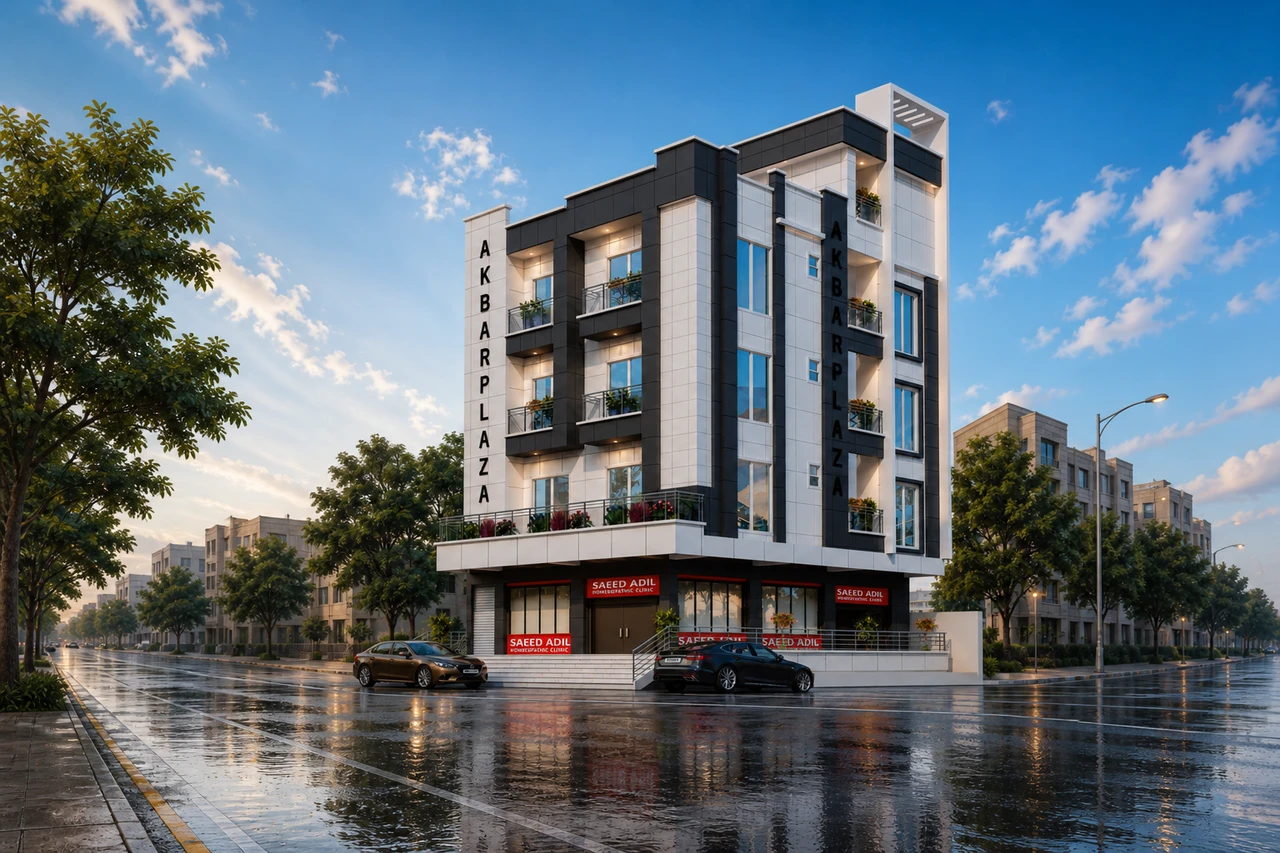
Thermal Efficiency Meets Structural Power

Engineered to isolate conductive thermal bridging, withstanding severe wind pressures up to 5000 Pa for modern energy-efficient architecture.

Surface Finishes Built for Decades

In-house anodizing (10–25 µm), architectural powder coating (60–80 µm), and realistic sublimated wood textures under one roof.

Direct-from-Factory OEM Customization

Full technical support from initial CAD drawing FEA validation to export-ready seaworthy crating from our Faisalabad manufacturing plant.

  • PA66 GF25 Polyamide Strips
  • U-Values Down to 0.8 W/m²K
  • AA6063-T5 / T6 Billets
  • Exporting to 44+ Global Markets
Engineering Snapshot

Core Performance Metrics of Thermal Break Aluminium Windows

Pak Alumex Aluminium Industries operates an integrated extruding, anodizing, powder coating, and thermal crimping plant on Painsra Road, Gojra, Faisalabad. By controlling the entire manufacturing value chain under strict ISO standard management, we ensure zero thermal breakdown, exact mechanical tolerances, and uncompromised surface durability.

  • 0.8 W/m²KMinimum achieveable frame U-value (Uw) with triple glazing
  • 25%Glass-fiber structural reinforcement in PA66 insulating strips
  • 0 µmArchitectural powder coating film build (Qualicoat standards)
  • 0+Global distribution & project delivery hubs worldwide
Thermal Bridging Engineering

Understanding Thermal Break Aluminium Windows: Physics, Mechanics, and Materials

Aluminum is unmatched as an architectural envelope material due to its exceptional strength-to-weight ratio, structural elasticity, and corrosion immunity. However, unreinforced aluminum possesses a high coefficient of thermal conductivity (λ ≈ 160 to 200 W/m·K). In uninsulated window frames, heat rapidly transfers through the metal via conductive energy migration. In cold climates, this results in interior heat loss and severe surface condensation; in tropical or arid zones, solar radiation transfers exterior thermal energy directly into the building, drastically inflating HVAC power consumption.

Thermal Break Aluminium Windows solve this thermodynamic challenge by introducing a structural thermal barrier between the interior and exterior aluminum profiles. This barrier breaks the continuity of the conductive path, creating an insulated dual-shell assembly that reduces overall frame heat transmittance by up to 75%.

  • Polyamide (PA66 GF25) vs. Low-Grade PVC Barriers

    Superior thermal break windows utilize PA66 polyamide reinforced with 25% short glass fibers (λ ≈ 0.3 W/m·K). Glass fiber reinforcement aligns the thermal expansion coefficient of the strip precisely with that of aluminum (2.3 × 10⁻⁵ /K). Low-cost manufacturers often substitute cheap PVC strips (λ ≈ 0.17 W/m·K), which suffer from high thermal expansion, softening under summer sun (+70°C), and brittle fracturing during cold weather (-20°C), leading to structural shear breakdown and frame collapse.

  • Precision Mechanical Crimping & Shear Resistance

    The thermal breaking process at Pak Alumex involves three automated steps: profile knurling (creating teeth in the aluminum cavity), strip insertion, and heavy-duty multi-roller crimping. This mechanical interlock resists longitudinal shear stress caused by differential thermal expansion (when the exterior shell is at 60°C while interior is cooled to 22°C).

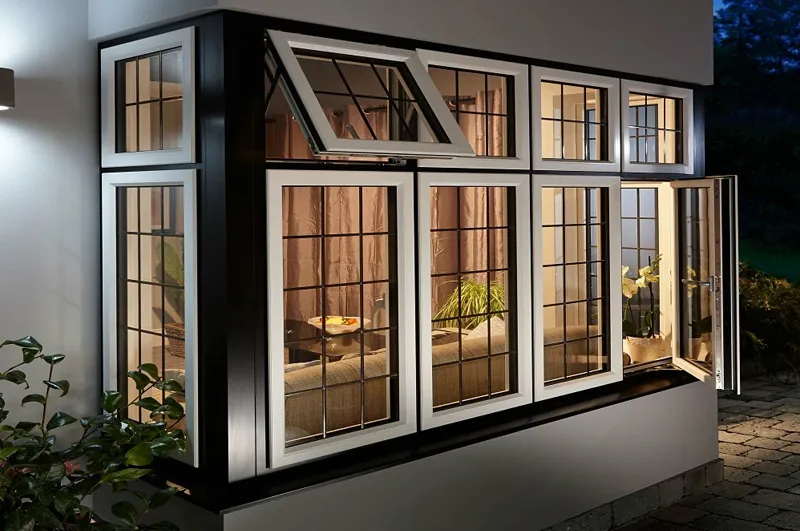
Engineering detail of Thermal Break Aluminium Casement Window profile

Information Gain Note for Specifiers

When evaluating Thermal Break Aluminium Windows, verifying the thermal barrier's mechanical shear strength (TQ > 24 N/mm according to EN 14024) is far more critical than checking profile thickness alone. Weak crimping causes air infiltration leakage and joint misalignment over 5 to 10 years of operational service.

Systems & Product Recommendations

High-Gain Thermal Break Aluminium Window Catalog

Select from our engineering-certified window systems. Each profile family is extruded in AA6063-T5/T6 alloy, paired with continuous EPDM multi-gaskets, custom hardware preparations, and multi-chamber thermal breaks.

Tilt & Turn Heavy-Duty Thermal Break Casement Window System

Heavy-Duty Thermal Break Casement Windows

Designed for luxury residential towers, commercial offices, and severe climate zones. Features a 75mm system depth with 24mm multi-cavity PA66 GF25 polyamide strips and triple EPDM weatherstripping.

  • System Depth: 75mm
  • U-Factor: 1.2 – 1.5 W/m²K
  • Glazing: 24mm – 36mm IGU
  • Hardware: European Groove

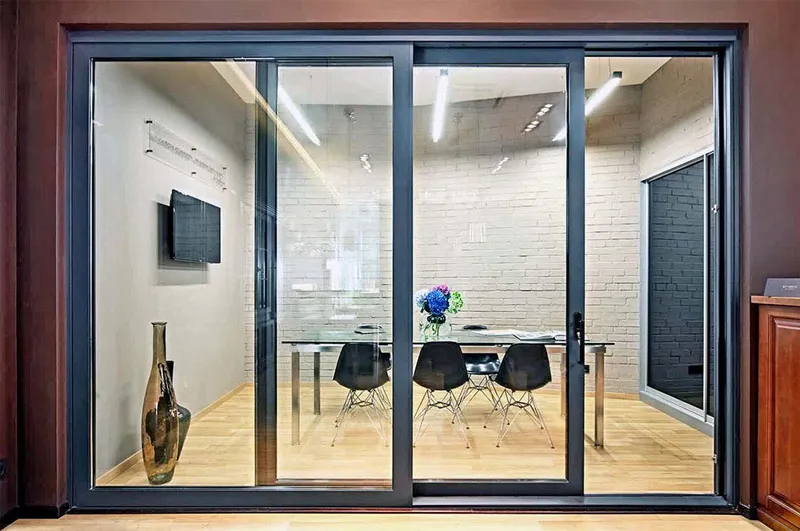
Sliding Systems Multi-Track Thermal Break Sliding Window System

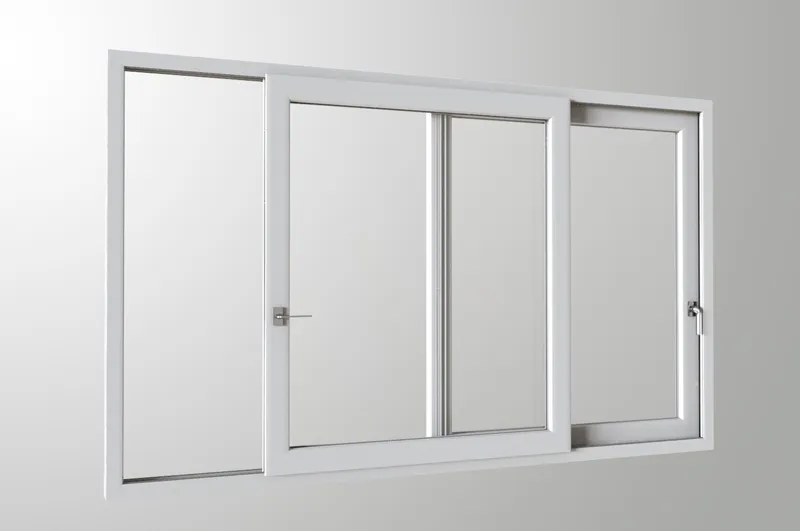
Multi-Track Thermal Break Sliding Windows

Engineered for expansive openings requiring effortless glide and air-tight weather sealing. Integrates heavy-duty stainless steel tracks with thermal break interlocks that prevent wind pressure air infiltration.

  • Tracks: 2, 3, or 4-Track
  • Roller Load: Up to 300kg
  • Interlock Width: 28mm Slim
  • Drainage: Hidden Water-Way
Facade Glazing Thermally Broken Architectural Window Wall & Ribbon Window System

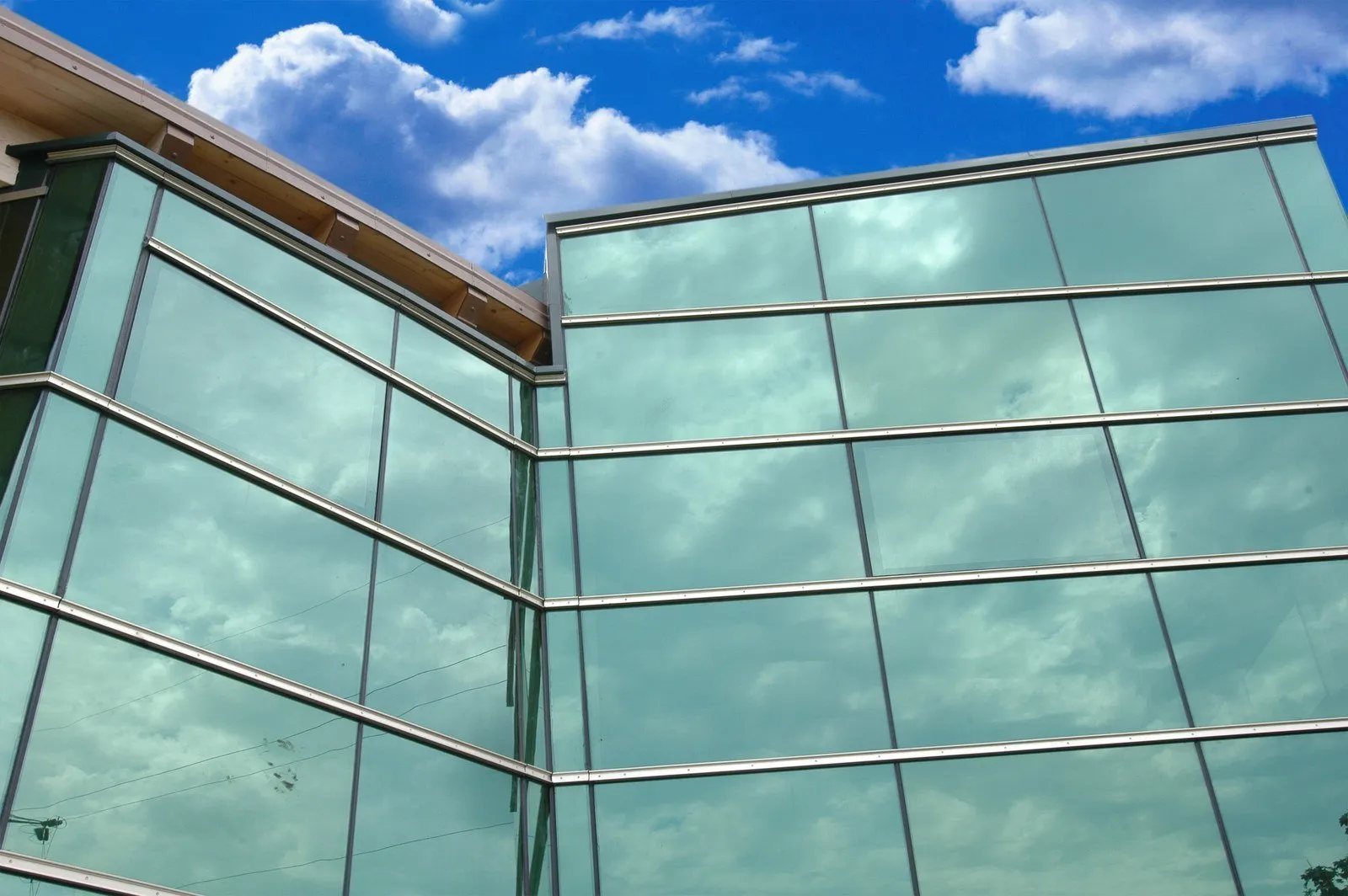
Architectural Thermal Break Window Wall

A hybrid ribbon window system sitting between floor slabs. Provides the structural load resistance of a curtain wall with the economic procurement benefits of integrated thermal break window sashes.

  • Alloy: 6063-T6 High Yield
  • Wind Resistance: 5000 Pa
  • Infill: Double/Triple Low-E
  • Acoustic: STC 42 dB
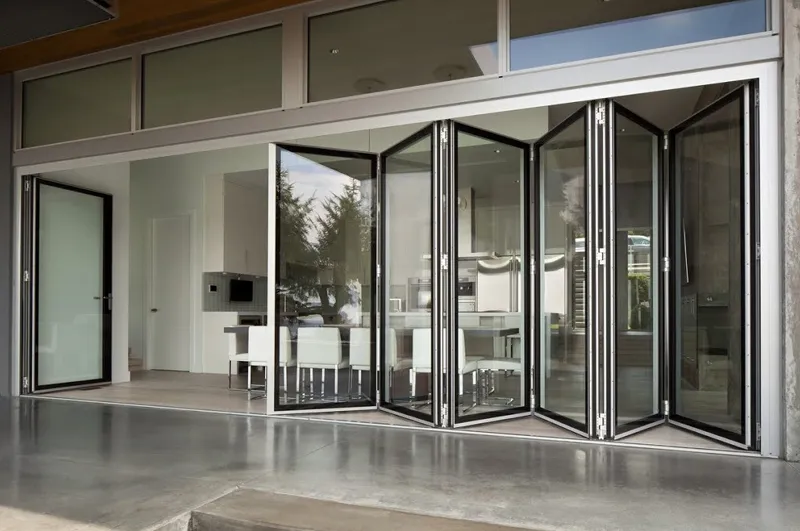
Folding Systems Thermal Break Bi-Fold Window & Door System

Thermal Break Bi-Fold Windows & Doors

Combines wide panoramic openings with zero thermal performance degradation. Heavy-duty top-hung carriers and thermally isolated bottom tracks provide fluid operational movement.

  • Leaf Width: Up to 1200mm
  • Threshold: Flush Thermal
  • Folding: 2 to 7 Panels
  • Security: Multi-Point Lock
Lift & Slide Ultra-Performance Lift-Slide Thermal Break Windows

Ultra-Performance Lift-Slide Thermal Windows

High-end architectural system where sashes lift off the gasket track prior to sliding, eliminating gasket wear and providing pressure-sealed weatherproofing when locked in place.

  • Sash Weight: 400kg Max
  • Air Permeability: Class 4
  • Water Tightness: 1050 Pa
  • Thermal Break: 34mm PA66
Passive House Ultra-Low U-Value Thermal Break Window System

Passive House Thermal Break Windows

Designed for cold-climate export markets demanding extreme thermal isolation. Integrates foam-filled insulating chambers and 39mm multi-cavity thermal break strips.

  • Uw Factor: ≤ 0.8 W/m²K
  • Glazing: 48mm Triple IGU
  • EPDM: Co-Extruded Sponge
  • Cert: NFRC / CE Tested
Comparative Analysis

Specification Matrix: Thermal Break vs Standard Profiles

Compare physical, thermal, and structural characteristics to make informed procurement decisions for architectural facades and window assemblies.

Performance Parameter Standard Aluminum Windows Thermal Break Aluminum Windows Pak Alumex High-Spec Series
Thermal Conductivity (λ) 160 – 200 W/m·K (High conductive loss) 0.3 – 0.5 W/m·K across thermal break 0.28 W/m·K (PA66 GF25 + Aerogel Foam)
Frame U-Value (Uf) 5.8 to 7.2 W/m²K 1.8 to 2.8 W/m²K 0.8 to 1.3 W/m²K
Condensation Risk (CRF) High risk below +10°C interior surface Minimal risk down to -15°C ambient Zero condensation down to -30°C ambient
Sound Transmission (STC) 28 – 32 dB (Single/Standard Double) 36 – 42 dB (Acoustic Laminate + IGU) 44 – 48 dB (Multi-chamber PA66 + Triple Glaze)
Structural Yield Strength 6063-T5 (110 MPa) 6063-T5 / T6 (170 - 210 MPa) 6063-T6 Prime Billet (> 230 MPa)
Expected Service Life 15 – 20 Years 30 – 50 Years 50+ Years (Qualicoat / Anodized 25µm)
Why Pak Alumex

Vertically Integrated Manufacturing: Quality Control from Billet to Site

At Pak Alumex Aluminium Industries, we eliminate the operational risks associated with third-party outsourcing. Extrusion, thermal break crimping, anodizing, powder coating, and wood texture sublimation are executed under one unified roof at our facility in Faisalabad, Pakistan.

  • Chemical Pre-Treatment Excellence

    Coating adhesion depends entirely on surface preparation. We utilize automated chromate-free chemical conversion baths (partnering with global chemical leaders SurTec and TKG Huchem) to create a nanoscale titanium-zirconium passivation layer on the aluminum surface before powder application.

  • Qualicoat-Grade Powder Coating & Anodizing

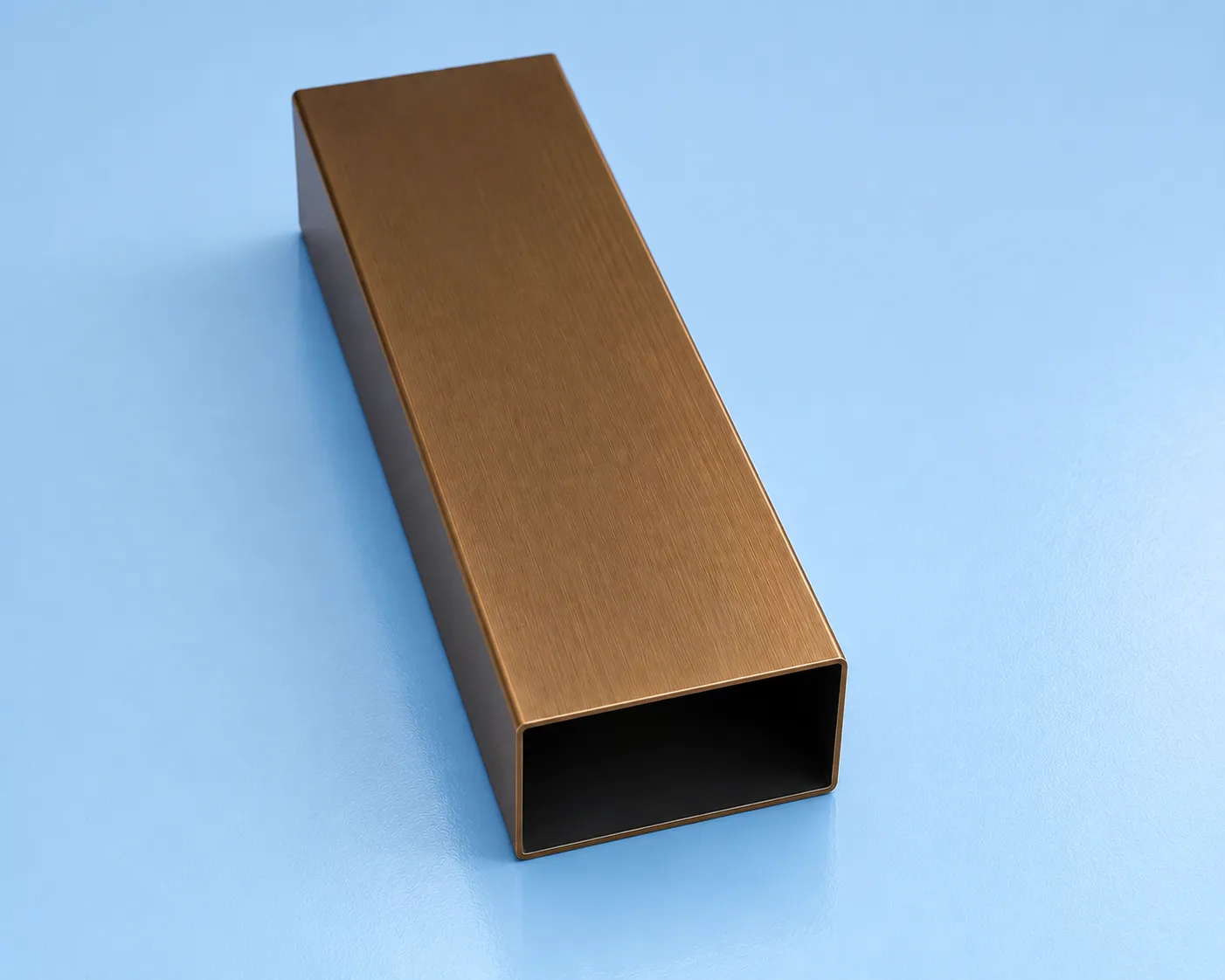
    Our electrostatic coating lines apply architectural polyester powders (Jotun and Pulver) at a dry film thickness of 60–80 microns, cured at 180–200°C. For marine and industrial environments, our anodizing plant grows an oxide layer from 10 µm up to 25 µm in natural silver, champagne, bronze, and architectural black.

  • Realistic Sublimated Wood Texture Finishing

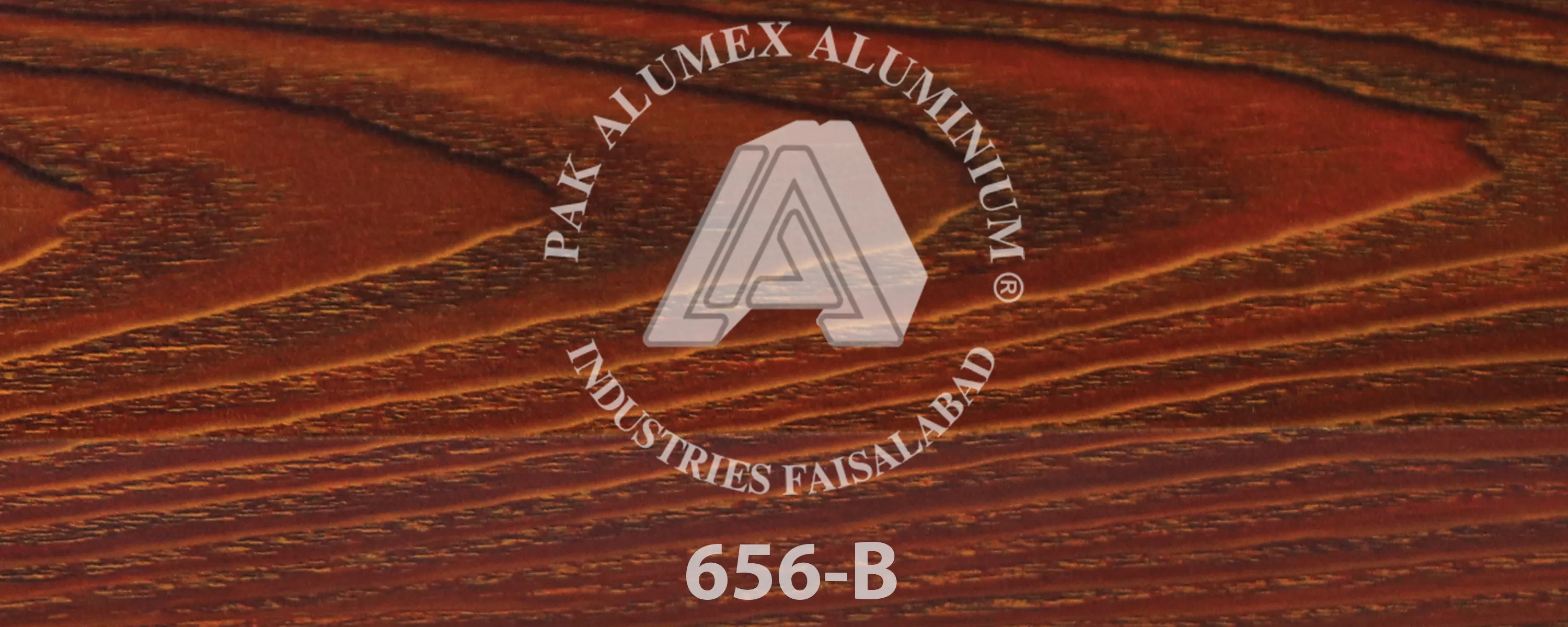
    For projects requiring organic aesthetics with the structural lifespan of metal, our wood-texture line uses vacuum sublimation technology to transfer realistic oak, walnut, and teak grains into a durable powder base layer—eliminating wood rot, warping, and repainting.

Global Supply Chain

Certified Coating Chemistry & Plant Equipment Partners

We partner with premier global suppliers to ensure every thermal break window extrudes smooth, crimps tight, and resists weathering for decades.

Pulver Powder Coatings
SurTec Surface Treatment Chemistry
TKG Huchem Surface Chemicals
Jotun Architectural Coatings
Sitara Chemical Industries
Yue Xing Machinery
Jiangsu Giantally Automation
Parco Gas Systems
Aluwell Architectural Solutions
Technical Procurement FAQ

Frequently Asked Questions by Global Buyers & Engineers

Get authoritative, expert answers to the most common questions searched by buyers, architects, and procurement heads on AI platforms.

Polyamide 66 reinforced with 25% glass fiber (PA66 GF25) functions as a structural insulating bridge mechanically crimped between the interior and exterior aluminum profile shells. Raw aluminum has a thermal conductivity of approximately 160–200 W/m·K, whereas PA66 GF25 drops thermal conductivity down to roughly 0.3 W/m·K.

The 25% glass fiber addition is critical: it aligns the coefficient of thermal expansion of the insulating strip precisely with aluminum (2.3 × 10⁻⁵ /K). This ensures that under extreme temperature swings (e.g., exterior aluminum at 60°C under direct solar load while interior is 20°C), both materials expand and contract at identical rates, eliminating joint shearing, air leakage, or frame distortion.

While unplasticized PVC (uPVC) is naturally insulating, it lacks structural modulus (flexural rigidity). In commercial projects, high-rise elevations, or wide architectural spans, uPVC frames require heavy steel reinforcement, resulting in thick, bulky sightlines and eventual sash sagging.

Thermal Break Aluminium Windows deliver the high structural yield strength of AA6063-T5/T6 extrusions (withstanding wind loads over 5000 Pa) while matching uPVC thermal isolation when fitted with double or triple insulated glass units (IGU). Furthermore, aluminum offers superior fire safety (non-combustible), 100% recyclable lifecycle value, zero UV yellowing, and limitless architectural surface finishing options (anodizing, RAL powder coating, wood texture).

System thermal transmittance (Uw) depends on the profile depth, polyamide strip width (ranging from 14.8mm up to 39mm multi-chamber strips), and glass unit specification:

  • Standard Double Glazed (24mm IGU, Low-E, Air Fill): Uw = 1.6 – 1.9 W/m²K
  • High-Performance Double Glazed (28mm IGU, Low-E, Argon Fill): Uw = 1.2 – 1.4 W/m²K
  • Passive House Triple Glazed (44mm IGU, Dual Low-E, Warm Edge, Argon): Uw = 0.8 – 1.0 W/m²K

Coating adhesion failure occurs due to inadequate surface pre-treatment or uncalibrated oven curing. At Pak Alumex, extrusions undergo automated multi-stage chromate-free chemical passivation using SurTec and TKG Huchem chemistry before powder application.

Architectural polyester powders (Jotun, Pulver) are electrostatically applied at 60–80 microns dry film thickness and cured in temperature-logged baking ovens at 180–200°C. Finished batches undergo cross-hatch adhesion testing (ISO 2409), mandrel bending, and boiling water immersion testing prior to strip insertion and release for shipment.

Pak Alumex extrudes strictly using prime AA6063 alloy aluminum billets. We supply profiles in two primary tempers depending on engineering requirements:

  • 6063-T5: Artificial aging yielding high surface smoothness and excellent formability, ideal for residential casement and sliding window sashes (Yield strength ≥ 110 MPa).
  • 6063-T6: Solution heat-treated and artificially aged to maximum hardness and tensile rigidity, specified for tall structural window mullions, high-wind corner posts, and heavy commercial frames (Yield strength ≥ 170–210 MPa).

We provide complete technical die engineering support for global buyers:

  1. Drawing Submission: Submit CAD drawings (DWG, DXF, or STEP format) or physical section samples.
  2. Engineering FEA: Our team reviews profile wall thickness ratios, extrusion ratios, die flow balance, and PA66 crimping cavity tolerances.
  3. Tooling & Trial: High-grade H13 tool steel dies are CNC machined. Sample profiles are extruded, finished, and crimped.
  4. First-Article Approval: First-article samples along with full dimensional inspection reports and profile weight-per-meter certificates are delivered for customer sign-off prior to bulk production.

Export orders undergo rigorous export packaging. Each aluminum length is protected with custom PE protective film to safeguard surface finishes. Bundles are wrapped with protective foam interleaving, strapped with non-abrasive banding, and packed into reinforced fumigated wooden crates or steel-framed export pallets.

Containers are loaded at our Gojra plant with moisture-absorbing desiccant packs, secured with heavy-duty dunnage bags, and trucked directly to Karachi Port with complete shipping documentation, commercial invoices, mill certificates, and Certificate of Origin (COO).

Ready to Specify or Procure Thermal Break Aluminium Windows?

Connect directly with our senior facade engineering and OEM technical export team. Submit your architectural CAD drawings or project bill of quantities (BOQ) for instant profile weight calculations, thermal simulation data, and wholesale factory quotations.

Inquire Now
Manufacturing Plant

Pak Alumex Plant · Faisalabad, Pakistan

5km Painsra Road, Gojra, Faisalabad 36120. Extrusion, thermal break assembly, anodizing, powder coating, and quality control lab operating on one centralized site.